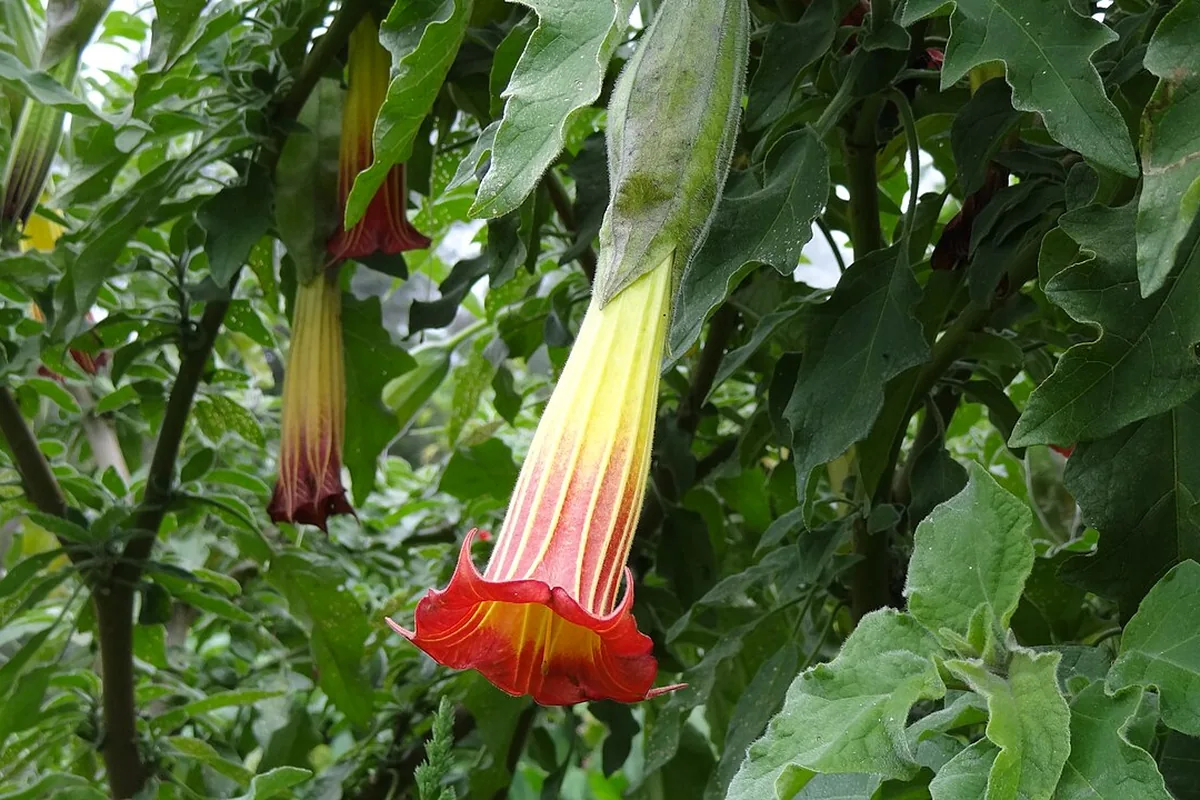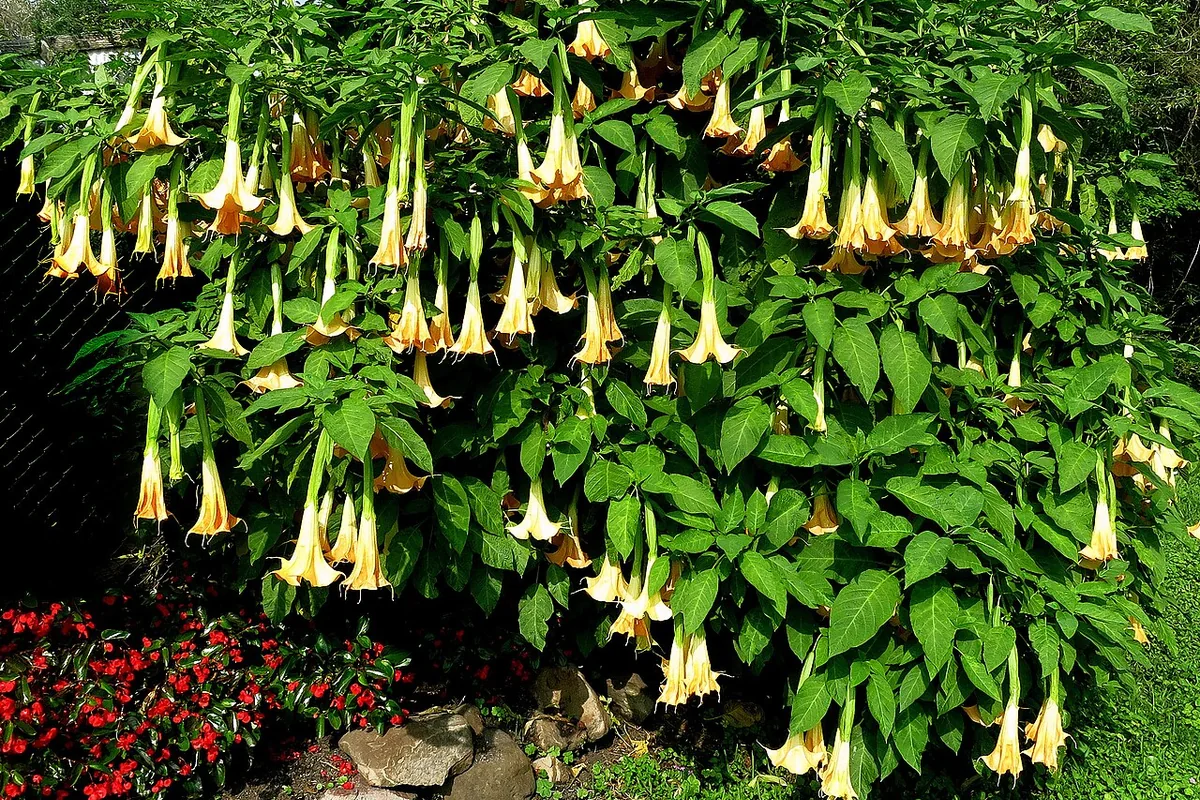
White Angel Trumpet brings large leaves and hanging trumpet flowers on a vigorous woody plant to a container collection. The botanical name is Brugmansia suaveolens, and keeping that name attached to the pot helps distinguish this plant from other flowers sold under a similar common label. Plan for the living structure as well as the flowers, with space to see its natural outline and reach the roots for watering. A flowering plant from a warm climate needs a workable growing position as well as an attractive display pot. Check the room available for mature branches or climbing stems before choosing a young specimen trained tightly around a retail support. Keep its identity label with the container. The flower alone is not enough to determine whether the plant needs strong sunshine, filtered light, a winter rest or warmth throughout the year.
Choose bright light with some afternoon shelter in very hot conditions for white angel trumpet. This preference is the starting point for the growing position, rather than a promise that every bright looking part of the home will behave alike. Translate the light preference into the actual conditions where the pot will stand. Distance from glass, an overhanging roof and surrounding plants can change the amount of useful light substantially. Acclimate a specimen before placing it in stronger outdoor sun after a winter indoors. Give its lower branches light as well as its uppermost flowers. A warm but dim position often produces soft extended growth without supplying the conditions needed for a convincing repeated display.
For Brugmansia suaveolens, the practical watering principle is to supply ample moisture during strong growth and check large pots frequently. The important distinction is the condition of the occupied root ball, not whether the pot happens to stand indoors or outside on a particular day. Learn how quickly the occupied root ball changes after a full watering. A small nursery pot inside a large decorative shell may contain much less moisture than its appearance suggests. Check the mix rather than following a rigid weekday schedule. Water evenly around the roots and remove runoff after it drains. In a cooler darker room, the same volume may remain wet longer, so always adjust the interval to actual growth and the conditions around the container.
Use a fertile aerated mix in a substantial stable tub when potting white angel trumpet. The stem and root arrangement deserves as much attention as the decorative colour of the container. The container must anchor the stems while allowing water to leave freely. Keep the previous planting depth and avoid burying a woody collar merely to conceal it. A proportionate pot is easier to water than a very large container around a small undeveloped root system. Inspect the roots before moving up a size and support any trellis before adding the plant. After repotting, settle the mix without compressing it into an airless mass.
The flowering behaviour of white angel trumpet is worth watching closely: flowering occurs on mature branching growth above the plant's first flowering division. Expectations should be based on this plant and the selected cultivated form, rather than a photograph of an unrelated species carrying its peak display. Look closely at the structures producing the display. True flowers, coloured bracts and the stems that carry them may have very different lifespans. Keep the growing position reasonably settled while buds are opening. Feed an actively growing plant at a sensible labelled rate, allowing for nutrients already in new potting mix. More fertilizer cannot replace missing light or restore roots that have been left continuously wet. Observe a complete flower flush before deciding which parts are actually spent.
For routine shaping, preserve the flowering framework when reducing size for storage. That timing and method belong to the way Brugmansia suaveolens builds its flower bearing growth. Decide whether the plant is being kept as an open shrub, a trained standard, a trailing basket or a climber before shortening stems. Young flexible growth can be positioned without the damage caused by forcing older wood. Leave enough useful leafy growth to support recovery and remove no more framework than necessary for the chosen form. Make any large change separately from a major root disturbance so that subsequent behaviour is easier to understand.
When the season changes, move into frost free protection before cold damages the framework. The seasonal routine for white angel trumpet therefore needs a review of its actual growth, rather than an automatic continuation of the busiest summer watering pattern. The move into protected accommodation should be planned before the branches become too large for the doorway. Check incoming stems and leaves for pests and choose the brightest position that meets the species' temperature needs. A pot beside cold glass may be much colder than the centre of the room. Reduce water and feeding when growth genuinely slows, but do not impose complete drought on a leafy plant that is still actively using moisture.
To raise another white angel trumpet plant, take suitable stem cuttings using gloves and careful handling. The best route depends on the material that this species can provide and whether preserving a selected cultivated form matters. Choose suitable material from an established plant and prepare a small clean container before taking it. Keep the cutting identified so that similarly shaped leaves do not become confused later. Rooting needs an appropriate balance of moisture, warmth and air; a sealed wet pot is not a shortcut. Introduce an established young plant to brighter conditions gradually and wait for sustained new growth before expecting it to carry the same flower load as its parent.
One particularly useful point when keeping Brugmansia suaveolens is that all parts are poisonous and fallen flowers should not remain where children or animals can reach them. Start the next inspection with that detail in mind and compare the affected area with the rest of the plant. Inspect the undersides of leaves, shoot tips and the point where the stem meets the mix. A few old leaves changing differs from a rapid general collapse, and a damp pot calls for a different response from a genuinely dry one. Keep records of moves, flowering and watering rather than changing every condition at once. Give new purchases a short period of separate observation before placing them close to an established collection, especially when they arrive carrying dense foliage.