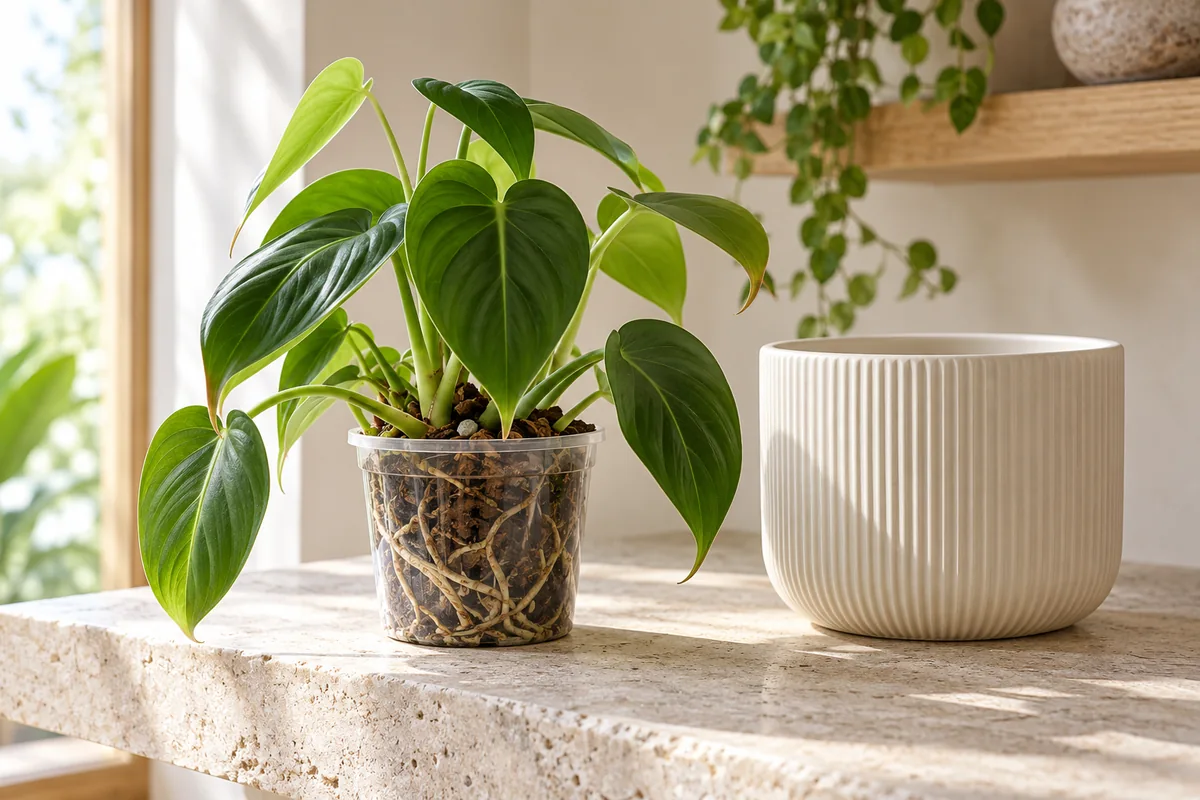
Some watering clues are easier to feel than to see. A small nursery pot can look unchanged for days as moisture leaves the lower growing mix, yet the difference in weight becomes obvious when you lift it. This is useful when a dry surface hides a damp center or when a dark pot makes the mix difficult to inspect. Pot weight is a comparison rather than a universal measurement. You are learning the range of one particular container with its own plant and growing medium. A heavy ceramic cover can obscure that range, so begin with a manageable inner pot that can be lifted safely.
Establish the wet end of the comparison after a normal thorough watering. Apply water evenly to the mix until excess leaves the drainage holes, allow the pot to finish dripping, and empty the saucer. Lift the inner container with both hands and notice its weight. A kitchen scale can help with a small plant if you want a written reference, provided the base is dry and the scale is protected. Do not include a changing amount of water in the saucer. That would measure the tray as well as the root ball. The useful baseline is a fully moistened container after free drainage, not a pot sitting in a pool.
Over the following days, inspect the mix in the way appropriate for the plant and lift the pot again. A fern that needs consistent moisture should not be allowed to approach the same dry endpoint as a jade plant. For a foliage plant that tolerates the upper layer drying, compare the weight when that layer reaches the usual watering threshold. Note the difference in your hands before adding water. You do not need to dry every particle to learn the pattern. The goal is to recognize the weight associated with suitable remaining moisture, while preserving the conditions that particular plant needs around its roots and new growth.
Use a surface check as a companion observation. Push a finger into the mix where accessible, or insert a clean wooden skewer carefully near the pot edge to assess a deeper area. Bark pieces can make the surface feel dry even when finer material below remains damp. A pot containing coarse pumice may stay relatively heavy because the mineral component itself has weight. Those characteristics become part of the baseline. Avoid comparing a lightweight plastic pot of coir with a clay pot containing grit. Each container is its own reference, and the weight of permanent materials can be quite different even when the plants are similar in size.
Containers change over time. A growing plant adds roots, stems, and leaves, while water loss between watering becomes faster or slower with changes in light and temperature. Fallen leaves, decorative stones, and a new support stake also alter the starting weight. Relearn the range after repotting, dividing, or adding a substantial top dressing. Even an identical replacement pot can hold a different volume of mix if its shape changes. This method works because you keep observing rather than treating an old number as a permanent rule. A brief note such as noticeably lighter with lower mix still slightly damp can be more useful than a precise weight copied from last year.
Large plants need a safer approach. Do not lift a heavy specimen by its stems, leaf stalks, or decorative rim. For a container that can be moved comfortably, a small controlled tilt may reveal whether it remains unusually heavy, but avoid straining or tipping the root ball. Use moisture observations from accessible areas instead when the plant is too large. A pot on a wheeled stand can still retain substantial water underneath, so check the saucer separately. The method should simplify care, not turn watering into a lifting exercise. Small and medium nursery containers are generally the easiest place to develop this skill before trying to interpret larger arrangements.
Unexpected weight can help reveal practical problems. A pot that remains close to its wet weight for much longer than usual may be standing in water, receiving less light, or containing more mix than its roots can use. A container that becomes very light almost immediately may be crowded with roots or may have a dry center that never absorbed the last watering. Check how water moves through it before assuming the plant needs a daily drink. Water running down the gap beside a shrunken root ball can create plenty of runoff without moistening the interior. Slow repeated applications or a brief supervised soak may help rewet a suitable mix, followed by complete drainage.
Once the range feels familiar, lifting becomes a quick check during ordinary care. Combine it with the plant's appearance, the season, and the moisture of the mix. Firm leaves and a pot approaching its expected watering weight offer a different picture from limp leaves above a container that is still heavy and wet. Keep the decision specific to that plant. There is no need to water just because another pot on the shelf feels lighter. The value of this method lies in noticing gradual change in a root zone you cannot see, using a simple physical observation that becomes more informative with each normal watering cycle.