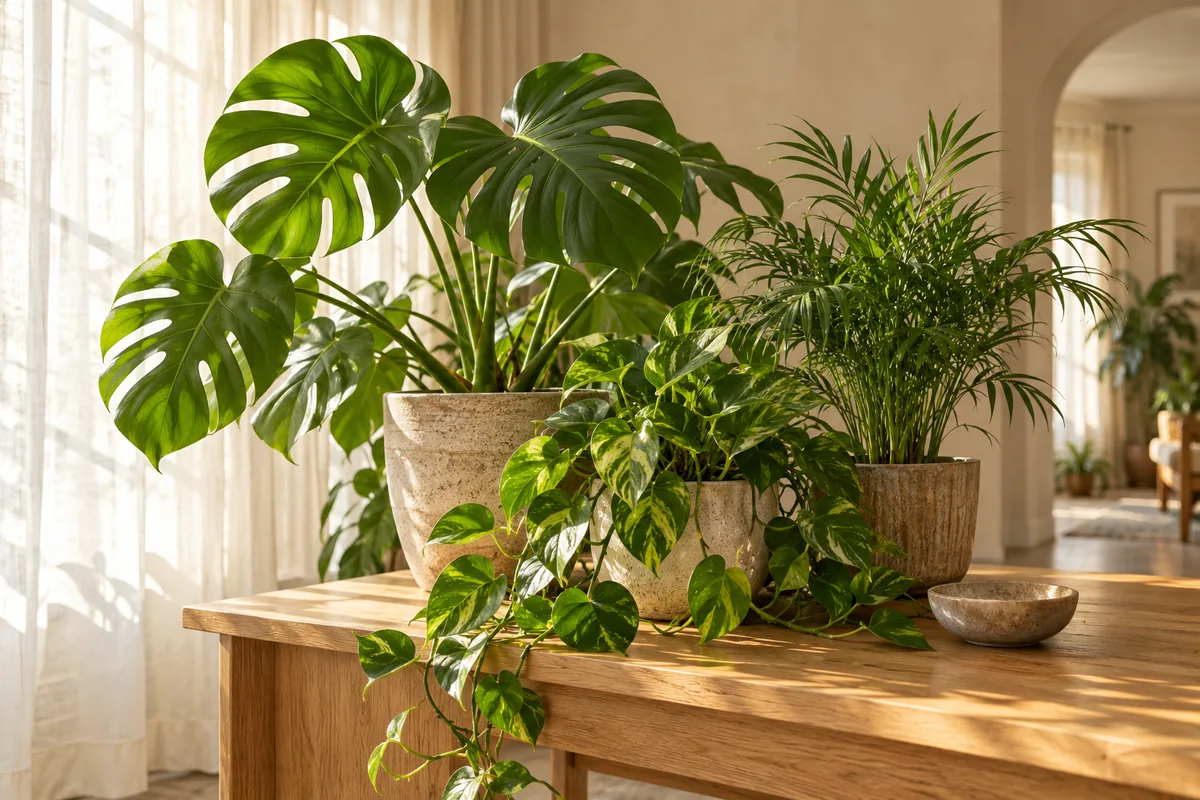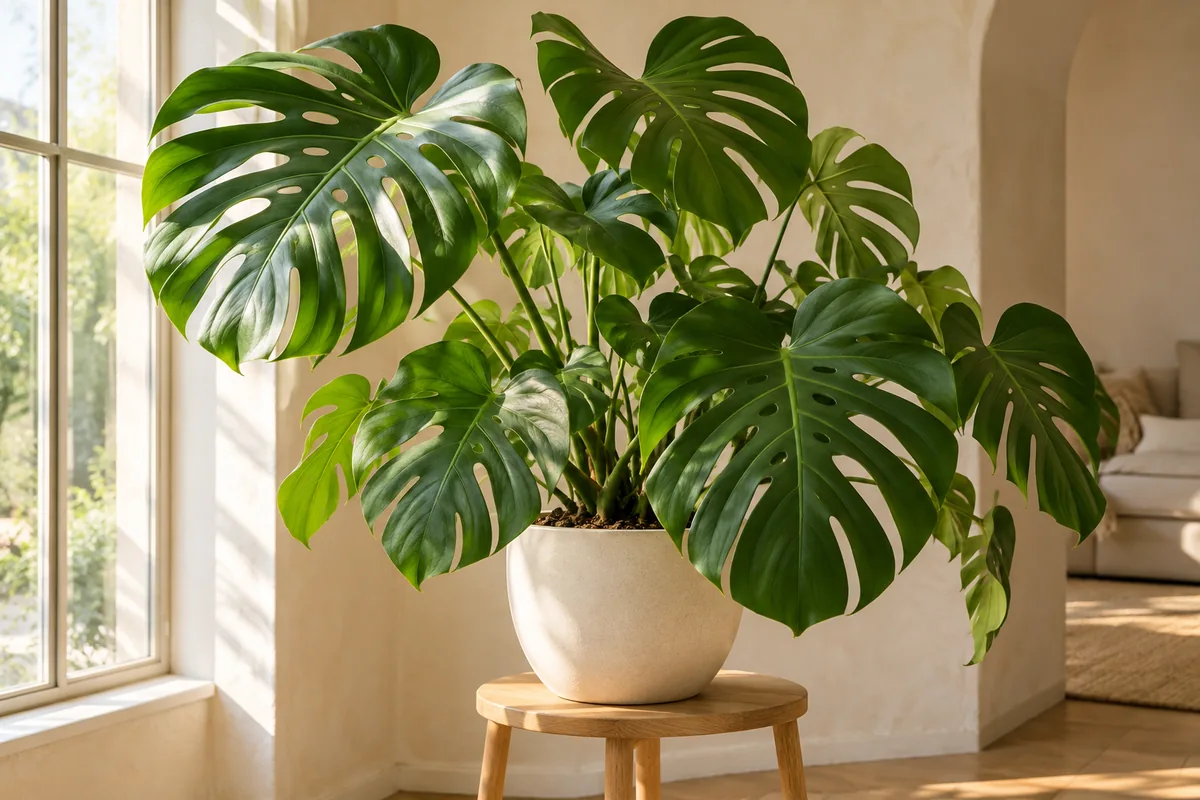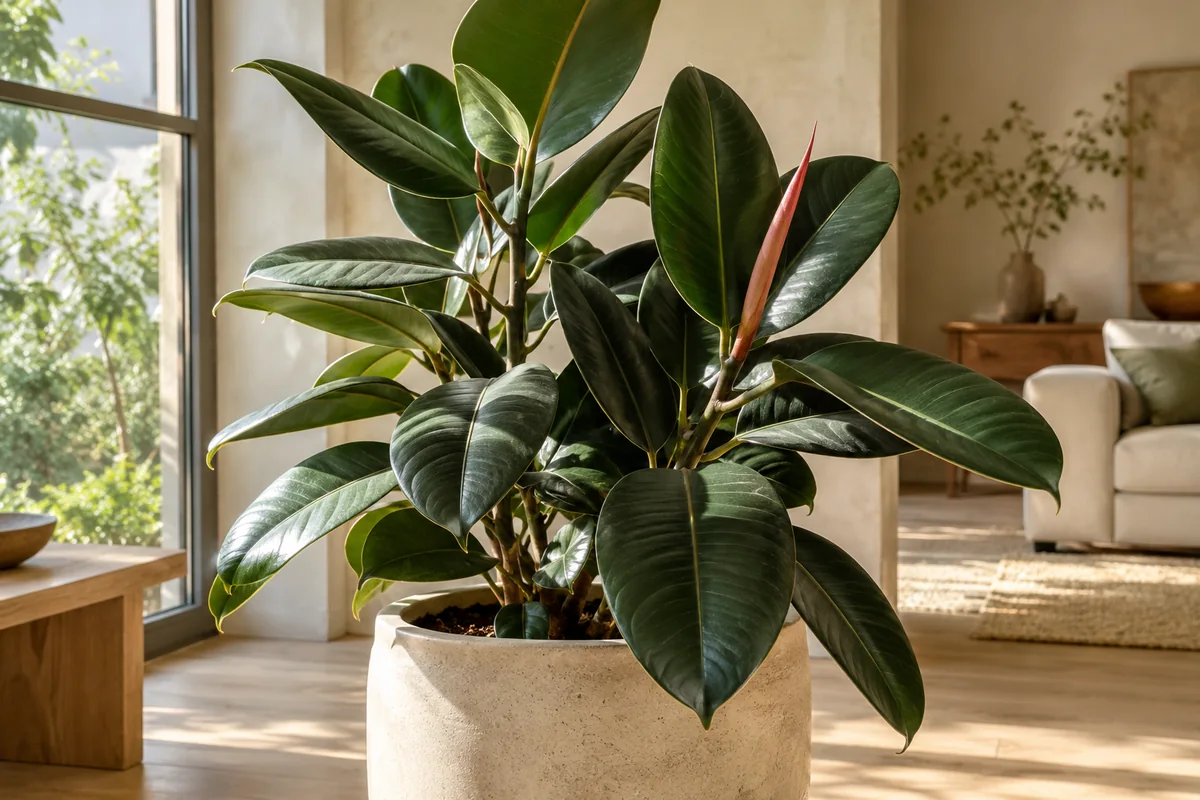
Spring creates a convenient repotting window for many indoor plants, yet the calendar cannot tell you whether a particular pot needs changing. A plant with workable roots and open mix can remain where it is while new growth develops. Another may be difficult to water properly because the root ball has filled the space or the old mix has collapsed. Begin with the problem you want to solve. More room, fresher material, improved stability, and better drainage are different reasons and may call for different choices. A thoughtful repot starts with that observation rather than a row of larger containers waiting to be filled because the season has changed.
Notice how water behaves during ordinary care. A pot that dries much faster than it used to may contain a dense root mass with little mix remaining. Water that runs straight down the sides can also indicate a dry, shrunken root ball that is not absorbing evenly. A pot staying wet for an unusually long time suggests a different issue, such as a large volume of mix, limited light, or deteriorating structure. Compare several waterings before drawing a conclusion from one event. Check drainage holes and the use of decorative outer pots as well. A blocked hole or hidden pool can create trouble that a larger pot would only make harder to manage.
Inspect the roots gently when the evidence suggests a closer look. Support the root ball while easing it from the container and avoid pulling the plant by its leaves. A few roots along the outside are normal. A tightly circling mass with very little loose mix tells a different story. Look for firm roots and a coherent base, noting any soft or collapsed sections. Slow growth alone does not prove the pot is too small, since light and season also influence it. If the root ball still has usable space and the mix is in good condition, returning the plant to the same container is a perfectly reasonable result of the inspection.
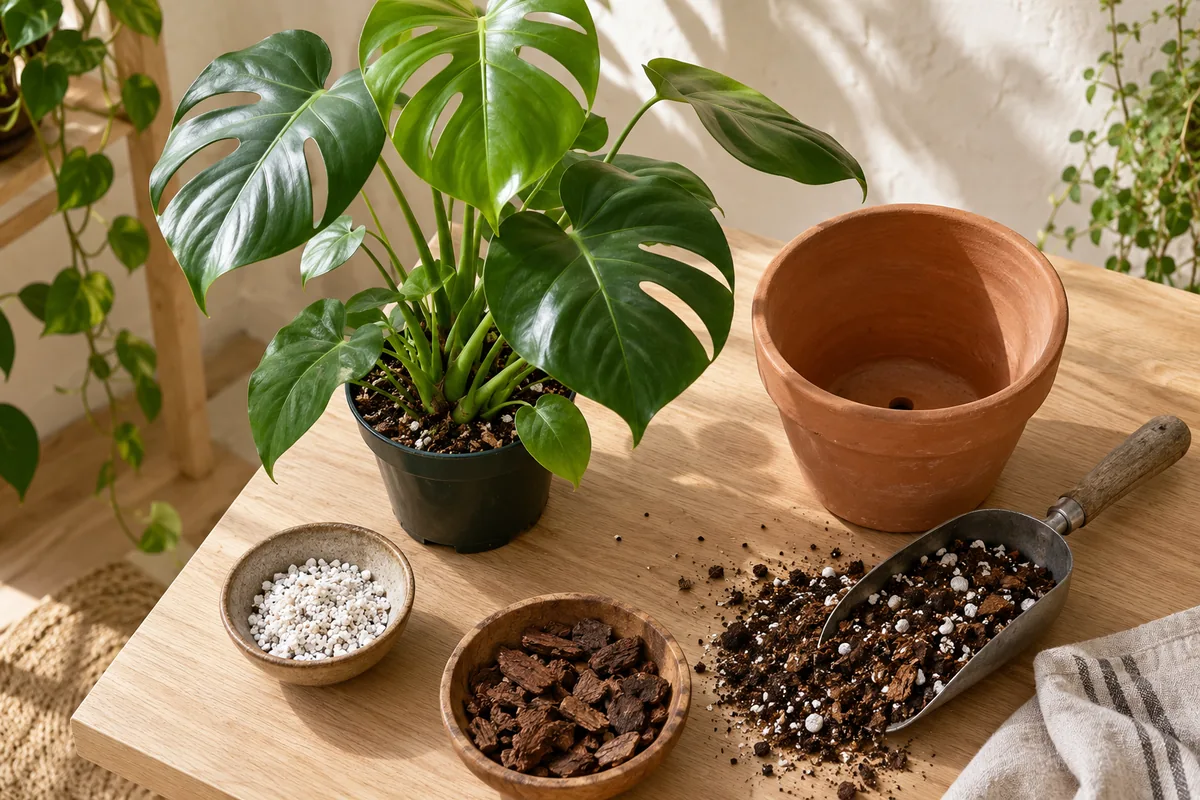
Choose the new container to match the root system rather than the size of the canopy alone. A modest increase in width is usually easier to manage than a dramatic jump into a deep decorative planter. The pot needs drainage holes and enough stability for the plant's shape. Tall specimens may benefit from a broader base without requiring a huge amount of extra wet mix. If the existing pot is appropriate but the material has degraded, refreshing the mix in the same container may be enough. Clean a reused pot and check its holes before planting. A layer of stones at the bottom does not replace drainage or correct a dense unsuitable mixture.
Prepare fresh mix suited to the plant and lightly moisten it so it settles evenly. Loosen only the outer roots that need guidance, avoiding unnecessary stripping of a sound root ball. Place the plant at approximately its previous depth, keeping growing points and leaf bases clear of the surface. Add material around the sides gently and leave room below the rim for watering. Packing hard creates a neat appearance at the expense of useful air spaces. Water to settle the mix and allow the excess to drain. Check that the original root ball and the new surrounding material both receive moisture rather than assuming one quick pour has wetted every part equally.
Give the repotted plant a stable period in suitable indirect light. Avoid combining root disturbance with an abrupt move into stronger sun or a major pruning session. The new mix can change how quickly the pot dries, so forget the exact interval that worked before and inspect moisture anew. A larger container may remain damp longer even as spring growth begins. Fresh material may also contain nutrients, making immediate feeding unnecessary. Read the mix label and wait for the plant to settle before deciding on additional fertilizer. Keep the saucer empty after watering and make sure the plant does not sink as the material settles around the roots over the first few days.
An urgent root problem may need attention outside the ideal seasonal window. A soft base, blocked drainage, or severely unsuitable container should not be ignored until the next spring. The practical advantage of spring is that many plants are beginning active growth under improving light, giving them a useful period to establish afterward. It is not a guarantee of an effortless recovery. Judge the plant's condition and the room you can provide. A dim cool home in early spring may offer less support than a stable bright setup later. Choose a day when you can complete the work carefully and inspect the pot afterward rather than rushing through a whole collection.
Label the pot or record the repotting date, container size, and mix used. A photograph of the exposed root ball can be particularly helpful when deciding whether the next repot is necessary. Keep notes on watering behavior after the change, since that is often where the benefit becomes most visible. A successful repot produces a manageable root environment, not merely a larger object on the shelf. Plants that did not need changing can continue growing undisturbed beside those that did. Reviewing them individually makes spring care clearer and helps you avoid turning a useful seasonal opportunity into a routine disturbance that every plant must experience.