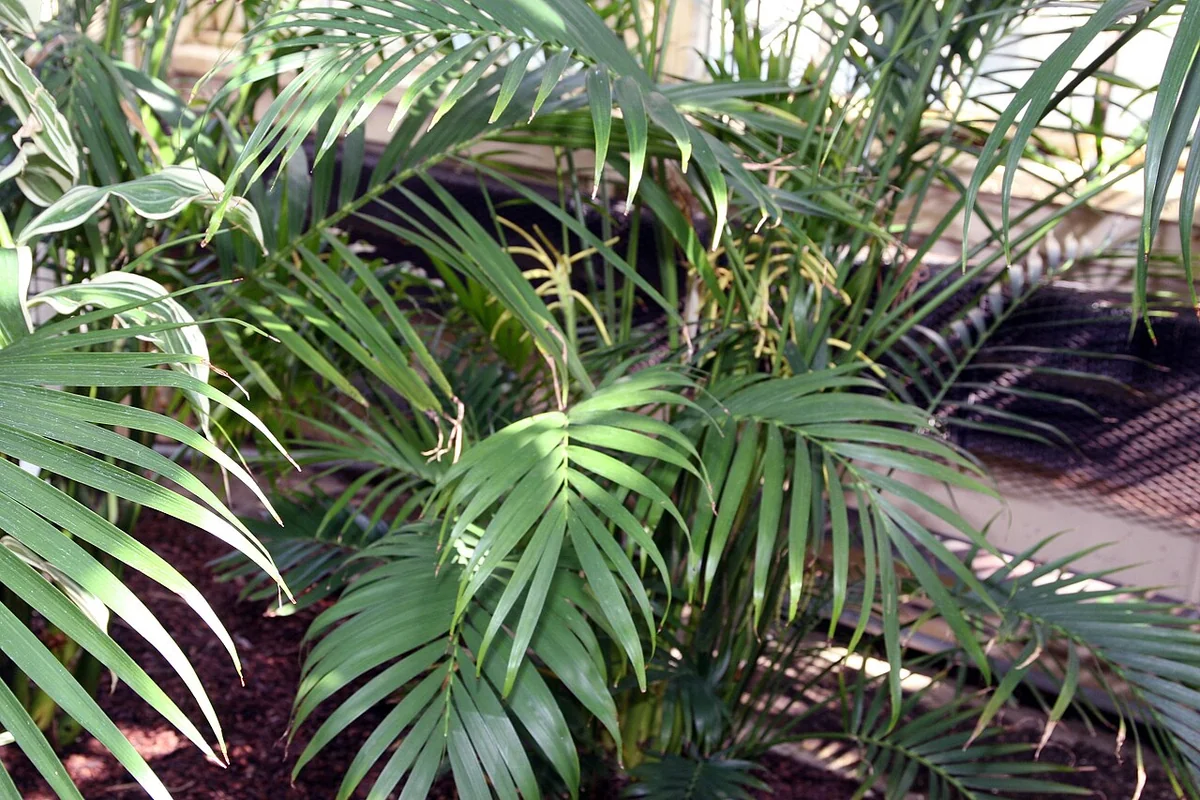
A Low Palm from Moving Water
Chamaedorea cataractarum is the palm to consider when a full, low fountain of foliage is wanted rather than a tall exposed trunk. Its dense feathered fronds arise from a branching base, creating the cascading outline reflected in the names cat palm and cascade palm. The word cat is not a statement about pet suitability; the botanical identity must be checked independently for that purpose. Nor is this a small version of a coconut palm. Its natural architecture is a spreading clump that can occupy substantial floor area while remaining relatively low, making width an important part of choosing an indoor position.
The species is native to Mexican stream margins, where flexible leaves and a low branching structure help it cope with flowing water. Botanists describe such a stream-associated plant as a rheophyte. That habitat is unusually instructive for an indoor grower, but it is easy to draw the wrong conclusion from it. Moving water in a natural stream is not equivalent to stagnant water in a closed ceramic planter. A wild plant has changing oxygen, temperature, and rooting conditions. At home, the useful lesson is that this palm appreciates reliable moisture and a suitable root environment, not that its container should become a miniature pond.
Brightness, Width, and Reliable Moisture
Provide bright filtered light if a dense, vigorous canopy is the goal. An office with daylight from a generous window can be suitable, provided the fronds are protected from harsh exposure immediately after purchase. Deep shade may keep a plant present without maintaining the lush nursery outline indefinitely. Set the pot where a person can reach the center without bending or breaking outer fronds. The spreading shape can obstruct a narrow walkway despite its modest height. In a shared room, leave room for chairs to move and for cleaning equipment to pass without repeatedly dragging the container by its foliage.
Check moisture frequently enough to avoid drying the whole root ball hard. Water the occupied medium evenly, let surplus drain, and remove the collected water. The frequency may increase when new fronds are opening in a bright warm room, then decrease when winter daylight falls. A small amount delivered repeatedly around the rim can leave the center under-supplied. Conversely, a wet center surrounded by dry fresh compost needs assessment before the entire pot is soaked again. The streamside origin should encourage attention to consistent root conditions, not a fixed daily watering rule that ignores temperature, root volume, and current growth.
An Aerated Clump through the Seasons
Use a mix that retains some moisture while remaining open. Fine garden soil in a sealed decorative pot is a poor substitute for a functioning container medium. If repotting is necessary, preserve the connected branching base and avoid an excessive increase in size. An established cat palm is not conveniently turned into many independent plants by pulling every visible shoot apart. Support the root mass during the move, fill gaps gently, and maintain the previous level around the base. Afterward, watch how the combined old and new media dry rather than assuming the same interval will still be appropriate.
The crowded canopy benefits from inspection at several levels. Lift an outer frond gently and look beneath the leaflets, then check the protected center and the soil surface. Mites may become troublesome in hot, dry moving air, while scale or mealybugs can be hidden among close petiole bases. Avoid diagnosing a problem only from the distant silhouette. Where pests are found, isolate the palm and identify them before selecting a response. More humidity can improve the growing environment, but a spray bottle used without inspection does not eliminate an established infestation or explain a continually declining root system.
Frond Replacement without an Artificial Dry Season
Remove a fully brown frond near its base while protecting new spears. If only tips are affected, retain the useful green leaf area unless the appearance is unacceptable. Clipping every frond into a shorter outline creates blunt, damaged leaves rather than a naturally compact palm. Growth from the branching base will provide replacement foliage in its own time. Feed lightly during active growth using a suitable labelled product. Because the root zone is kept relatively moist, regular attention to drainage and occasional removal of accumulated soluble salts is more useful than adding fertilizer every time a leaflet loses color.
Cat palm does not need a deliberately dry winter dormancy. It remains a leafy tropical plant, though reduced light changes how much water it can use. Keep it away from cold entry doors and from heating outlets that rapidly dry the air across one side of the clump. A room can have an acceptable average temperature while a particular corner experiences sharp extremes. Compare new growth on different sides when investigating uneven damage. If the plant becomes too broad, choosing another position may be more practical than continually removing its healthiest outer leaves just to keep it inside an unsuitable footprint.
Matching a Flowing Palm to Its Recipient
For gifting, this is a plant for someone who enjoys regular observation and has a wide, well-lit location. Its flowing outline can personally suggest movement, welcome, or a fresh start; such meanings are an interpretation of its form rather than a traditional promise attached to the species. The moisture needs make it less convenient for a frequent traveler without a caretaker. Give the scientific name and explain why the streamside story does not mean standing water in the saucer. When animals share the home, verify safety using an authoritative species-specific source and discuss whether the leaves will be chewed or played with.
A successful long-term display resembles a managed fountain of living fronds, not a symmetrical object frozen at nursery size. Take time to learn the container weight and the pace of new growth before making major interventions. An intact root system, reliable but aerated moisture, and sufficient daylight support that renewal. Seasonal photographs can reveal whether the center is filling in or whether too many outer fronds are being lost. The distinctive attraction of Chamaedorea cataractarum comes from its relationship to water and its low branching habit, both of which become easier to appreciate when the care follows the plant rather than its nickname.