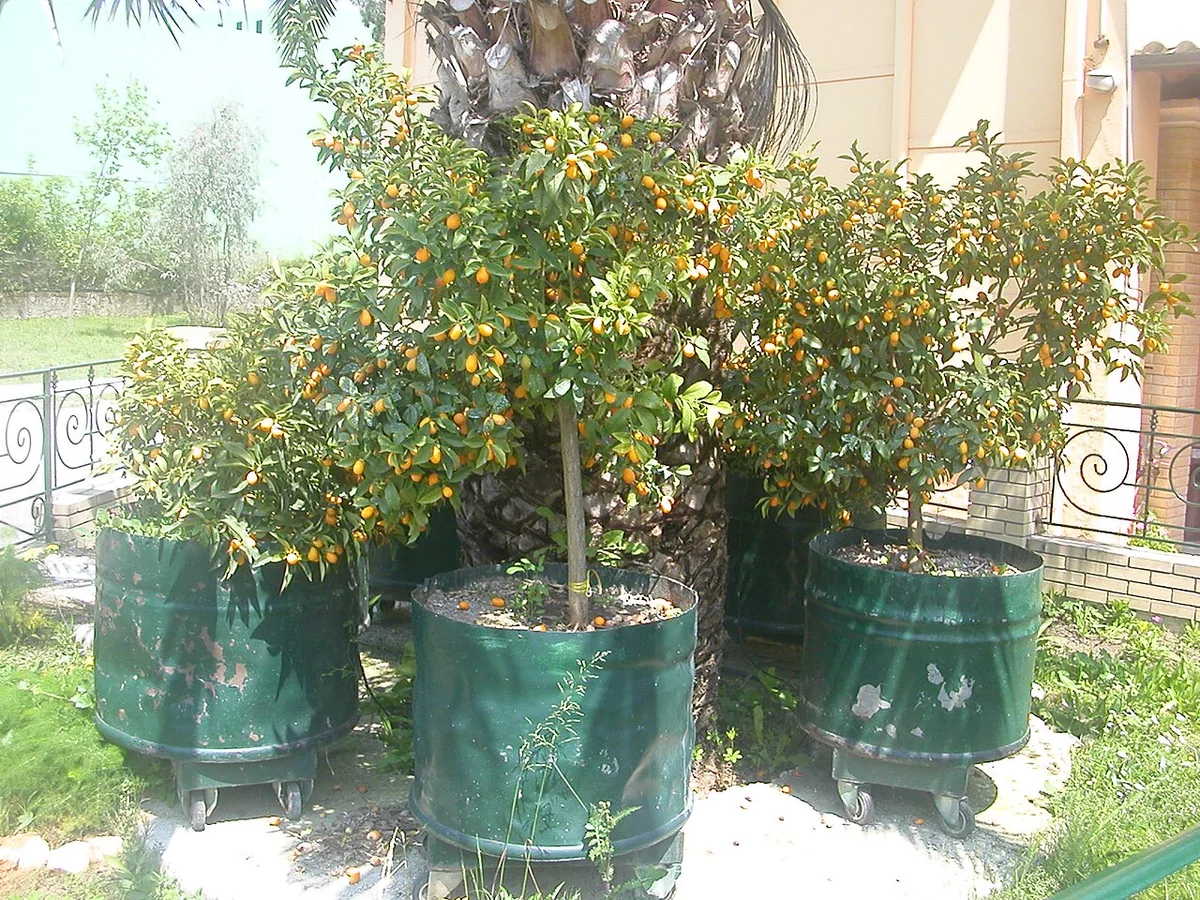
Small fruit does not mean small needs
Kumquats make convincing container trees because the scale of the fruit suits a manageable crown. Their glossy foliage can carry orange fruits without the visual weight of a large lemon or grapefruit. The name Citrus japonica is used for kumquats that older references place in Fortunella, and nursery labels may distinguish round, oval and named cultivated forms. These differences matter to the shape and taste of a future crop. Buy a known selection if fruit character is important. A photograph of a laden kumquat should encourage a light assessment, not the assumption that any indoor corner can produce the same display.
The cultivated kumquat has a history in East Asia, with movement and selection creating the forms now offered internationally. It is not a miniature version of a sweet orange. The peel and interior have a different balance of flavour, which is part of its horticultural identity. Common retail names such as Nagami and Meiwa point to distinct selections or groups that deserve their own labels. Preserve the nursery identification and rootstock information. A broadly labelled kumquat grown for ornamental display is still attractive, but the owner should not guess its precise lineage or culinary treatment from fruit colour alone.
Arrange a bright permanent position
Start with a sunny window or a bright protected growing room. The leaves should receive real daylight across the crown rather than a thin strip of sun reaching only the floor beneath the pot. Compact growth and a reliable flower cycle depend on that energy supply. If a winter sunroom is cooler than the main living space, check its actual night temperatures around the container. A window that gives excellent daytime sun may still expose the roots to a cold pane overnight. Suitable protection needs to account for the root pot as well as the upper foliage.
Kumquats can benefit from a summer outside in climates where the weather permits, but the transition should be deliberate. Protect nursery or indoor leaves from a sudden jump into intense sun. Move toward brighter conditions in stages and keep the pot stable in wind. A small crown carrying fruit can still place surprising leverage on a lightweight container. Do not use a dark cramped balcony position as a substitute for useful daylight merely because it is outdoors. At the end of summer, inspect the plant before bringing it close to other houseplants and adjust its watering to the new conditions.
A modest pot with dependable drainage
Choose an airy container mix and real drainage holes. Keep the previous root collar level when repotting and leave any graft union exposed. A decorative sleeve can be useful if it is easy to remove and empty, but it should not conceal a permanent puddle. Small fruit does not mean the roots can thrive in a tiny volume indefinitely. Repot when inspection shows that the roots need room or the medium has deteriorated. Increase size sensibly rather than selecting an oversized tub that remains wet for a long time around a comparatively small root system.
Check moisture through the occupied root ball before watering. A kumquat carrying both leaves and developing fruit can use water actively in bright warm conditions, while the same plant may use far less during a cooler dimmer period. Apply water thoroughly and let it drain, then assess the next interval from the plant's response and the feel of the mix. Repeated shallow watering can leave the central nursery root ball dry. Repeated soaking of already wet roots can be equally unhelpful. Neither condition is corrected simply by misting the leaves or adding a more decorative top dressing.
The long relationship between blossom and fruit
The flower season and the progress of fruit depend on the cultivar and growing conditions. Do not assume a kumquat should flower whenever a lemon beside it flowers. Indoors, pollen transfer may be helped by a small clean brush when flowers are open. After a fruit set, some loss can be normal, particularly on a young recently moved plant. Keep moisture and light reasonably steady rather than trying to retain every fruit with excessive feeding. A tree needs enough useful leaves to support what it carries. The orange display at a garden centre may have developed under brighter conditions than your winter room provides.
Use a citrus fertilizer according to its directions while growth is active, and record what has been applied. Fresh potting mix may already contain a supply of nutrients. Pale leaves call for examining the pattern, the irrigation water and the root environment before adding iron, magnesium or several supplements together. Excess salts can accumulate in a confined pot and complicate the problem. If the tree is making very little growth in winter, repeated heavy feeding is unlikely to improve its light supply. The objective is balanced seasonal growth, not the largest possible burst of soft shoots in the darkest months.
Keep the framework accessible
Pruning should preserve the small tree's character without making a dense shell of leaves around an empty interior. Remove damaged branches and any confirmed rootstock shoots, then consider whether a long twig needs shortening or simply a better position. Work around the actual fruiting branches rather than clipping the canopy blindly. Check ties and supports so they do not tighten against thickening stems. When the tree is rotated for even growth, ensure that fruit stalks do not catch on curtains. A crown that can be reached for inspection is easier to keep attractive than one pressed tightly against surrounding objects.
Look for scale insects on twigs and beneath leaves, particularly after an outdoor season. Dust can hide small changes in leaf colour, so gentle cleaning is part of observation as well as appearance. A few old leaves dropping differs from a sudden general loss after a move. Record when the pot was last watered and whether the room became warmer or darker before making a response. Inspect the root zone if the canopy wilts while the mix is wet. A stable bright position and a clearly assigned watering keeper help avoid conflicting care when a tree is displayed in a shared room.
A seasonal gift with an honest message
The clustered orange fruit makes a kumquat a cheerful seasonal gift, but its meaning should be presented carefully. If a recipient's family uses citrus in a particular celebration, ask about that custom rather than inventing a universal message on their behalf. As a personal design choice, the tree can suggest abundance through its small repeated fruit, without implying that it guarantees wealth or good fortune. It is well suited to a plant enthusiast with a bright conservatory or protected balcony arrangement. It is less suitable for a person who wants an ornament requiring no seasonal attention.
Give the tree with a cultivar label and a pot that permits safe drainage. Ask whether the recipient can manage the plant's weight and has room for any seasonal move. Do not encourage immediate eating of retail fruit without checking the nursery's treatment information. For a young owner, learning how the root ball changes between waterings can be a more useful first goal than counting fruits. Over time, the relationship between the compact crown, the flowers and the changing crop becomes the real attraction. A modest well adapted kumquat is more rewarding than a larger specimen continually struggling to fit its room.