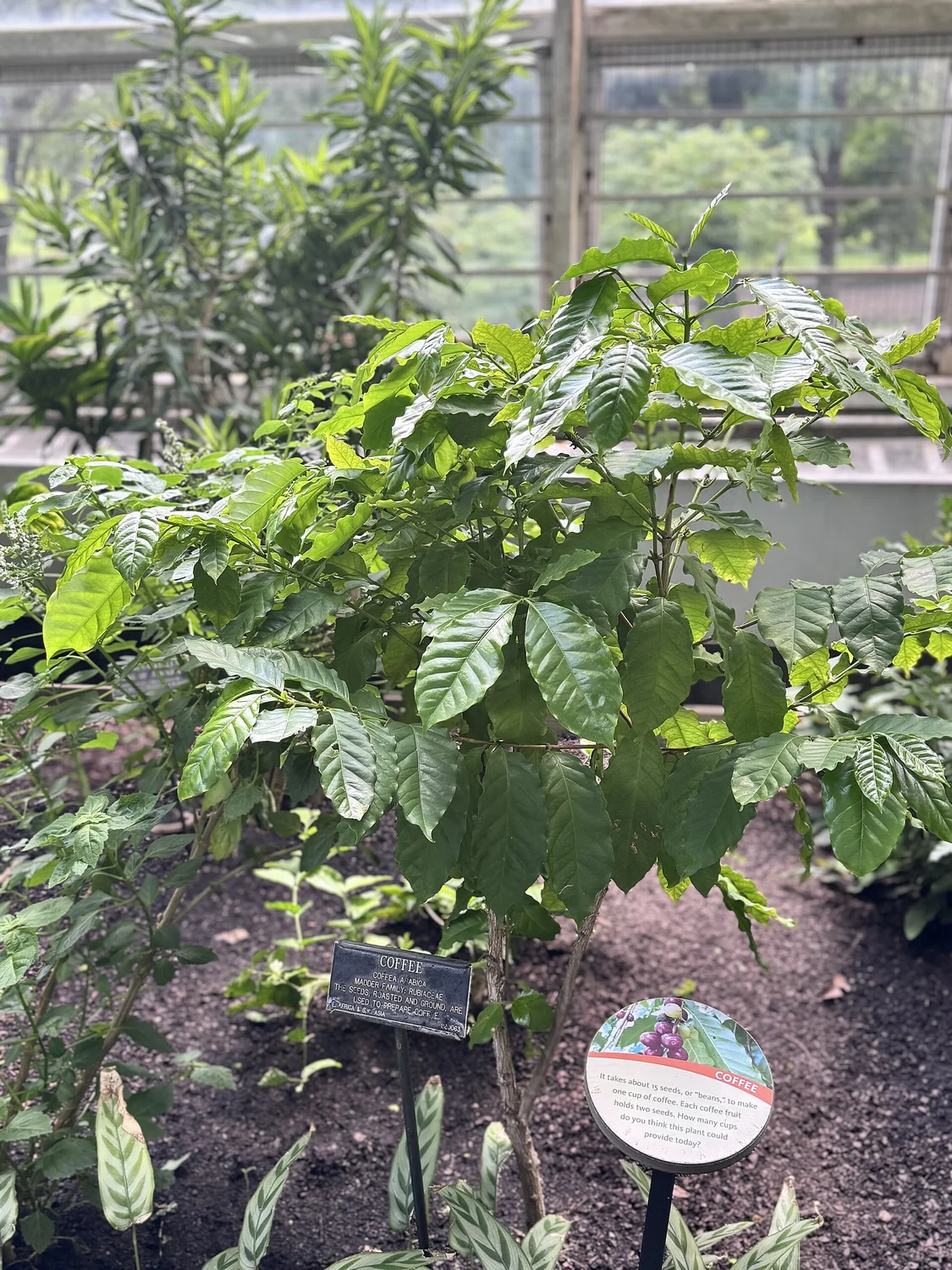
A living tree behind a familiar drink
Arabian coffee tree connects a familiar drink with a living plant that many people have never seen beyond a packet of beans. Coffea arabica is an evergreen shrub or small tree with glossy opposite leaves, white flowers under suitable conditions, and fruits that ripen to coloured coffee cherries. Its botanical origins lie in African highland regions, especially Ethiopia, rather than being established by the English word Arabian. Cultivation and trade later carried it far beyond that native setting. A potted indoor tree is usually a foliage plant first, and any flowers or fruit should be treated as an additional possibility rather than a promised supply for the kitchen.
Young coffee is frequently sold as a cluster of seedlings in one small pot. That arrangement creates an immediately full display but can become crowded as the stems and roots develop. Inspect the base and the condition of each seedling instead of assuming the group is one naturally branching tree. A smaller number of established stems may be more manageable over time. If separation is considered, avoid tearing apart an already dense healthy root mass merely for tidiness. Plan changes while the plants are actively growing and can be maintained individually afterward. The attractive glossy leaves should not conceal the practical amount of root room available beneath them.
Light and a workable indoor position
Provide bright filtered light rather than either deep office shade or an abrupt dose of harsh afternoon sun. A useful window with gentle morning exposure can be a good starting point, while a hot conservatory may require shading and attention to ventilation. Leaves formed under nursery protection need time to adjust to stronger light. Watch new growth and the retention of foliage lower on the stems. A plant that stretches toward one bright point may not be receiving enough usable light for a compact framework. A suitable growing lamp can supplement a dark season, but it must illuminate the canopy rather than merely brighten the desk beside the pot.
Water, roots, and a draining container
Keep the root zone moderately moist while retaining air in the mix. Check beneath the surface, then water thoroughly when the upper portion has dried enough to need replenishment. Do not leave the pot in accumulated drainage water. A crowded seedling group can dry quickly in warm light, whereas a recently repotted tree may remain wet outside its old root ball. Both need observation rather than a fixed weekly quantity. A persistent dry episode may damage leaves and developing buds, but flooding afterward does not erase that stress. A steady pattern of appropriate watering is more useful than repeated rescue cycles between extremes.
Use a draining indoor container mix with a suitable mildly acidic tendency rather than assuming ordinary outdoor garden soil will behave well in a pot. Repot when the roots fill their space and watering becomes difficult, making a moderate increase in volume. Keep stem bases at their existing depth. Water quality and accumulated salts can affect a long term container plant, so investigate a repeated crust or damaged margins rather than immediately adding more feed. Follow a product suited to the plant and the actual water supply. Coffee grounds are not a balanced substitute for container fertilizer and should not be piled over the roots merely because the plant's name is coffee.
Training and ongoing maintenance
Temperature and humidity need a practical balance. The tree should be protected from cold drafts and from concentrated hot dry air, yet a warm room alone does not compensate for poor light. If humidity is very low, change the ambient arrangement or use a maintained humidifier rather than repeatedly leaving the foliage wet. Clean dust gently from the leaves and inspect their undersides. Scale, mealybugs, and mites can establish in protected indoor conditions. Feed during active growth at a suitable labelled rate and ease the programme as extension slows. A quiet winter plant does not need to be pushed into plantation speed by strong fertilizer.
Prune with both shape and possible flowering wood in mind. A young plant can be encouraged to branch, while a larger specimen may need selected extensions shortened to remain accessible. Removing every tip repeatedly can interfere with future flowering and hide the difference between a trained tree and a temporary clipped mound. Keep enough leaf area to support the plant after a cut. Propagation from fresh seed or appropriate cuttings requires its own conditions and reliable identification. A roasted coffee bean from the kitchen is not viable propagation material. Preserve the botanical name with any young plants rather than allowing an ordinary common name to conceal different species or cultivars.
Flowers and cherries depend on maturity and suitable growing conditions, and a household tree may never provide a meaningful harvest. If fruit develops, do not rush from a decorative cherry to a beverage without understanding proper identification, processing, and the suitability of any products applied to the plant. Leaves and unprocessed ornamental material are not snacks for pets or children, and caffeine is a relevant reason to prevent casual chewing or tasting. A lack of fruit does not invalidate the foliage plant. Success can be measured by sound roots, balanced growth, and an owner who understands the difference between enjoying a coffee tree and operating a miniature plantation.
Coffee culture and a personal message
Coffee has a genuine global cultural history through cultivation, hospitality, trade, and everyday conversation. That history can make a living Arabica tree an appropriate symbol of shared time or a familiar ritual, without relying on an unverified origin legend. A giver might connect the plant with mornings spent together or the start of a creative workspace. Those are personal meanings layered onto an accurately identified species. Avoid promising financial success, improved health, or an endless home grown supply of beans. The interesting story is the relationship between a plant of African origin and the many cultures that have incorporated its processed seeds into their lives.
A gift matched to the recipient
A coffee tree can suit a coffee enthusiast's birthday, a housewarming with a bright kitchen window, or a requested plant for a new studio. Confirm that the recipient enjoys growing plants as well as drinking coffee; the two interests do not automatically coincide. Discuss light, warmth, watering access, and pets before choosing the size. A healthy modest specimen with a clear label may be more useful than a tall tree selected only because it already carries fruit. Include realistic expectations about flowering and harvest. The gift can celebrate a beloved drink while remaining a manageable ornamental plant rather than an obligation to produce it.