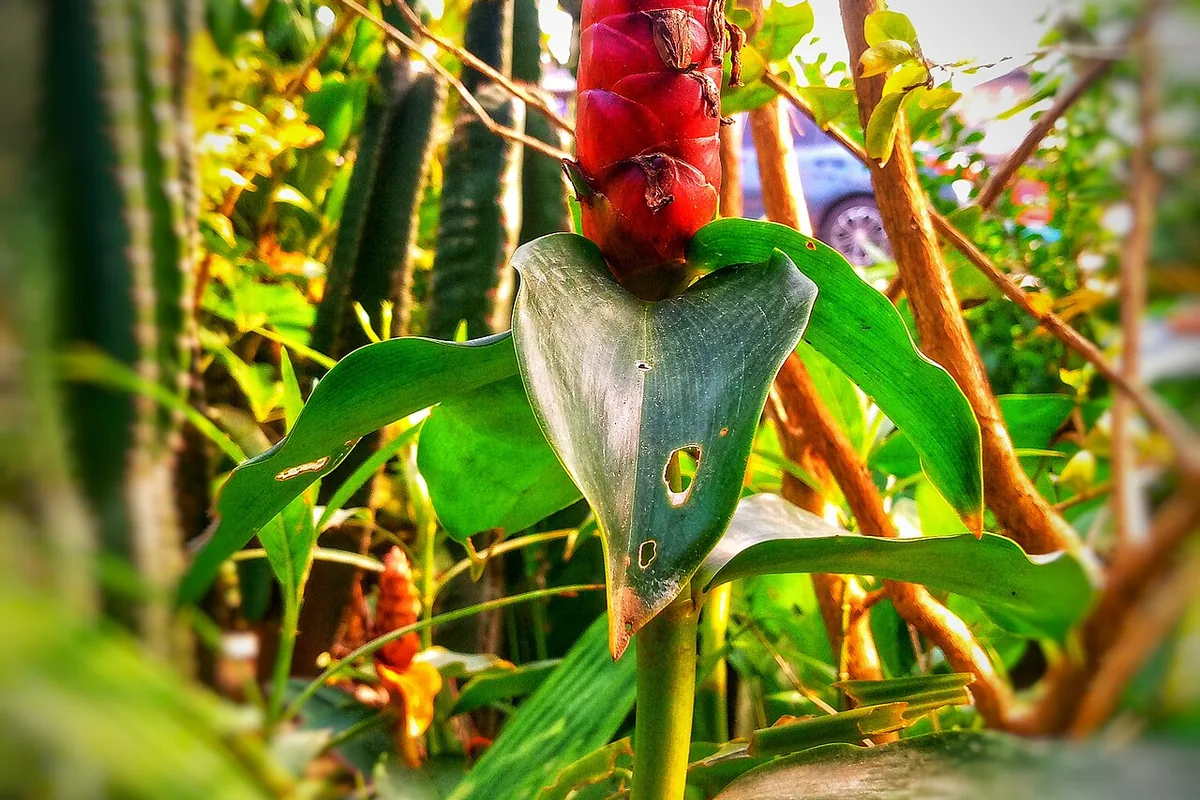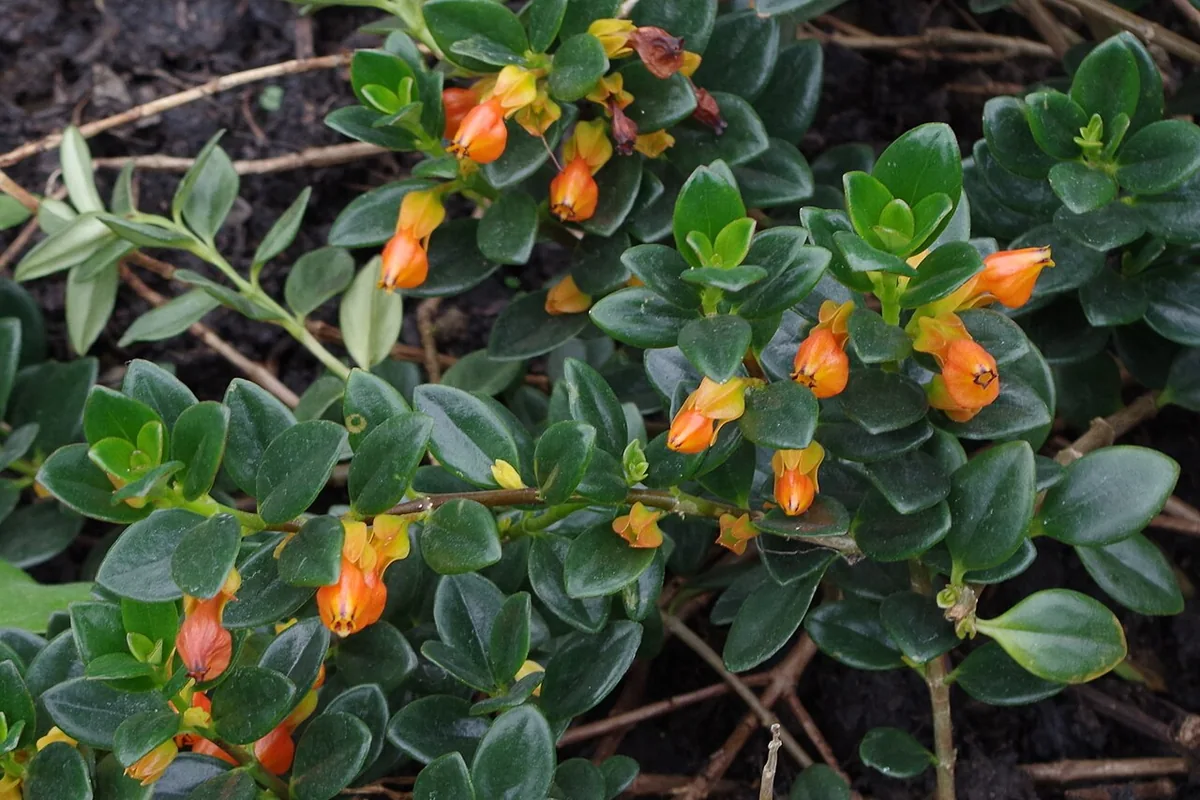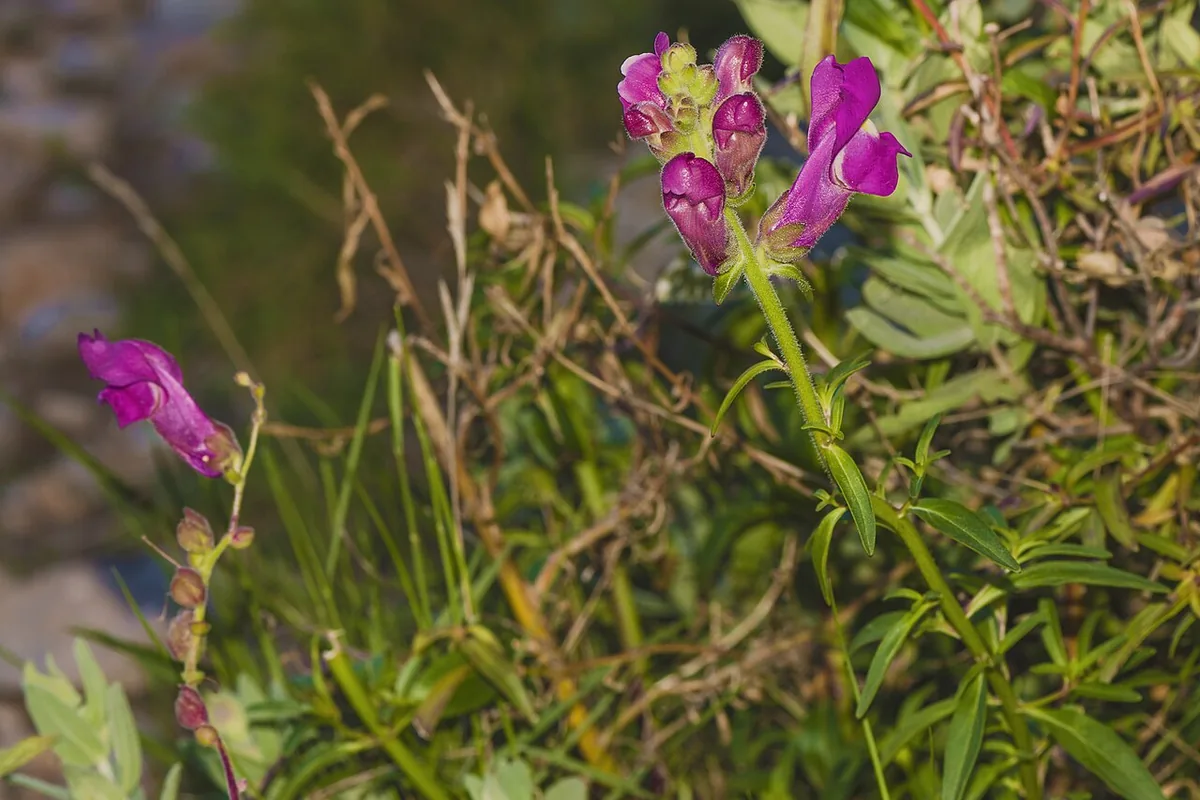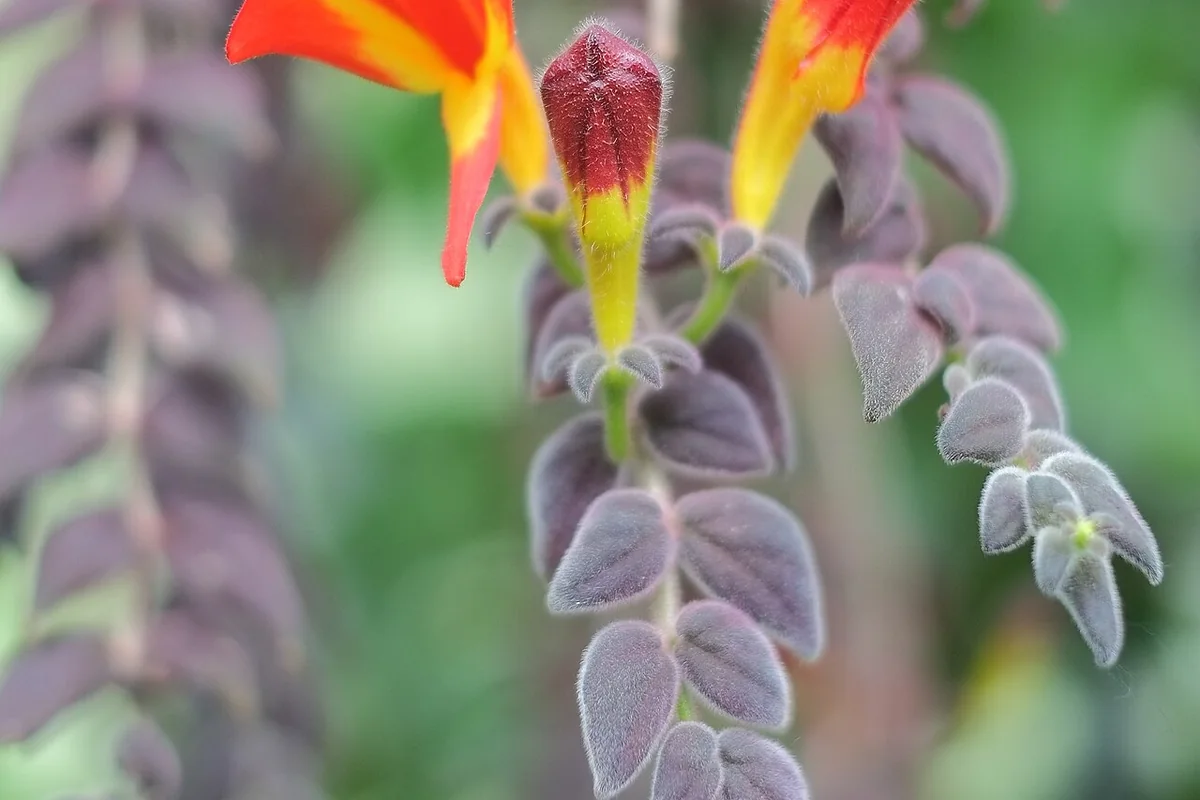
Goldfish Vine brings trailing stems with hairy leaves and bright red tubular flowers to a container display. The botanical name Columnea gloriosa is useful when buying a plant because common names can cover relatives with different seasonal needs. Start by deciding where the pot can grow well between flowering periods, rather than choosing only a place where the current flowers look attractive. This guide focuses on giving trailing stems room while keeping their root system open and accessible. Leave enough space to inspect the trailing stem bases and airy fine roots without pulling the plant out each time. A manageable plant with visible new growth is usually easier to understand than a large decorative specimen whose roots and growing point are hidden behind wrapping or neighboring containers.
Filtered light and mild warmth suit its soft growth better than a hot dry window. Exposure changes through the year, so a place that works during one season may become shaded or excessively hot in another. Look at the actual leaves and pot rather than relying only on the direction a window faces. Introduce changes gently and keep nearby plants from leaning across the growing point. A sheltered display site can be used briefly for open flowers, but it should not permanently replace the conditions needed for continuing growth. If a stem leans, examine both light and its natural habit before repeatedly turning or tying it. Secure support without compressing the growing tissue.
Keep the open root mix gently moist while avoiding a waterlogged basket. The decision belongs to the root zone rather than a fixed date on the calendar. Lift a manageable container or check moisture within the medium before adding another dose, taking care not to injure sensitive roots. Water should reach the occupied root ball and then leave through open drainage holes. A small splash applied repeatedly to the surface can conceal a dry center, while an outer pot can hide stagnant surplus underneath. Keep the trailing stem bases and airy fine roots free from unnecessary standing moisture. Reassess after a move, a weather change, or the end of flowering because each can alter the rate of water use.
Choose a hanging pot of airy epiphytic mix accommodates trailing growth and fine roots. Match the new pot to the actual root system, leaving room for the next period of growth without surrounding a small plant with excessive unused wet mix. Check that decorative packaging has not covered the drainage holes. When repotting, distinguish living roots from loose decomposed medium and handle the trailing stem bases and airy fine roots with particular care. Set the plant at its appropriate previous level unless its specific planting instructions require otherwise. Firm only enough to hold it steady. A top dressing can keep splashes down, but should not conceal the crown or make it difficult to see whether water is entering and leaving normally.
The red flowers are positioned along trailing stems and benefit from a raised viewing position. Their appearance is useful for confirming the label, but a variation in flower size or color may belong to a cultivated strain rather than indicate a care problem. Arrange enough clearance for buds and avoid crowding several containers around a fragile new stem. During active growth, use a suitable feed at its labelled dilution rather than increasing concentration in an effort to force flowers. Remove spent material gently and leave the extending stem tips and firm established leaves intact. The next display depends on resources built over time, and a temporary period without flowers can still contain essential root development and preparation.
A mild seasonal change can encourage flowering, but cold drafts should still be avoided. A seasonal flowering pot is a living sequence, and its quieter stage is not necessarily a failure. Record the end of the flower display and the later behavior of the leaves separately. When the plant slows down, change care in response to that stage instead of continuing high inputs merely because they worked earlier. An outdoor container can cool much faster than garden soil, while a protected indoor space can remain too warm for a plant that requires seasonal cooling. Plan shelter and access in advance, using the identity and growing cycle to guide each change.
Root firm stem tip cuttings in warm airy conditions while preserving useful leaf area. Start with a plant that has already settled into its growing position rather than dividing a recently transported flowering specimen simply because it looks large. Use clean tools where cutting is necessary and prepare the new container before exposing roots. Retain enough established growth to support recovery, and avoid making several demanding changes at once. A small new division often needs a gentler position than the mature display, but it still requires air around the root medium. Label it with the botanical name and date. Progress is shown by rooted new growth, not by keeping old flowers open for the longest possible time.
Fine hairy foliage can become spoiled by water that remains on it overnight in still air. Take a moment to examine the complete pot, including drainage, recent growth, and any hidden debris around the trailing stem bases and airy fine roots. One fading flower is not enough to diagnose the root system. A broader change in leaves deserves a closer look and a comparison with the recent temperature and watering pattern. Separate any pest affected container while identifying the cause rather than applying an unfamiliar product to the whole collection. Preserve firm living growth and make the next change for an observed reason. Over time, Goldfish Vine becomes more predictable when its own seasonal signs guide the routine.