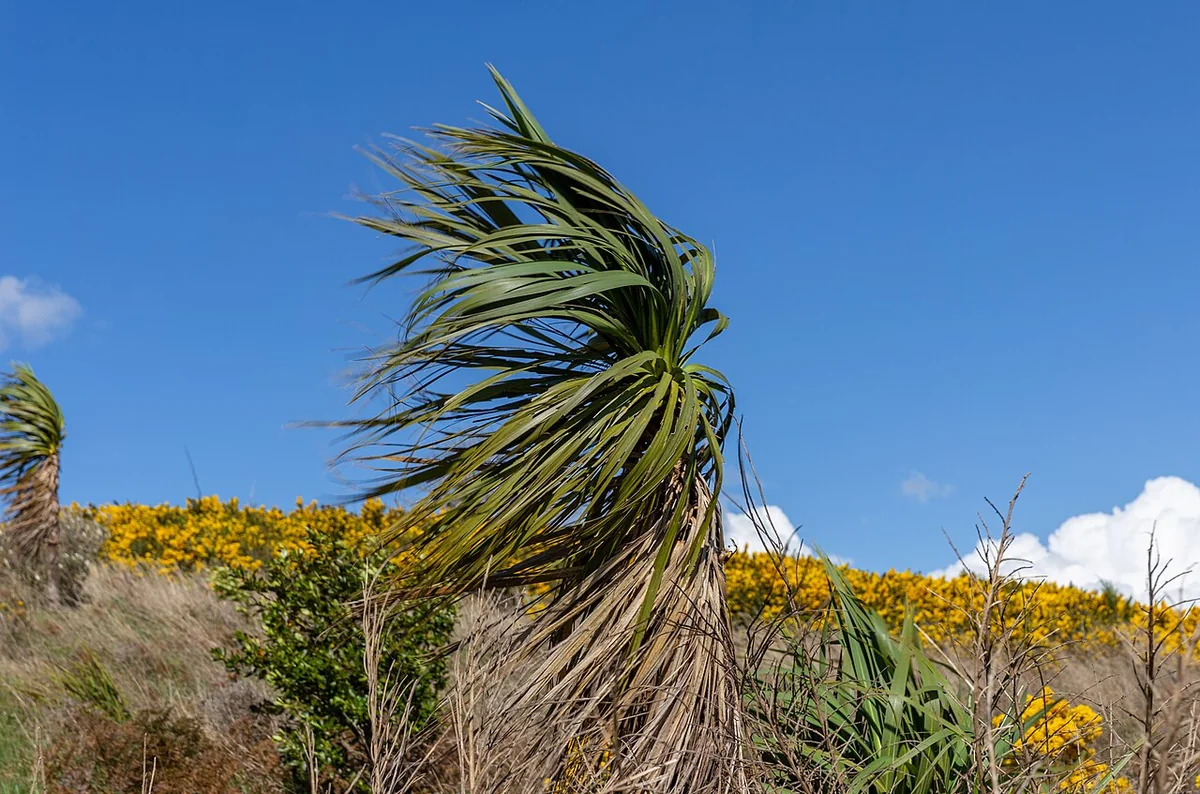
A New Zealand Tree outside the Palm Family
Cordyline australis can look palm-like from across a room, with a fountain of narrow leaves above an increasingly exposed stem. It is not a palm, and a mature tree can branch into several tufted crowns. The New Zealand cabbage tree is an architectural monocot within the asparagus family. A young container plant can be useful in a bright, cool interior or as a seasonal patio specimen, but it is not the same sort of warm, shaded houseplant as a parlor palm. That distinction should be made before a handsome nursery rosette is placed permanently in an unsuitable office corner.
The species is endemic to New Zealand and is widely known there as ti kouka. It occurs across a range of habitats, often in association with alluvial or river-related landscapes. Its familiar presence in New Zealand gives the tree a strong sense of place, but a cultivar sold abroad may have burgundy or striped foliage quite unlike the common green form. Keep the label to distinguish the actual plant. The common name cabbage tree is not an invitation to use an ornamental houseplant for food. Its history and local identity are better appreciated through authoritative cultural and botanical accounts than through improvised home use.
Cool Brightness and Seasonal Watering
Provide a genuinely bright position. A cool conservatory, a sunny enclosed porch with appropriate frost protection, or a well-lit room can be suitable while the plant remains manageable. A permanently dim, warm office is less convincing. If the pot is moved outside for summer, introduce direct sun progressively, particularly for a specimen raised under shade. The long leaves need room beyond the circumference of the container. Check whether their tips will sweep across a desk or catch in a sliding door. Sharp-looking architecture can be attractive without being placed where people must continually squeeze past it.
Water actively growing plants sufficiently to moisten the full root ball, then let surplus escape. Summer containers may need close attention because substantial foliage can use moisture rapidly, while a cool winter plant may need much less. Avoid repeated severe drying simply because an outdoor cabbage tree can survive a wide range of conditions. A restricted pot has none of the soil volume available to a landscape tree. Conversely, do not keep a sheltered winter container saturated. Check the medium itself and allow the interval to change with the season. A calendar can remind an owner to inspect without automatically prescribing another watering.
Container Roots and a Developing Trunk
Use a draining container with fertile, open medium and enough stability for the developing stem. A large pot may eventually be needed, but moving a small root ball directly into an enormous volume of wet compost complicates care. Repot in proportion to real root development. Keep the stem base at the previous planting level, and do not hide an increasingly woody trunk beneath constantly damp top dressing. Where the pot is heavy, arrange a safe moving method before seasonal changes require it. Protect the leaves while transporting the plant through doorways rather than pulling them into a tight abrasive bundle without support.
Temperature expectations should reflect the plant's temperate background. An established outdoor tree in an appropriate climate and a small potted specimen have very different root protection. Do not use a landscape hardiness description as permission to leave a saturated nursery pot exposed to severe freezing. Equally, a continuously hot dry interior may not offer the best year-round conditions. Observe the actual microclimate near glass, heaters, and doors. The goal is a stable growing cycle with adequate light, not a succession of abrupt moves between a hot room and a cold patio whenever the foliage looks temporarily untidy.
An Exposed Trunk and Seasonal Pest Checks
As the plant matures, lower leaves naturally die and the stem becomes more visible. Remove completely dry leaves carefully, avoiding damage where new tissue is forming. Some owners retain a skirt on outdoor specimens, but indoors loose dead material can collect debris and make inspection difficult. Branching and height changes should be managed with species-specific guidance rather than assuming that the crown can be clipped like a hedge. If a mature plant is cut back, its response requires sound tissue and suitable growing conditions. A small young specimen does not need dramatic pruning merely to imitate the branching silhouette of an old landscape tree.
Feed during active growth at a suitable labelled rate and inspect for pests when the plant returns indoors after a season outside. Leaf undersides and tight crown bases can shelter insects that become harder to manage among other houseplants. Isolate and identify any problem before choosing a response. Long leaves also accumulate physical wear, so distinguish an old scrape from spreading damage. If the crown or base becomes soft, inspect moisture and roots promptly rather than applying fertilizer to strengthen a deteriorating plant. A photograph of a healthy new leaf provides a useful comparison when evaluating later changes in color or form.
A Gift for a Suitable Porch or Conservatory
The cabbage tree can be a thoughtful gift for someone with a connection to New Zealand or an interest in cool conservatory plants. Its ability to develop branching crowns may personally suggest continuity and a growing network, but no universal traditional gift meaning should be invented from that form. The recipient must have enough light and space, and should know that some cordylines can be harmful to pets if chewed. An agreed plant for a bright porch is more considerate than a surprise for a shaded apartment. Include the exact cultivar because its leaf color and eventual outline are part of the intended display.
In a successful container setting, the plant gradually exchanges the compact nursery rosette for a more distinctive trunked structure. Allow that development while maintaining accessible roots and realistic seasonal protection. If the stem and canopy eventually exceed the indoor space, plan a suitable new home rather than repeatedly removing healthy leaves to force a smaller footprint. Cordyline australis is valuable precisely because it differs from a generic tropical palm. Its New Zealand origin, cool-bright preferences, and capacity for a particular branching tree form make it an architectural subject deserving a long-term plan rather than an anonymous decorative pot.