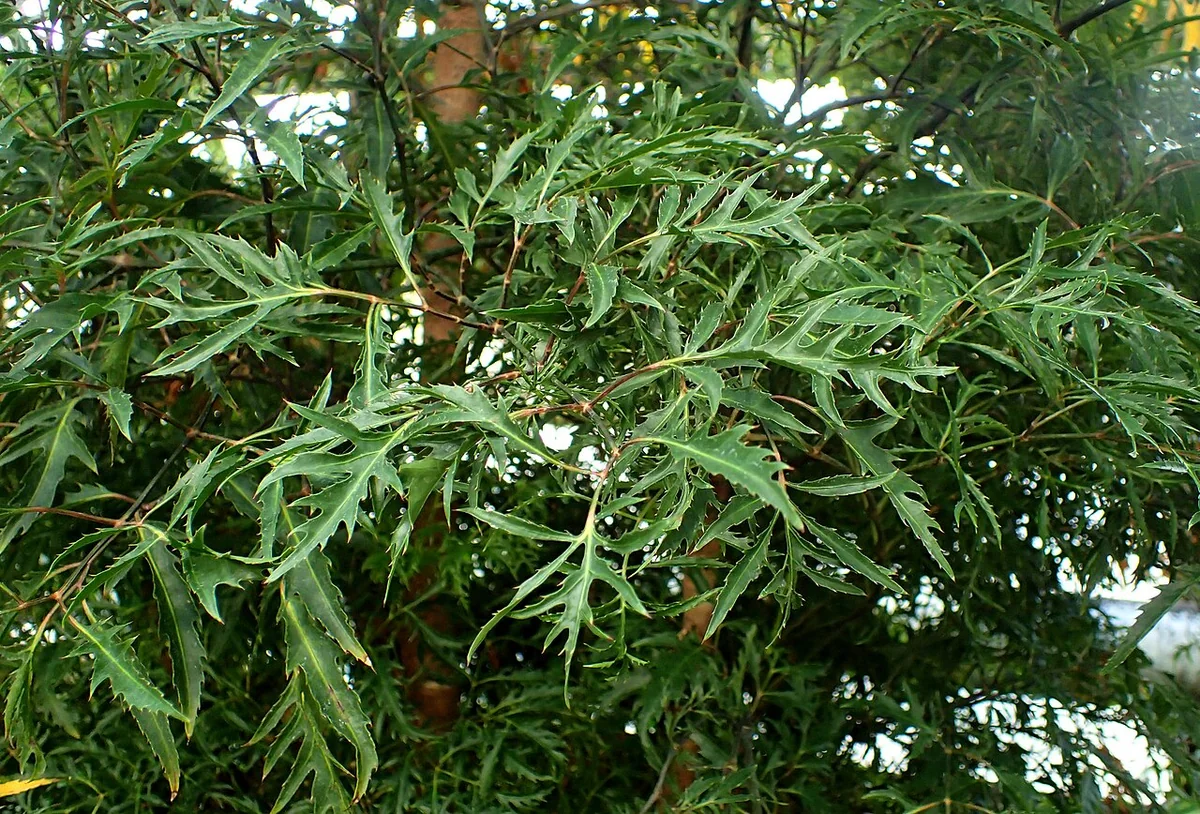
Ming aralia and its finely divided crown
Ming aralia offers the structure of a small woody tree with foliage fine enough to resemble a miniature landscape. Polyscias fruticosa carries repeatedly divided leaves, irregularly cut leaflets, and upright stems that gradually become a visible framework. Botanical references place its origins in central Malesia and the southwestern Pacific, although long cultivation has spread it well beyond that range. The familiar name should not be used as evidence of an origin in a Chinese imperial period. Its indoor appeal is horticultural: a tropical shrub or small tree can be trained into an airy, intricate specimen when light, warmth, and root moisture remain suitable.
Select the framework with future maintenance in mind. A plant made from several young stems may create a lush effect immediately, whereas an older single trunk can show more clearly defined branching. Neither arrangement should be judged solely by height. Look for live tips throughout the crown, clean stems, and a firm base above the mix. An expensive mature specimen with hidden bare interiors may be less useful than a smaller healthy plant. Fine foliage also catches on clothing and nearby objects, so leave space around the canopy. A shelf or crowded desk is often less practical than a stable bright floor position.
Light and a workable indoor position
Provide bright indirect light that reaches more than the outermost leaflets. A tree placed against a wall can retain a decorative face while losing the shaded side, so assess the whole crown. Some gentle morning sun may be suitable after adjustment, but sudden harsh exposure can damage foliage formed in nursery shade. Dim interior locations limit both growth and the ability to recover after pruning. The plant is better suited to a warm inhabited room than a space that becomes cold every night. A draft at root level or across the fine leaves can cause trouble even when the general room feels comfortable.
Water, roots, and a draining container
Moisture should move through a moderate range instead of swinging between saturation and complete drying. Check the upper mix and its deeper condition, then give a thorough watering when the plant needs it. Let surplus water drain and remove it from the cover. The fine leaf area can be damaged by an overlooked dry interval, yet a persistently wet root system is also vulnerable. A small nursery ball can remain dry inside fresh damp compost if water bypasses it, so inspect that relationship after repotting. Observation through several cycles is more reliable than copying a fixed number of days from a plant kept in another house.
Warmth and reasonably humid air are particularly relevant to the delicate canopy. Keep the pot away from a heater blast or air conditioning outlet that dries one side repeatedly. A properly maintained humidifier can help an unusually dry room, while a quick mist only changes the immediate leaf surface briefly. Do not enclose the entire plant in stagnant wet conditions as a substitute for a suitable room. Good air movement should remain gentle rather than windy. During winter transport, protect the foliage and stems from cold exposure before they reach the house; the fact that a car is warm does not protect the tree during a long wait outside.
Training and ongoing maintenance
Repot carefully and only when the roots and watering pattern indicate that additional space is needed. Use an airy indoor container mix and make a modest increase in size, retaining the original depth of the trunk. A large pot full of unused damp compost can make moisture management more difficult for a relatively slow indoor specimen. Avoid combing apart a healthy fine root system merely to obtain a visually neat arrangement. Once settled, inspect any nursery ties and supports before they press into the bark. A small stable functional pot inside a decorative vessel often provides better maintenance access than planting directly into an ornate container without drainage.
Pruning is a way to reveal and improve the branch structure, not simply to make the outside smaller. Shorten a selected stem to an appropriate growing point and retain useful foliage on the remaining framework. The response will be slower if light and warmth are marginal. Make major work in stages and avoid combining it with a disruptive move or substantial root work. Suitable stem cuttings can be used for propagation under controlled conditions, but a fallen divided leaf does not reproduce the branching tree. Keep cuttings identified and separate from the main collection until their roots and growth are established.
The many fine leaf divisions make early pest inspection worthwhile. Look closely for mites, aphids, mealybugs, scale, or whitefly rather than waiting until an entire branch has thinned. A gentle rinse can clean a manageable specimen, provided the pot is allowed to drain and the foliage is not left persistently wet in cold air. Feed modestly during active growth and account for fertilizer already in fresh mix. Root trouble, inadequate light, and cold induced shedding are not repaired by increasing nutrients. If leaf loss starts, review the recent environment and moisture pattern before making a rapid sequence of unrelated changes.
Meaning without unsupported promises
Ming aralia's visual resemblance to a carefully arranged small landscape can make it meaningful to someone who enjoys detail, patient work, or quiet composition. That is a personal interpretation of its form. It should not be promoted as a traditional guarantee of wealth, healing, or protection merely because its common name sounds culturally evocative. The plant's actual tropical history and worldwide cultivation are sufficient context. A gift card might explain that the branching outline reminded the giver of the recipient's work or interests. Keeping the meaning specific to that relationship is more honest than inventing a universal ceremonial use for the species.
A gift matched to the recipient
This is a considered gift for someone with a warm bright home, a protected plant collection, or an established interest in woody indoor forms. A retirement celebration, a new study, or a personal creative milestone can fit that context. It is a less suitable surprise for a cold office or an owner who routinely leaves small pots unchecked for weeks. Discuss the required care and the eventual canopy width before choosing an expensive mature tree. Treat foliage as ornamental and keep pruning debris out of casual reach of pets or children. A manageable specimen with an accurate label respects both the plant and the recipient's capacity to care for it.