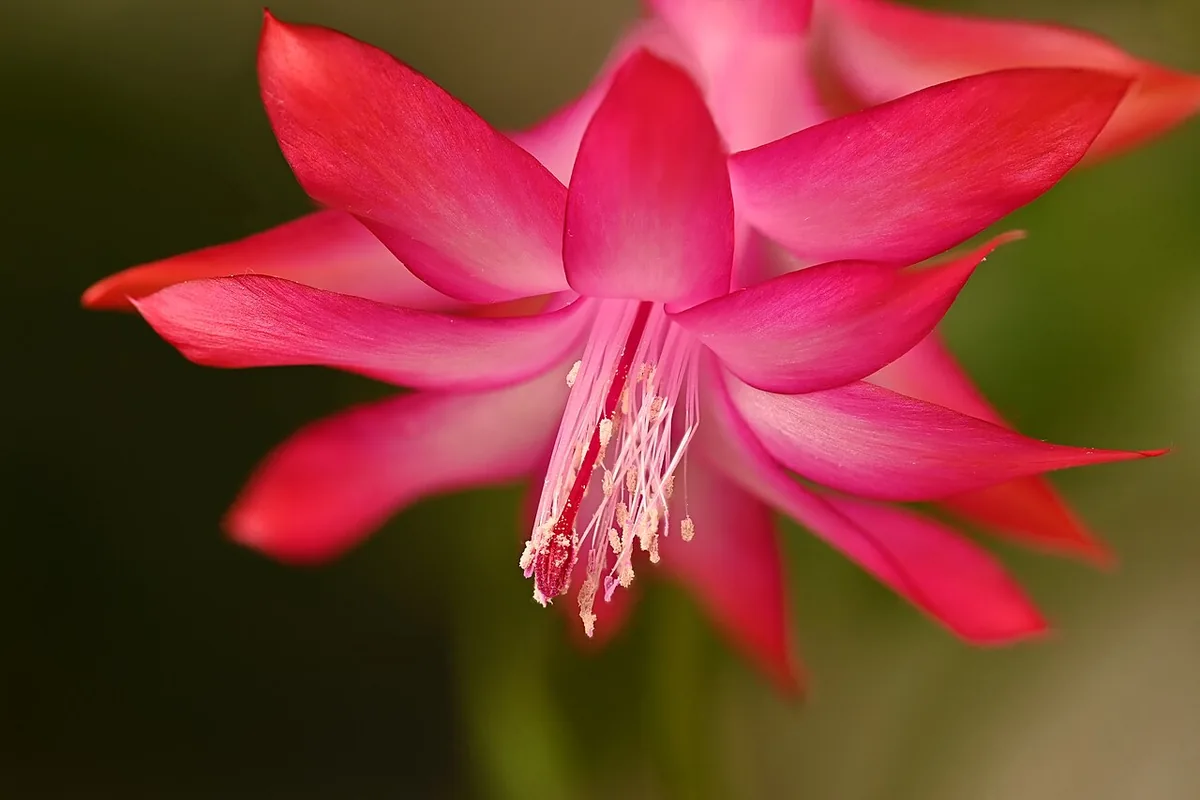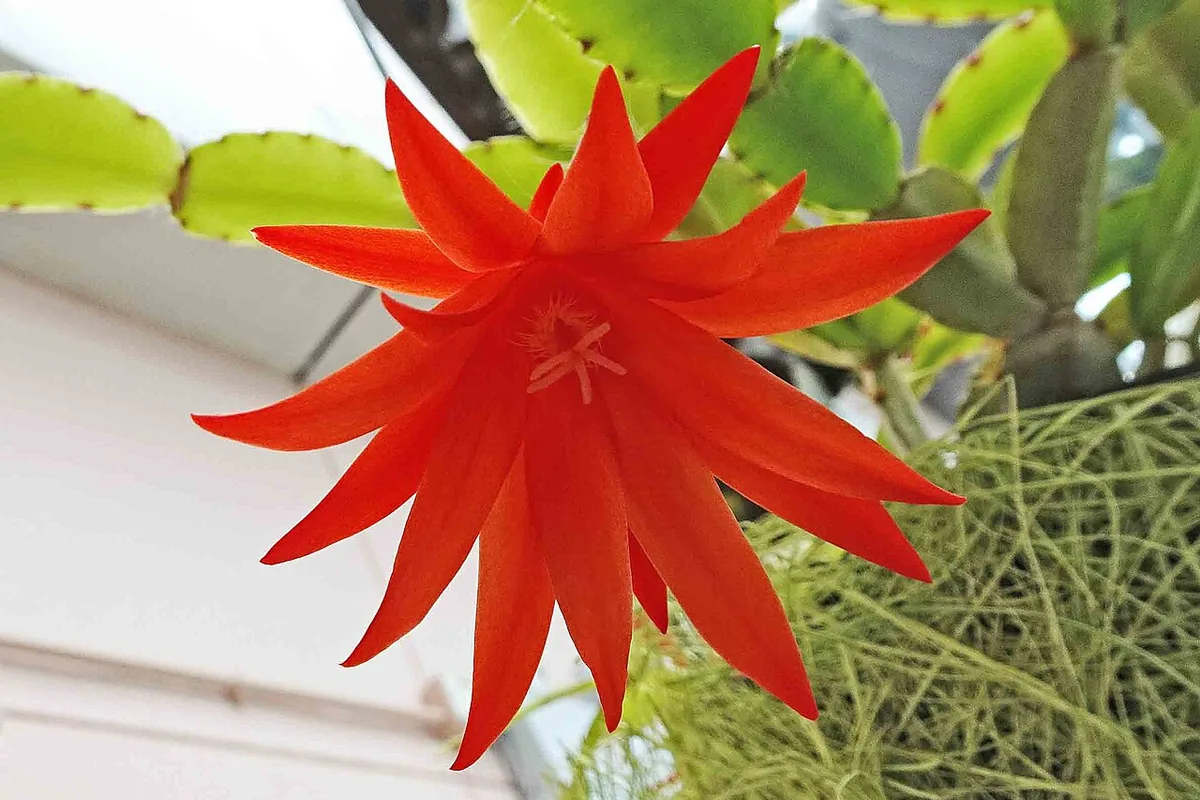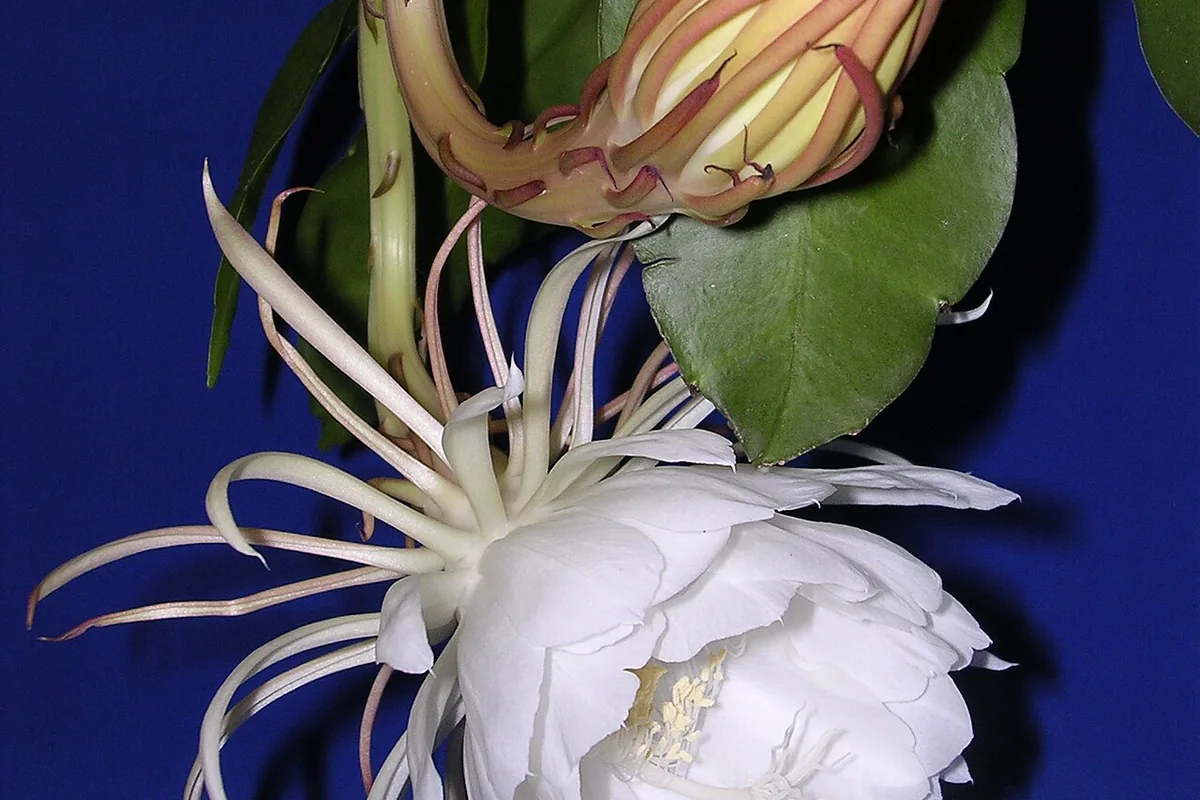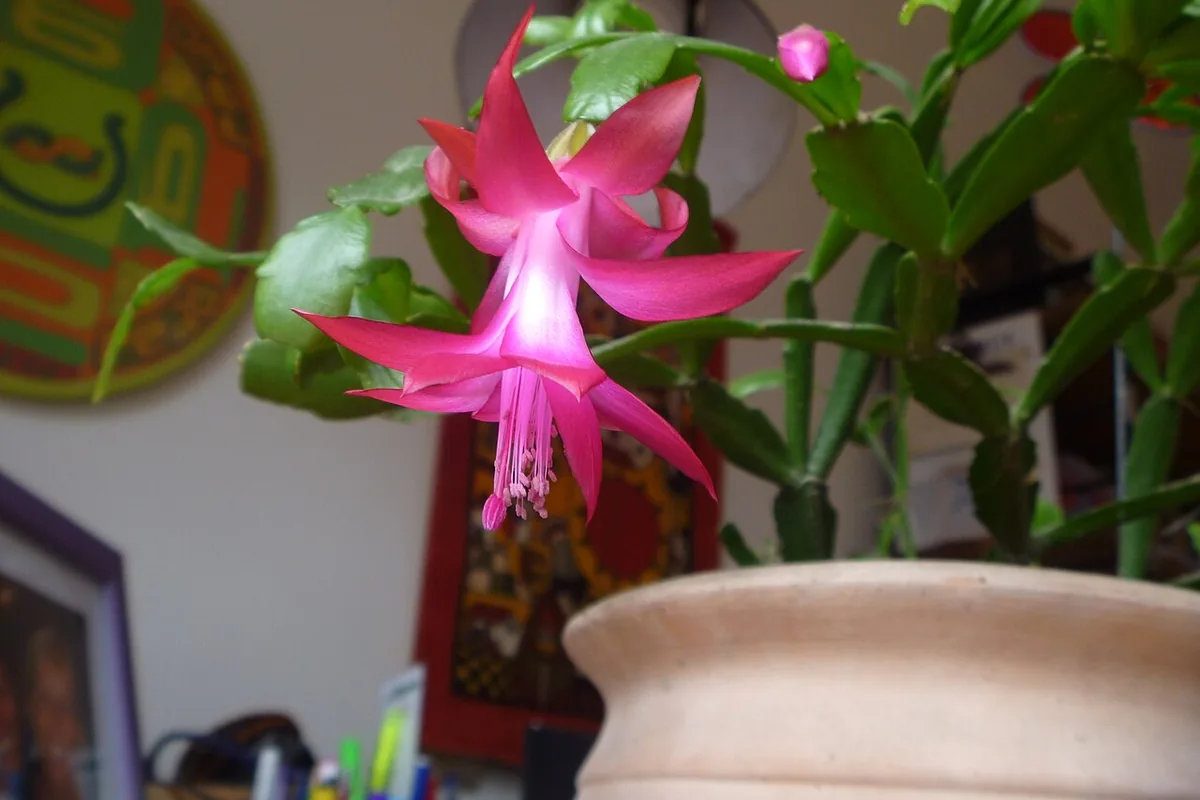
Christmas Cactus Species brings rounded edged flattened stem segments and hanging flowers with a more symmetrical shape to a container collection. The botanical name is Schlumbergera russelliana, and keeping that name attached to the pot helps distinguish this plant from other flowers sold under a similar common label. Plan for the living structure as well as the flowers, with space to see its natural outline and reach the roots for watering. This is a plant to understand through its individual growth habit rather than through the assumption that every succulent belongs on a dry desert windowsill. An airy root environment can coexist with fairly regular moisture. Give the stems their natural hanging, arching or climbing space and choose a pot that can be reached for inspection. A fixed label is helpful because related flowering plants often look similar when they are not carrying buds.
Choose bright filtered light rather than a burning south facing summer pane for christmas cactus species. This preference is the starting point for the growing position, rather than a promise that every bright looking part of the home will behave alike. A place that is bright enough for flowering can still need protection from the most intense direct exposure. Look at how much sky the stems can see, especially if the basket hangs high above the window. A room may feel sunny at floor level while the upper plant is shaded by a curtain or shelf. Introduce brighter conditions gradually and use firm new growth as the more useful measure of a position.
For Schlumbergera russelliana, the practical watering principle is to water when the upper layer begins to dry while keeping the epiphytic roots aerated. The important distinction is the condition of the occupied root ball, not whether the pot happens to stand indoors or outside on a particular day. The coarse root medium must receive water as well as air. Check below its upper surface, since loose bark may look dry while finer material underneath remains wet. Wet the occupied root ball evenly and let excess leave the container. Do not leave the basket inside an undrained decorative sleeve. A smaller root system, a cold night or a darker season can all extend the time before the next drink is needed.
Use a loose organic bark based mix without a wet compact lower layer when potting christmas cactus species. The stem and root arrangement deserves as much attention as the decorative colour of the container. The aim is a resilient open structure around relatively accessible roots, not a permanently empty dry basket. Repot only when the roots and deteriorating medium give a reason to do so. Support long stems before lifting the plant, and avoid sharply bending joined or fleshy sections. Keep the existing planting depth. A modest pot with suitable structure is easier to manage than a large container filled with fine water holding material.
The flowering behaviour of christmas cactus species is worth watching closely: cooler conditions and appropriate autumn day length help establish its seasonal flower cycle. Expectations should be based on this plant and the selected cultivated form, rather than a photograph of an unrelated species carrying its peak display. Follow the development of the flowering structure before changing the routine. A swelling bud is different from a new shoot, and both can appear on established stems. Keep light and moisture reasonably steady during expansion. Feed lightly while the plant is actively making growth, accounting for any fertilizer already included in the medium. Removing mature stems merely to obtain a tidier shape may postpone the flowers that those stems could otherwise support.
For routine shaping, preserve the terminal segments carrying buds and prune for shape after flowering. That timing and method belong to the way Schlumbergera russelliana builds its flower bearing growth. Start by identifying old damage, useful mature stems and genuinely exhausted flowering material. A plant trained around a hoop needs a different approach from one spilling freely from a basket. Keep enough intact foliage or stem surface to support recovery. Shorten selectively instead of cutting every branch to the same length, and make the changes when the plant can grow afterward. Never assume that a persistent flowering spur is disposable simply because an individual flower has faded.
When the season changes, keep bright frost free and stable during bud expansion. The seasonal routine for christmas cactus species therefore needs a review of its actual growth, rather than an automatic continuation of the busiest summer watering pattern. Seasonal conditions influence flowering, but these plants are not all programmed by the same month or temperature. Notice when the specimen actually slows and when buds appear. A cooler room usually calls for less frequent watering, while a warm actively growing plant still requires observation. Keep it away from freezing glass and hot dry heating vents. Once buds are expanding, a settled position is generally easier to manage than repeated moves for display.
To raise another christmas cactus species plant, root suitable joined stem segments. The best route depends on the material that this species can provide and whether preserving a selected cultivated form matters. Take propagation material from an established plant with firm growth, leaving enough useful stems on the parent. Keep the material labelled and use a small clean container with an airy medium. Rooting requires moisture without a stagnant saturated base, and a new plant should be moved into stronger light gradually. Do not judge success by a cutting that merely stays green for a few days. Wait for roots and sustained new growth before treating it like an established flowering specimen.
One particularly useful point when keeping Schlumbergera russelliana is that the species is one parent of familiar Christmas cactus hybrids and is not identical to every holiday cactus sold in shops. Start the next inspection with that detail in mind and compare the affected area with the rest of the plant. Look beneath hanging stems and along the joins where a quick glance from above can miss a problem. A loose stem section, a changing bud and a soft dark root collar call for different responses. Review the actual moisture and temperature before adding more water. Keep new purchases separate during their first inspections, and remove dead debris without tearing living stems. Several small observations usually explain more than a wholesale change of pot, food and position on the same day.