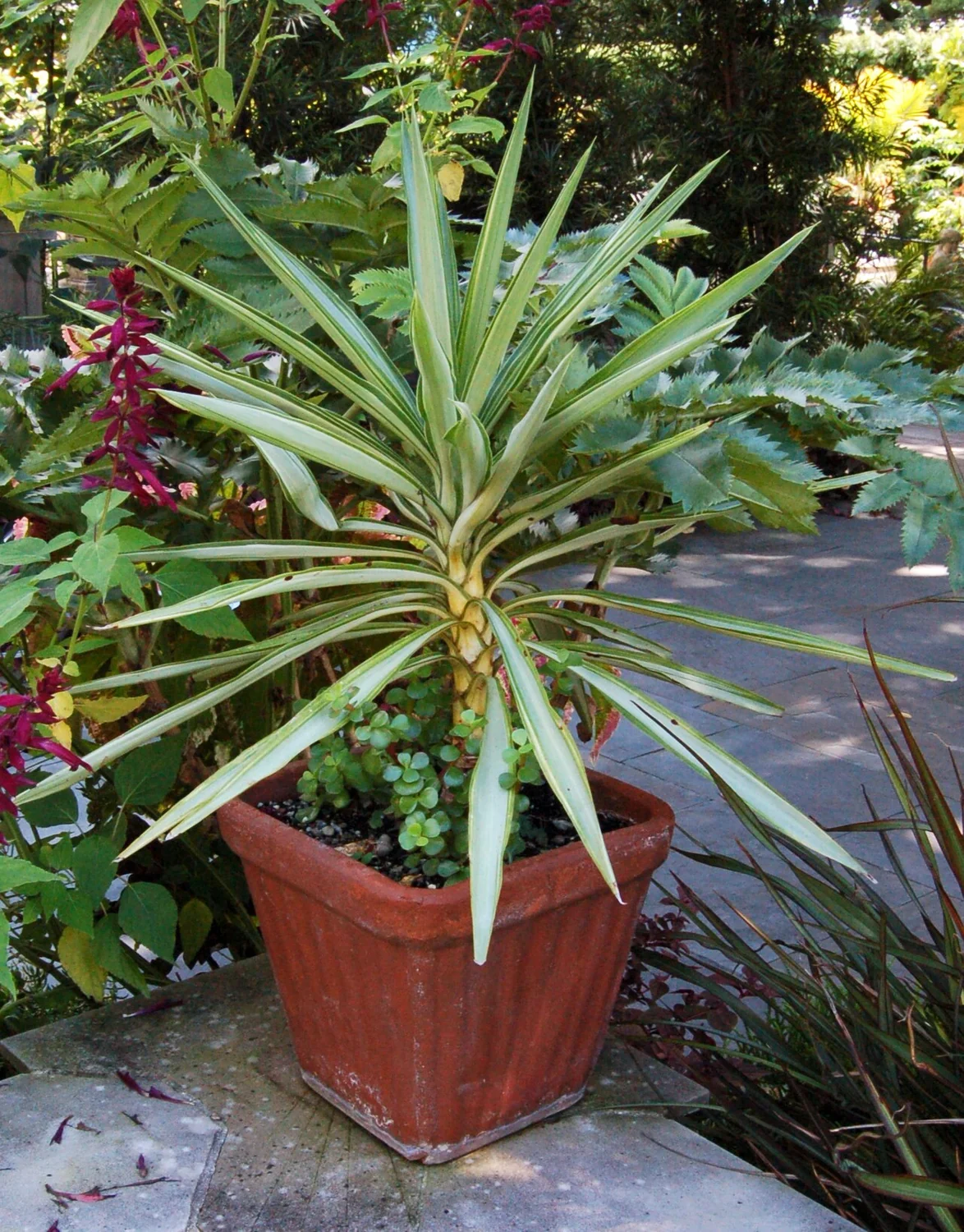
The Identity behind a Cut-Cane Yucca
Spineless yucca brings a bold combination of thick canes and stiff green rosettes to an interior. Yucca gigantea is also widely sold as Yucca elephantipes, so retaining both names helps when comparing nursery labels and older references. Its common name distinguishes it from more aggressively sharp yuccas, but the leaves are still firm and pointed enough to require sensible placement. A young display may contain cut canes of several heights with new crowns near their tops. It is an architectural succulent tree rather than a palm, and its care should not be copied from a moisture-loving indoor forest palm beside it.
The species is native to Central America and can become a substantial outdoor tree in a suitable warm climate. Its thickened trunk explains the elephant-foot association in the older name. Indoor plants usually remain smaller, but that reflects container conditions and management rather than a guarantee of permanent dwarf growth. Nursery canes may have different root systems and growth rates even when they look like one harmonious arrangement. Inspect the base and ask how the pot has been assembled. A convincing long-term display depends on rooted living material, not only the initial visual balance between several cut trunks and their crowns.
Sunlight and Drying without Neglect
Sunlight is a central requirement. Choose a bright window, conservatory, or another position with substantial natural light. An ordinary dim office corner is unlikely to maintain a compact, robust crown indefinitely. A plant raised under shade should be introduced to stronger sun in stages, since existing leaves can scorch after an abrupt move. Judge new growth for its strength and spacing. Leaves that become weak and stretched toward the window indicate a placement problem that extra fertilizer cannot solve. Check the temperature of a dark pot in strong sunshine and allow ventilation without exposing a warm-grown plant to cold drafts.
Let a useful portion of the upper root medium dry before watering thoroughly. The plant's thick canes and drought tolerance make constant small additions unnecessary, particularly during a cool or low-light period. However, a pot that has dried into a shrunken, water-repellent core still needs careful rehydration when watering is due. Check that the occupied root ball takes up water rather than letting every application run down the sides. Surplus should leave the container and be removed from the outer planter. A yucca standing in hidden stagnant water can deteriorate at the roots while its leaves remain deceptively firm for a while.
Root Volume, Pruning, and Stiff Leaves
Use an open, mineral-rich container medium with excellent drainage. The exact proportions depend on the available ingredients and climate, but dense outdoor soil is a poor choice for a sheltered pot. Match the container to the roots and avoid a large leap into unused damp volume. A heavy, stable cover can support a tall display without requiring all that space to be filled with compost. Keep the cane bases at their established level. During repotting, examine any soft or unstable piece carefully instead of hiding it beneath a thicker layer of medium and assuming physical support will correct a biological problem.
Height management is possible because sound yucca canes may produce new shoots after pruning. That does not make a drastic cut a trivial operation. Choose a suitable growing period with enough light for recovery, retain useful foliage where practical, and use clean tools. New crowns may appear below a cut rather than at the exact positions imagined beforehand. Removed sound tops can sometimes be propagated, but a cutting needs time and appropriate conditions to establish roots. If the plant only occasionally brushes a nearby object, moving that object may be a simpler and less demanding solution than repeatedly cutting the tree.
Stiff Leaf Handling and Diagnosis at the Cane Base
Cleaning should respect the stiffness of the leaves. Support a blade with one hand and wipe gently with the other, keeping pointed tips away from the face and eyes. Completely dead lower leaves can be removed carefully, while a little exposed cane is a normal part of the plant's development. Do not cut every leaf into a blunt shortened shape to fit a small room. The resulting damaged margins remain and the rosette loses its natural structure. Space planning should allow the crown to retain its characteristic length. The word spineless is a relative botanical description, not a promise that careless handling cannot cause a scratch.
Feed modestly during active growth according to an appropriate product label. A yucca in bright summer conditions and one resting in a cool winter room should not receive identical inputs. Investigate pale or collapsing new growth through light, roots, and moisture before adding a stronger dose. Check for scale and mealybugs among protected leaf bases, especially when introducing a nursery purchase into a collection. If the cane base becomes soft, root and stem problems need attention rather than cosmetic pruning alone. Keeping a simple record of watering and exposure changes can prevent several people from making conflicting corrections to the same pot.
A Sunny-Space Gift with a Clear Footprint
Spineless yucca can be an appropriate gift for a recipient with a sunny home or bright workspace who prefers a bold form and measured watering. The sturdy cane and outward rosette may personally suggest resolve or a fresh start, but the plant should not be assigned invented traditional promises of strength or success. Yucca can be harmful to pets if chewed, and the stiff leaves also matter in a home with children. Discuss the intended location before supplying a tall specimen. A manageable labelled plant with a sound root system is a more useful gift than an oversized cane arrangement chosen only for immediate drama.
The best display develops from adequate light and a drying rhythm suited to the container. Keep drainage reachable, protect the crowns during moves, and allow the lower canes to remain visible as leaves age. If one cane fails while others grow, examine its separate rooting and stem condition instead of treating the entire arrangement as one uniform organism. Plan pruning only when it serves a clear long-term purpose. Yucca gigantea can provide a durable indoor-tree silhouette, but that durability comes from respecting its sunny, well-drained character rather than assuming a thick trunk can withstand any combination of darkness and water.