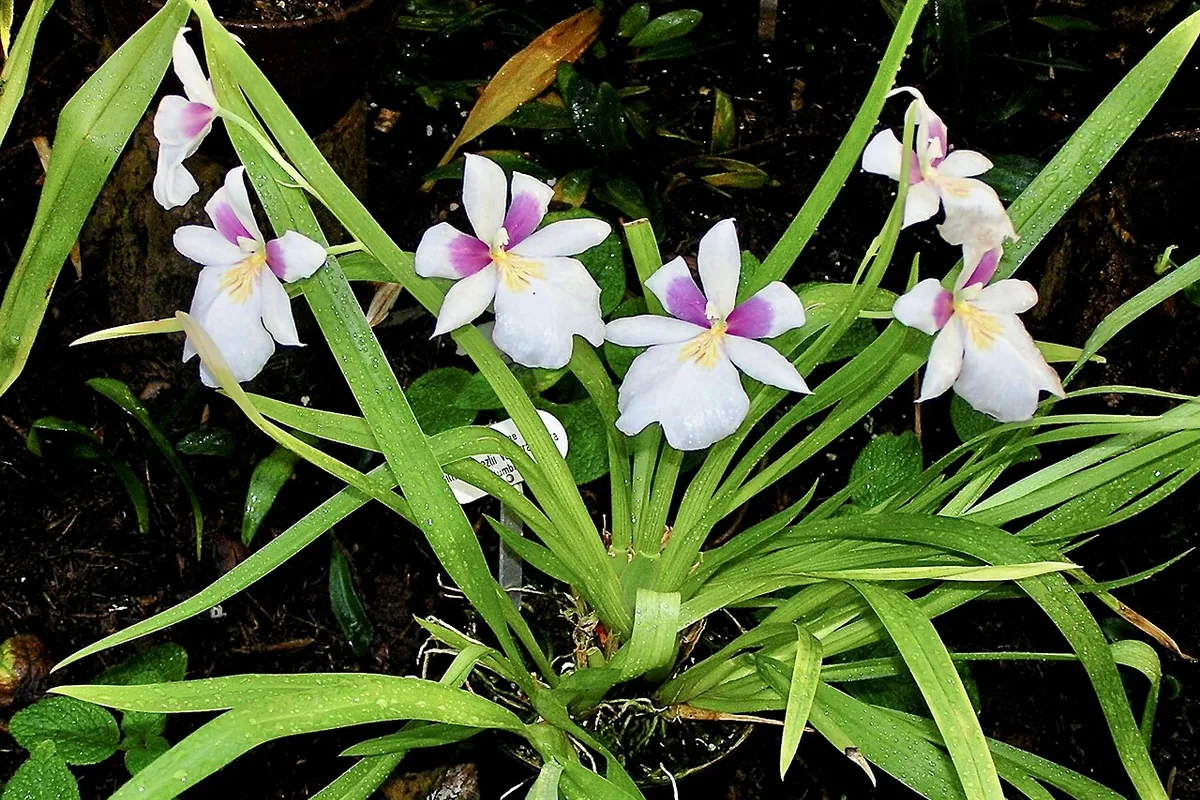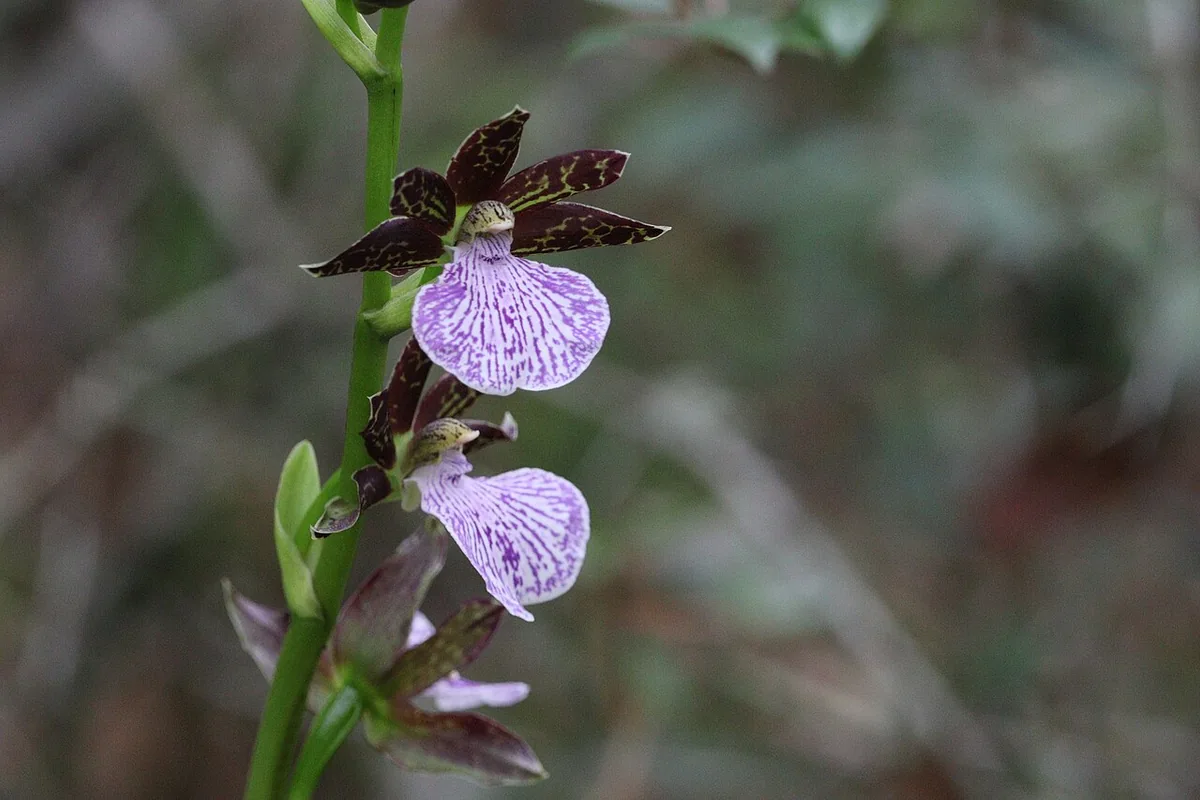
Before placing Spotted Zygopetalum in its final pot, take a close look at green flowers marked brown and a broad white lip patterned purple above pleated leaves. These features help identify Zygopetalum maculatum and explain why its care cannot simply be borrowed from any flowering plant nearby. A useful container plan includes room for leaves and roots after the first flowers fade. For this plant, that means matching ventilation and seasonal temperature to the particular orchid rather than its flower color. Keep the root tips and developing pseudobulb accessible, choose a position you can reach when watering, and retain the nursery identification. The aim is a plant that can complete its own growth cycle rather than a brief arrangement maintained only until the petals fall. Its next season begins with the condition of the present growth.
Bright filtered light and intermediate temperatures suit a sheltered growing space. Judge that position over a complete day rather than during one bright moment. Glass, a balcony above the pot, a deep shelf, and a nearby building can each change the light that actually reaches the leaves. If the plant arrives from sheltered nursery conditions, introduce any stronger exposure in stages. Watch new growth for a practical response and avoid moving the container to several different places in the same week. A flower displayed temporarily indoors may need to return to its growing position afterward. Keep the container clear of a hot radiator and remember that strong light and overheated roots are separate conditions.
Supply steady moisture while new leaves and pseudobulbs develop, without keeping old mix sodden. Learn the difference between a recently soaked pot and one approaching its appropriate watering point. This is particularly useful when a purchased plant contains a compact nursery plug surrounded by a different newer mix. Check both areas gently rather than watering only the loose surface. Let surplus escape, and remove a saucer of collected water before returning the display to its place. Avoid using a wilted leaf as the only signal because damaged wet roots can also leave foliage short of water. The condition of the root tips and developing pseudobulb, recent growth, and moisture together tell a clearer story than one symptom considered alone.
An airy bark based potting mix with moisture retention suits the active fine roots. A handsome container still needs room for roots, working drainage, and enough stability for the top growth. Make a change because roots or declining medium require it, rather than automatically moving every new purchase into a much larger pot. Where possible, time disruptive work to the start of active root growth. Preserve sound roots and avoid packing the new medium so tightly that water cannot move through it. Keep the root tips and developing pseudobulb at the correct level and clear of unnecessary wet covering. Afterward, inspect how the pot dries in its real growing position before returning to any previous watering routine.
The strongly patterned lip and often noticeable scent are the main close viewing features. Choose a viewing position that leaves room for the stem to develop naturally rather than pressing it against glass or a wall. Do not rotate or relocate a tightly budded specimen repeatedly merely to rearrange the display. If feeding is appropriate during active growth, follow a suitable product label and take account of nutrients already included in fresh medium. Extra fertilizer cannot replace missing light or sound roots. Remove spent floral material carefully when it releases or can be clipped without injuring leaves. Preserve the newest leaf growth and supporting storage organs, because the attractive open flowers represent only one part of the plant continuing work.
Maintain active growth after flowering and avoid an unnecessary complete dry dormancy. Read that rhythm through current growth rather than expecting every plant sold in flower to remain continuously in bloom. Keep the label with the container, especially when visible leaves disappear or a neighboring display is rearranged. Seasonal protection should consider roots and stored growth as well as the exposed top. Small pots dry and chill faster than plants in the ground, and a sheltered wall can be warmer than an open balcony. Make changes gradually where possible and note the response. The useful question is whether the plant is completing its own growth cycle with firm living tissue.
Separate large divisions at new root emergence while retaining several mature pseudobulbs. Timing matters more than the number of new pots produced. Work when the plant has enough stored resources and conditions allow fresh roots to establish, using clean equipment and an appropriate small medium. A generous rooted division usually makes a more dependable start than many weak fragments. Keep new plants identifiable and separate from the main display while their water use is still changing. Avoid immediately subjecting them to the strongest light that the mature parent can tolerate. Wait for a clear sign of new root or shoot growth before assuming establishment and returning to the full routine.
Water left on tender new leaves during cold stagnant conditions can leave lasting blemishes. Inspect the undersides of leaves, concealed stem bases, and the rim of the pot during ordinary watering so small changes are noticed early. Compare a suspect area with new growth before deciding that every mark requires treatment. If pests are present, separate the affected container and identify the problem before choosing a suitable response. Remove decaying loose debris without damaging living tissue. Keep a brief record of any major change in position or watering. With Spotted Zygopetalum, observation of the newest leaf growth and supporting storage organs provides a better long term guide than repeatedly trying a new intervention whenever one flower fades.