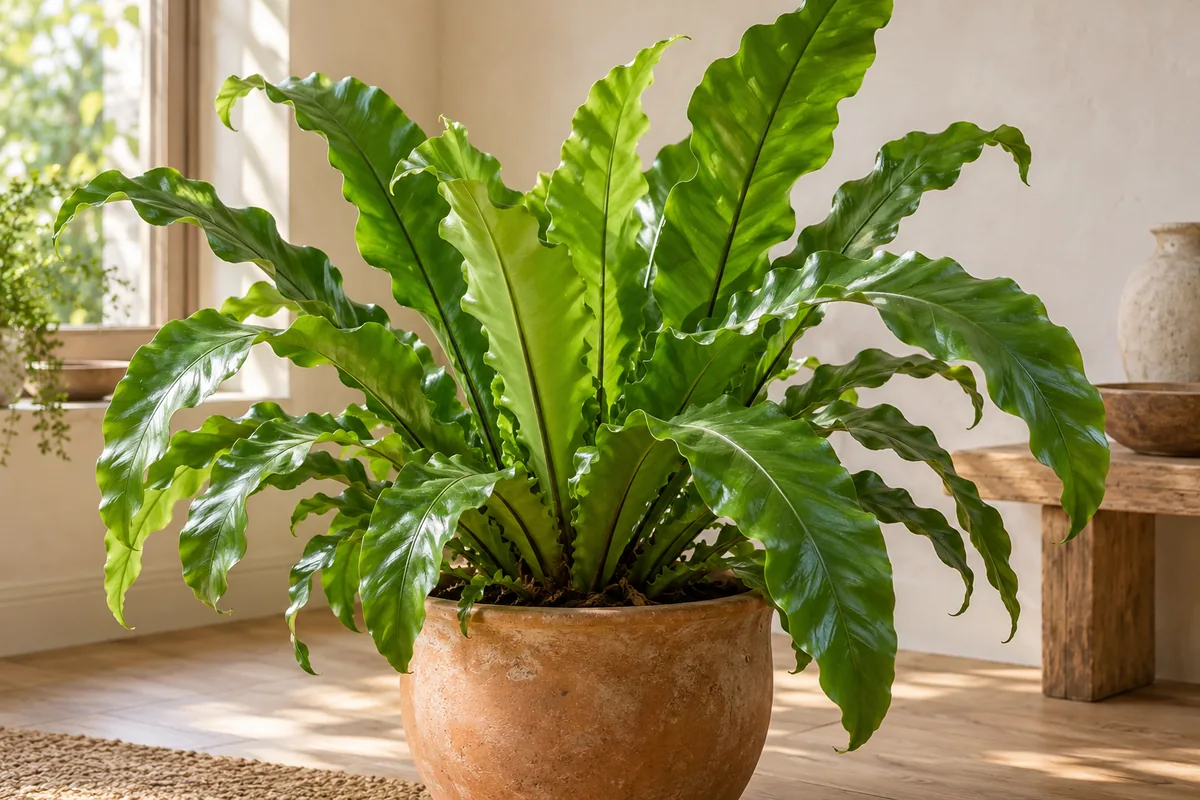
The center of a bird nest fern invites a closer look. New fronds rise from that tight brown growing point and gradually open into broad green blades. It is also the part of the plant best left undisturbed. Pulling at a curled frond or pouring water into the middle can create trouble where every future leaf begins. Care becomes easier when the crown stays clear and watering is directed to the mix around it. Set the pot somewhere bright enough for growth and close enough to inspect. The simple arrangement of the leaves makes careful observation more useful than frequent handling or a complicated routine.
Asplenium nidus grows well with bright indirect light and shelter from harsh sun. A position near an east window or behind a light curtain is often suitable, depending on the actual exposure. Strong afternoon sun can leave pale dry areas on broad fronds. A dim shelf may slow the plant enough that the mix stays wet for too long. Check the light reaching the central rosette, not only the tips extending into the room. Keep the fern away from cold drafts and heated airflow. The soft broad leaves are easily marked when pressed against glass or repeatedly brushed by curtains, so give them room to expand.
Keep the root zone lightly and consistently moist, allowing the surface to begin drying before the next thorough watering. Avoid letting the entire root ball become crisp and shrunken. Direct water around the edge of the pot and through the mix rather than into the central crown. Allow excess water to drain and empty the saucer or outer planter. A small nursery pot concealed inside a much larger container can be difficult to check, so lift it out when practical. If the pot remains heavy for a long time, examine drainage and the texture of the mix before adding another drink.
An open moisture retaining mix suits the fern's roots better than dense garden soil. Coarse bark and other suitable ingredients can provide structure while the finer component holds a gentle supply of moisture. The container needs drainage holes and does not need to be much larger than the existing root system. Repot when roots have filled the available space or the old mix has deteriorated. Keep the crown above the surface at its previous depth. Packing new material into the center or burying the bases of the fronds can leave the growing point damp. Settle the mix carefully around the roots without compressing it into a hard mass.
Bird nest fern appreciates a room with some humidity, particularly when indoor heating makes the air dry. A properly maintained humidifier can help in a suitable space. Misting offers only a short lived change and may leave water sitting in the crown if used carelessly. A bright bathroom can be a good location if it remains reasonably warm and the fronds receive real daylight. Avoid choosing a room solely because it feels damp. Light, temperature, and access still matter. Provide gentle air movement around the leaves and keep the pot away from surfaces where persistent moisture could collect.
Do not try to uncurl a new frond. It opens gradually, and a crease caused while the tissue is tender usually remains visible after expansion. Older fronds may carry long brown spore lines on their undersides. An orderly pattern of those structures is a normal fern feature and does not need to be scrubbed away. Remove a fully old dry frond close to its base with a clean tool, avoiding the center of the rosette. Damaged tips can be left in place if the rest of the blade remains green. Keeping useful foliage helps the plant support its next set of growth.
Feed modestly while the fern is actively producing fronds, following the chosen fertilizer directions and considering any nutrients already included in fresh mix. Heavy applications can contribute to mineral buildup around sensitive roots. If deposits appear on the surface or pot rim, review fertilizer strength and water quality before adding more. Flush a freely draining container when appropriate, directing water away from the crown and allowing full drainage. Brown edges can reflect dry air, uneven moisture, or accumulated salts. Look at the recent conditions together instead of assuming that every mark requires the same adjustment or a stronger feed.
New fronds are the most useful record of how the arrangement is working. Look for clean expansion, reasonable firmness, and a crown that remains open and dry between watering sessions. If growth pauses during dim weather, reduce unnecessary disturbance and continue checking moisture. A bird nest fern does not produce the little hanging plantlets seen on some other houseplants, so avoid pulling pieces from its center in an attempt to divide it casually. Its broad rosette is the display. A clear growing point, a gently moist root ball, and soft daylight allow that shape to develop with fewer marks and less intervention.