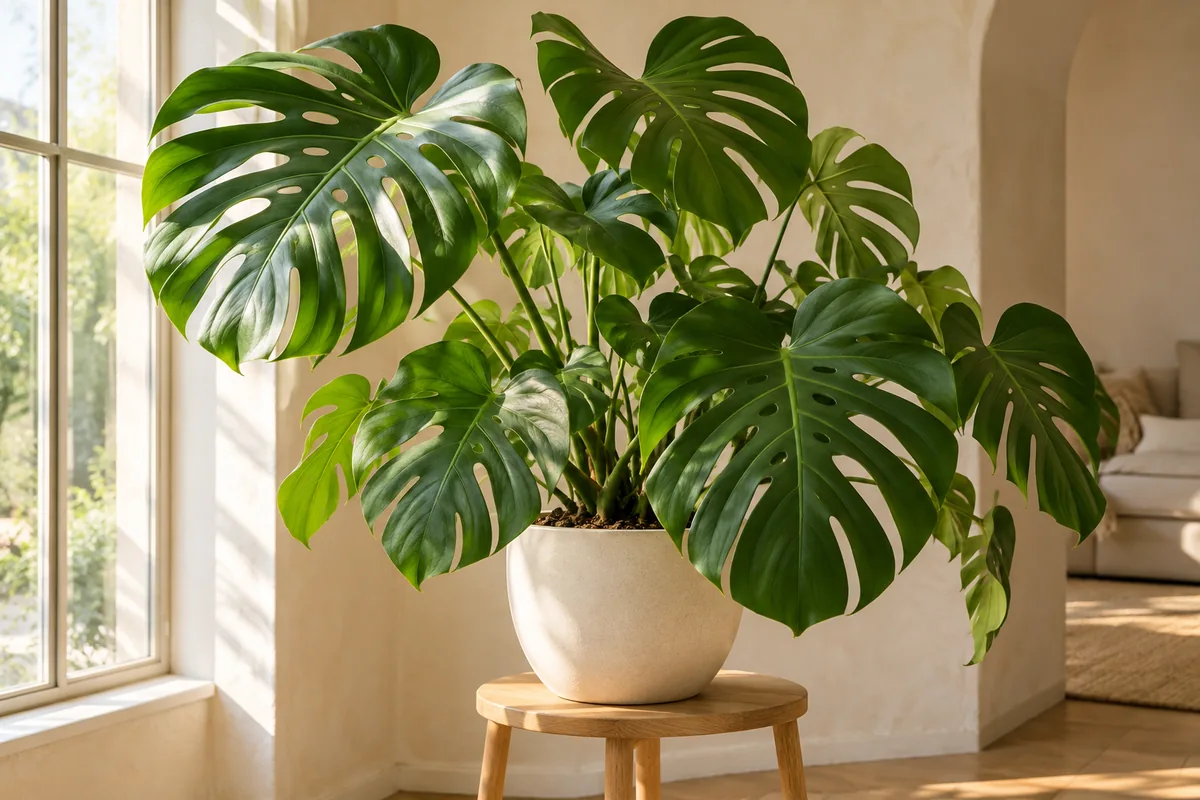
A monstera can look perfectly settled beside a sofa and still be looking for somewhere to climb. Its long stems belong to a climbing plant, and that habit explains much of what happens as a small specimen becomes a large one. Leaves lean toward a window, aerial roots emerge from the stem, and the whole plant gradually occupies more floor space than its pot suggests. Planning for that shape early makes care easier. Choose a position with useful daylight and enough clearance for the next few leaves, then give the main stem a dependable support before it starts pulling the pot sideways.
Bright filtered daylight suits most indoor monsteras. A position close to an east window often provides a useful starting point, provided the glass is not shaded by a deep porch or another building. Strong afternoon sun can leave pale patches on leaves that developed in a dim room. Introduce brighter conditions gradually, watching the newest growth rather than expecting old leaves to change. A room can seem bright to someone standing in it while the plant receives relatively little light several feet from the window. Move the pot closer in small increments and leave enough space between foliage and cold window glass.
Water after the upper portion of the potting mix has dried, checking below the surface with a finger or wooden probe. The exact interval changes with pot size, light, room temperature, and the amount of foliage. A heavy pot that remains damp does not need another drink because a particular day has arrived. When water is needed, apply it across the surface until some drains from the bottom, then empty the saucer or outer container. A small splash near the stem leaves other roots dry. Repeated soaking without a drying interval can leave the lower root zone wet for much too long.
An open potting mix helps water move through the root ball without leaving it airless. A houseplant mix amended with coarse bark and a porous mineral ingredient can work well, with the proportions adjusted to the room and watering habits. The container needs drainage holes that remain unobstructed. Choose a new pot only modestly wider than the existing root ball when roots have occupied most of the available space. A very large container holds a substantial volume of damp material beyond the reach of young roots. Keep the original planting depth and settle the mix gently rather than pressing it into a dense mass.
Place a sturdy pole or trellis behind the climbing stem and fasten the stem loosely with soft ties. Each leaf stalk needs freedom to move; do not tie individual leaf stalks tightly against the support. A moist moss pole can encourage aerial roots to attach, though it introduces another watering task. A wooden plank or simple trellis offers support without needing to remain damp. Guide aerial roots toward the support or into the pot when practical. They do not need to be removed simply because they are visible. Check attachments as the stem thickens and adjust any tie that begins leaving a mark.
Large leaves collect dust, especially near busy rooms and open windows. Support each leaf from underneath and wipe it with a soft damp cloth, including the area beside the central vein. Plain water is sufficient for routine cleaning. Oils and glossy coatings are unnecessary and can leave an uneven film. An unfolding leaf is delicate, so allow it to open by itself rather than pulling apart the rolled edges. Splits and holes develop according to maturity, light, and the particular plant. A young monstera with solid leaves is not automatically missing a special feed or a complicated treatment.
Feed lightly during periods of active growth, following the instructions for the chosen houseplant fertilizer and using the lower end of its suggested rate when growth is modest. Fresh potting mix may already contain nutrients, so check the bag before adding more. Brown tips, a white crust on the surface, or persistently damp roots deserve an inspection of watering and accumulated salts before additional feeding. Older leaves occasionally yellow as the plant grows. Several leaves changing at once calls for a closer look at the root zone, recent moves, and the amount of usable daylight reaching the foliage.
Keep the plant manageable by watching the main stem instead of judging only its tallest leaf. If the stem reaches beyond its support, extend the support or plan a spring pruning session while growth is underway. A stem cutting needs a node to produce a new plant; a detached leaf alone cannot replace that growing point. Make major changes separately so their effects remain easy to read. A photograph taken from the same position every few weeks can show whether leaf size and spacing are improving. A supported stem, a dependable drying interval, and a bright position create a much steadier growing arrangement. Keep the support within reach so ties and aerial roots can be inspected without repeatedly shifting the heavy container.