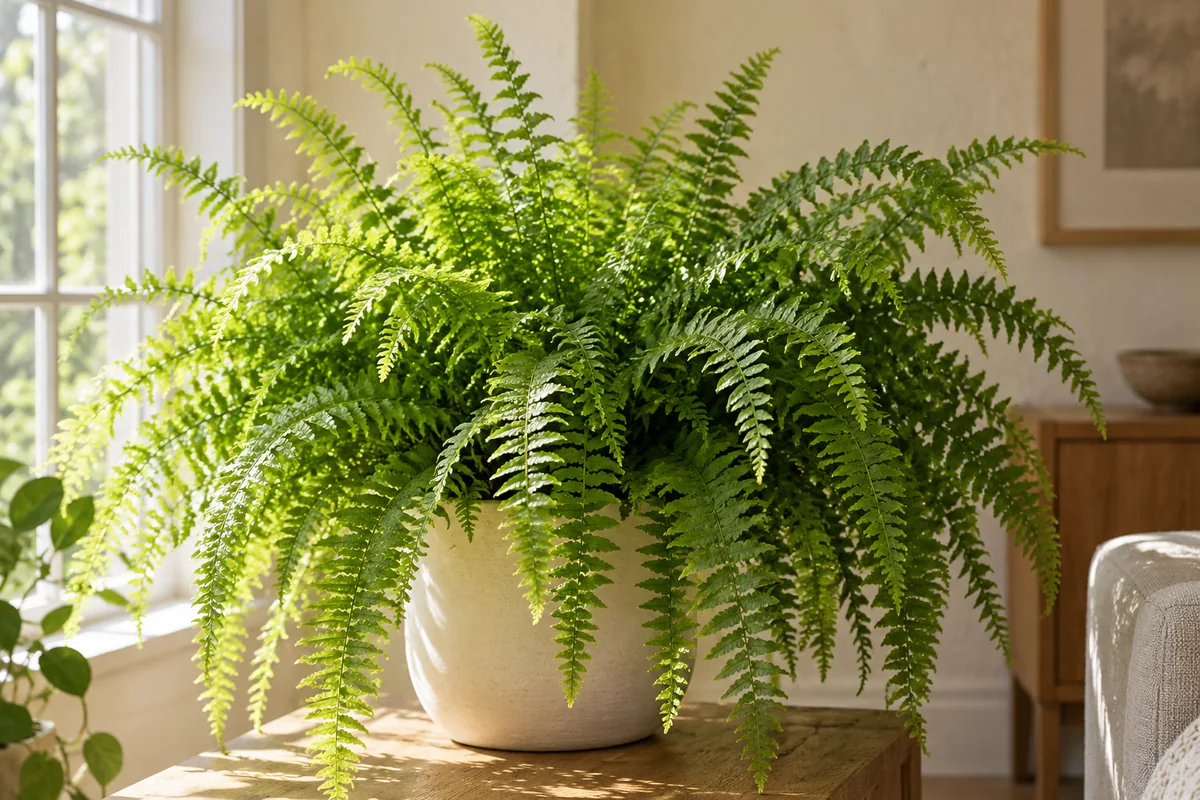
The outside of a Boston fern can look airy even when its pot contains a tight mass of roots and growing points. Division is useful once that crowded base makes watering difficult or the plant has become too large for its position. It also produces new plants from established parts of the clump. The aim is to preserve useful rooted portions, not to reduce every frond to a separate pot. Look for several areas of fresh growth before beginning. A small fern with a weak center is better given time to grow. Start during an active period when you can provide consistent moisture and a sheltered position afterward.
Water the fern in advance if its root ball is dry, then let the excess drain. Fine fern roots are easier to handle when they are pliable, and dry mix can fall away abruptly from a lifted clump. Prepare small draining pots and a fresh mix that holds moisture without becoming dense. A workspace covered by a tray keeps loose root material contained and gives the fronds room to lie naturally. Set out clean tools before lifting the plant. If long fronds obscure the base, move them aside gently rather than trimming the whole canopy. The divisions need retained foliage as well as roots to resume normal growth.
Slide the root ball out by loosening the container and supporting the base. A pot filled with roots may need patient work around its sides. Do not yank the fern upward by a handful of fronds. Examine the root ball for natural groups of growth and any smaller rooted plantlets connected by runners. Those plantlets can sometimes be separated more easily than a large central clump. Decide how many useful sections the existing structure can support. Two or three substantial portions often make better plants than many thin pieces. Keep the roots covered with a lightly damp cloth if the inspection takes time in a dry room.
Separate the clump along natural gaps where possible. A dense mature root ball may require a clean sharp blade to divide it, making sure every section retains growing points and a generous root portion. Avoid cuts that leave a wedge of roots with no active crown. Remove only fronds that are already spent or badly damaged, rather than cutting all foliage back as a routine step. Shake away loose old mix gently and leave sound fine roots attached. The irregular shape of a divided root ball is not a problem. Preserving living structures matters more than creating tidy identical pieces that fit a photograph or match the same pot exactly.
Place each division in a prepared pot at approximately its original depth. Set the growing points near the surface and fill around the root portion with fresh mix. Use your fingers to settle the material gently into spaces without pressing hard enough to close its air gaps. Water slowly so the mix becomes evenly moist, then let the pot drain completely. A newly divided fern should not sit in a deep pool inside a decorative cover. If the roots are still very dense, check that water is actually entering the center rather than running only around the edge. Adjust the watering pace to wet the root ball thoroughly without leaving the surrounding mix saturated.
Give the new plants bright indirect light in a position protected from hot sun, cold drafts, and direct airflow from heating or cooling equipment. Boston fern divisions can lose moisture quickly through a large canopy, so inspect the mix frequently during the first days. Keep it evenly moist rather than alternating between severe dryness and soaking. A suitable room environment helps more than repeated brief misting. If you use a temporary clear cover, leave space around the fronds and ventilate it regularly. Watch for condensation that remains heavy and surfaces that never dry. The purpose is to reduce sudden moisture loss, not to create a sealed wet container.
Some older fronds may decline after division. Remove them individually once they are no longer useful, cutting near the base without damaging new growth. Fresh fronds emerging from the growing points are a more meaningful sign of establishment than the appearance of the oldest tips. Hold back on feeding until the divisions have settled and begun growing consistently. A large dose of fertilizer cannot replace roots lost during handling. Compare the pots as they dry, since divisions with different root volumes may need water at different times. If one remains wet and limp, inspect drainage and the condition of its base before assuming every fern needs more moisture.
Allow the divisions to occupy their present pots before moving them again. A fern does not need a large container to regain its full shape; it needs a workable match between roots, mix, moisture, and light. Once fresh growth is steady, return to the ordinary routine suited to your room and the plant. Note how many growing points each division retained and whether the center or an outer portion recovered more easily. That observation will make the next division less uncertain. A crowded fern can become several manageable plants over time, provided the separation follows its structure and the recovery period is allowed to proceed without repeated disturbance.