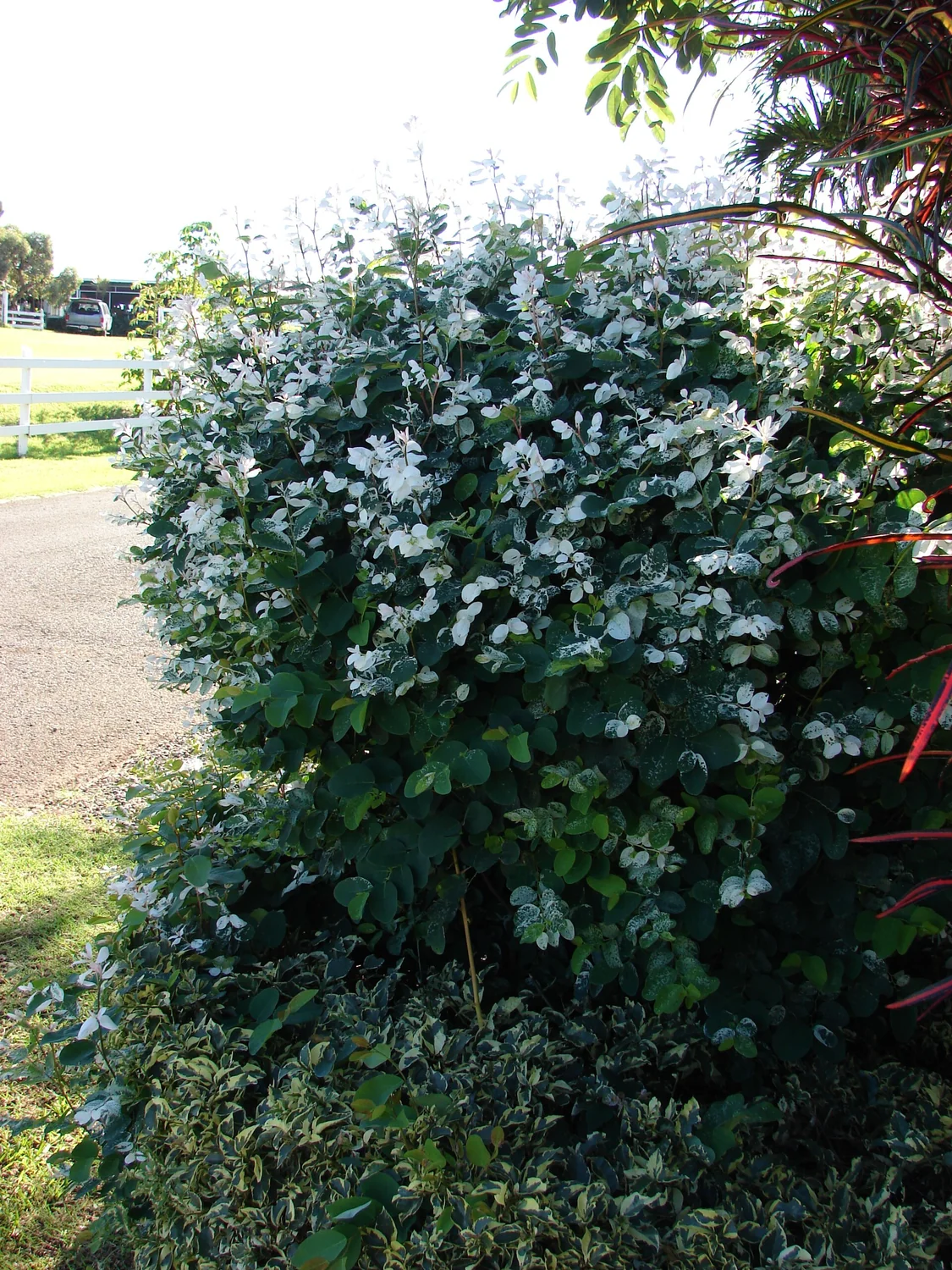
Snow coloured leaves on fine woody branches
Snowbush earns its name from the pale mottling of its leaves, rather than from any ability to tolerate snow. The plant long sold as Breynia disticha is now listed by North Carolina Extension as Phyllanthus nivosus, with the older name retained as a synonym. Those names should accompany each other on a useful label. In warm bright conditions, a well grown specimen can form a delicate woody shrub or small trained tree. Its fine branches and green, cream and sometimes pink foliage create a light visual texture. They do not make it a dependable choice for a dry dim office.
The species comes from New Caledonia and Vanuatu in the Pacific, and belongs to the leaf flower family. Variegated cultivated selections account for much of its ornamental appeal. Different nursery plants can show different proportions of cream, pink and green, so compare the actual specimen rather than expecting every snowbush to reproduce one promotional photograph. Its small flowers are inconspicuous. If white areas appear throughout the crown, these are usually the foliage pattern being admired, not a sudden abundance of white petals. Zigzagging reddish stems are another useful identifying feature, especially when the leaves are viewed close to the plant's framework.
Brightness supports colour and branching
Choose a position with strong light and carefully acclimated sun, or a similarly useful bright protected exposure. Extension guidance notes that full sun encourages the strongest variegated colour, while the shrub can also grow in partial shade. Behind glass, balance that need against the heat of the particular window. A newly purchased greenhouse plant should not be pressed against hot glazing on its first day. Gradual adjustments are easier to interpret than an abrupt change followed by scorch. Turn the container occasionally if necessary for even growth, but do not use rotation as a substitute for adequate illumination throughout the growing season.
Snowbush needs shelter from frost and from conditions that dry its foliage excessively. North Carolina Extension specifically warns that leaves can drop in dry indoor conditions and recommends a humid frost free overwintering location outside tropical climates. A plant sitting in the stream from a heater is therefore at a disadvantage even if the room feels comfortably warm. Keep the canopy away from sudden door draughts and manage air humidity without enclosing the plant in stagnant wet air. A conservatory with attentive environmental control offers a better setting than an office whose heating and ventilation change dramatically whenever the building is unoccupied.
Keep moisture even without hiding the roots
Use an organically rich container medium that holds useful moisture and still drains freely. Snowbush should not be managed like a succulent tree allowed to become extremely dry between occasional soakings. Check the established root ball regularly, especially while the plant is growing in bright warm conditions. Water evenly when needed and let the excess escape completely. A decorative outer pot should be emptied rather than used as a hidden reservoir. Small fine leaves can begin to look tired while a larger container still has a dry interior, so ensure the water actually penetrates the rooted material instead of running only down its edges.
Reduced light and cooler protected conditions can slow the plant's water use, making observation more useful than a rigid daily interval. If leaves drop, investigate both atmospheric dryness and root moisture before making a correction. The same symptom can tempt opposite mistakes: repeated flooding when roots are already wet, or withholding water because a leafless plant appears dormant. Snowbush is not being cultivated for a deliberate dry winter rest. Examine the stems and remaining foliage alongside the recent environmental history. A moisture meter reading alone should not override what is happening in the actual pot, particularly when the mix has different layers or a dense original nursery core.
A shrub framework can become a light tree
Light pruning during the growing period encourages fresh foliage and helps maintain a compact crown. Choose whether to retain a rounded shrub or gradually reveal a small trunk before removing lower branches. A little woody standard can be attractive, but stripping too much green growth at once weakens the visual balance and leaves fewer resources for recovery. The naturally slender zigzag branches deserve to remain visible rather than being compressed into an opaque cube. Inspect the base for suckering shoots and manage these as needed to preserve the chosen framework. Cut thoughtfully rather than pulling at material and disturbing the roots of a small container specimen.
Fertilize moderately while growth is useful, allowing for nutrients already present in the mix and following the chosen product's instructions. More fertilizer will not restore colour lost through inadequate light, and pale variegation itself is not evidence of a deficiency. Compare new leaves with established leaves of the same cultivar before diagnosing a problem. If a shoot changes its appearance substantially, check whether it is reverting to a greener pattern or simply producing a normal new flush. Major repotting is best justified by root condition and followed by stable growing conditions. A plant recovering from substantial disturbance should not simultaneously undergo severe decorative reshaping.
Examine delicate foliage without constant handling
Spider mites are among the problems noted for snowbush, so inspect leaf undersides and the fine branching regularly, particularly in dry indoor air. Look for actual evidence before treating the entire collection. Pale patches that belong to a variegated leaf should not be confused with pest damage. Remove fallen leaves from the pot surface so moisture and new debris remain easy to see. If an outdoor summer placement is used, check for caterpillars and other visitors before the return indoors. Allow time for observation away from valued nearby plants, since a fine dense canopy can conceal activity that is not obvious from the front of the pot.
A snowbush can make a thoughtful gift for someone who enjoys pale foliage, fine branching or a conservatory palette with pink accents. Any association with celebration or a fresh beginning is a personal reading of its colours, not a documented universal cultural meaning. The name should never be used to imply winter hardiness. Ask whether the recipient has a bright suitably humid place and wants to care for a plant with more delicate leaves than many common office trees. It may be a beautiful present for an experienced foliage grower while being an inconvenient obligation for someone who leaves the heating on high throughout long absences.
Give both botanical names and practical context
Provide Breynia disticha and Phyllanthus nivosus together, plus the cultivar name when it is known. Record the previous light exposure and the most recent pruning or repotting. Transport the fine crown with enough protection that branches are not crushed by a tight sleeve, and remove temporary wrapping once the plant reaches a suitable room. Keep drainage and the root surface accessible in its final container. The new owner's first success is stable foliage and a small flush of well formed leaves. That outcome reflects an appropriate environment, which is more useful than expecting a permanently perfect pink and white canopy without seasonal variation.