Tea is a camellia before it is a drink
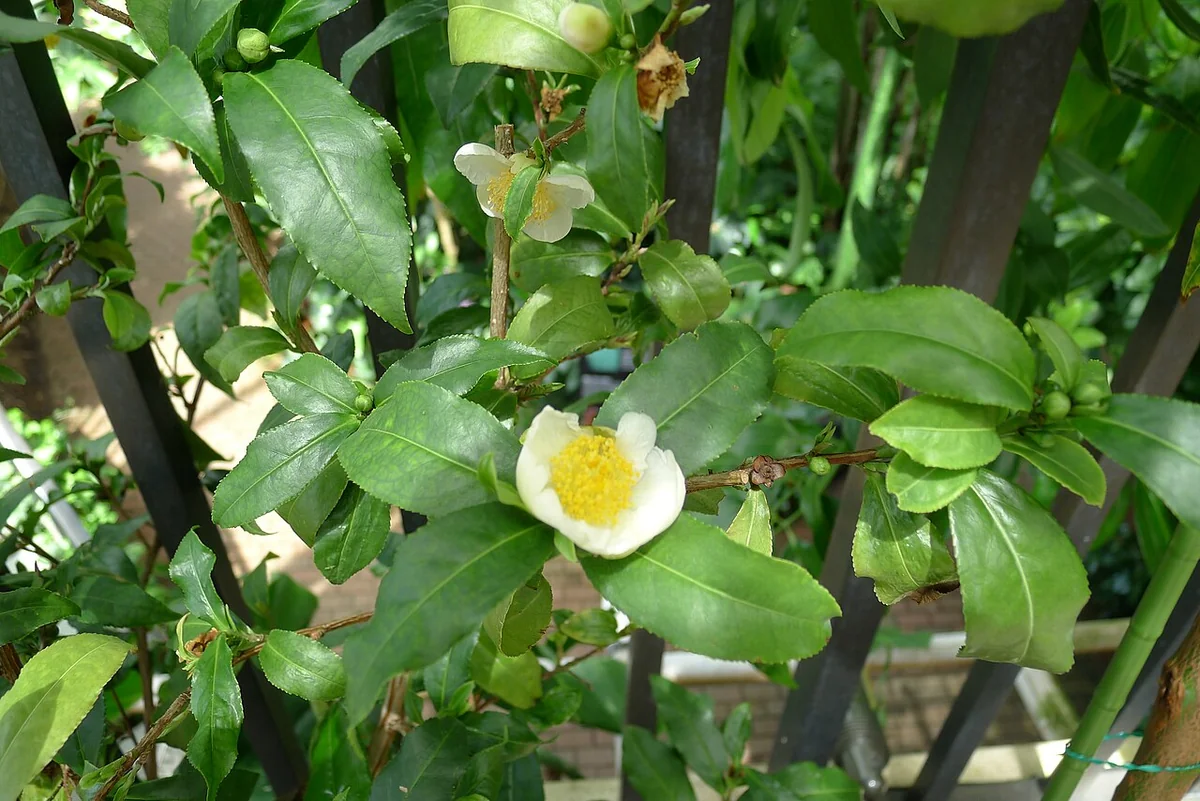
A tea plant offers a direct connection between an everyday beverage and a living woody shrub. Camellia sinensis has glossy leaves, attractive new growth and small camellia flowers, and it can be trained into a compact tree form over time. It should not be treated as a generic tropical foliage plant that thrives indefinitely in a warm dim office. A bright sheltered growing space with an appropriate cool seasonal rhythm is a more realistic home. The interest can be botanical and ornamental even when the grower never produces more than a small experimental harvest of leaves.
Tea cultivation has deep roots in Asia, with extensive selection and movement creating the forms grown in many regions today. The familiar black, green and other teas are not simply leaves from unrelated species; processing is central to their differences. Cultivated varieties and local practices still matter, so preserve the nursery label rather than assuming that every plant sold as tea will grow identically. This guide concerns the living Camellia sinensis, not the many unrelated herbs marketed as herbal teas. Its identity is important both for understanding its requirements and for avoiding confusion about any intended leaf use.
Build the growing position around the leaves
Give tea bright filtered light or suitable gentle sun, protecting it from scorching exposed conditions during hot weather. The relationship between leaf temperature and root moisture is important in a pot: a tree can sit in bright air while its container becomes excessively hot against paving or glass. Avoid hiding the canopy behind larger indoor plants. A bright cool porch or conservatory can suit the seasonal arrangement better than a hot shaded kitchen. Inspect the chosen position across the day rather than assuming that the word indoor describes a single set of growing conditions.
A sheltered outdoor growing season is useful where the local climate allows, but moving from protected nursery conditions into strong sun should be gradual. Consider winter protection for the container even where the selected tea plant tolerates cool outdoor weather. Roots surrounded by pot walls are exposed differently from roots in the ground. The exact selection and local conditions affect what protection is needed. Keep drainage open and avoid a cold waterlogged base. A brief indoor display beside a tea table is possible, but the plant's permanent growing place must support its actual light and seasonal requirements.
An acidic root environment is essential
Tea is a camellia and needs an acidic root environment. Use an appropriate ericaceous container mix with enough structure to drain while retaining even moisture around the fine roots. Do not add lime simply because another houseplant receives it. Irrigation water can gradually influence the root conditions, so investigate its alkalinity if new leaves show persistent yellowing between greener veins. Repot proportionately when roots or deteriorating medium justify the work. Keep the previous planting level and avoid packing material over the collar. An oversized pot of wet unused mix does not replace a suitable acidity and aeration balance.
Water as the occupied root ball begins to need it, aiming to avoid both complete repeated drying and permanent saturation. The fine roots should not be treated like those of a dry resting cactus. A dense nursery root ball can dry differently from fresh material around it, so check more than the surface. Wet the occupied volume evenly and permit excess to leave. In a quieter cool season, reduce the frequency according to observation rather than continuing summer habits automatically. Leaves that look temporarily less firm warrant checking the root zone before another drink is added to a pot that may already be wet.
A small harvest is not a commercial plantation
Wait until the plant is established and making suitable new growth before considering a light harvest. Removing young shoots repeatedly is a pruning decision as well as a culinary one. A small decorative tree needs enough foliage to support its roots and branching. If experimenting with tea processing, use only a correctly identified plant produced and treated for that purpose, and follow reliable food preparation guidance separately from this growing guide. Do not assume that an ornamental nursery specimen is automatically ready for the teapot. The plant remains interesting even when leaves are simply allowed to mature on the branches.
Shape a young tea plant gradually if a visible trunk and compact crown are desired. Retain enough leafy growth and avoid removing a large proportion at once merely to imitate a mature trained specimen. The plant's natural shrubby character is also a legitimate ornamental form. Feed active growth with a suitable product for acid loving container plants, following the rate and accounting for nutrients in the mix. More fertilizer cannot correct alkaline water or inadequate light. Note the pattern of new growth and any yellowing so that feeding decisions respond to the plant rather than to the enthusiasm of the person hoping for a harvest.
Observe buds, roots and visiting pests
Small white flowers with visible yellow stamens may provide an additional seasonal display, but flowering and a tiny leaf harvest should not both be forced on a newly established plant. Inspect leaf undersides and woody stems for pests, especially before bringing an outdoor specimen into a protected collection. Keep the canopy accessible and remove dead debris from the surface without disturbing fine roots unnecessarily. If leaves change rapidly after relocation, compare exposure, temperature and moisture. Do not move the tree repeatedly between a dim room and intense sun in search of an instant improvement; each move introduces another condition to which it must respond.
Tea can make a thoughtful gift for someone interested in botany, food history or the craft of tea. Its personal meaning might be hospitality and the time set aside to share a drink. That interpretation should not be presented as a universal tradition or a promise of a calming effect from keeping the tree nearby. A recipient who already gardens in containers is more likely to appreciate its acidic mix and seasonal requirements than someone expecting an ordinary low maintenance office plant. Discuss the actual growing space before choosing the size, and let the recipient decide whether leaf harvesting is part of the project.
A complete label is part of the gift
Include the botanical and cultivar names, the type of mix, and the supplier's information about treatments and intended use. Add a practical way to collect and empty runoff without making the roots stand in water. A well matched modest plant may be more useful than an elaborately clipped tree whose growing space is unknown. Through the first year, focus on firm new leaves, suitable acidity and a stable annual position. Any later harvest is an optional extension of that success. The lasting pleasure is understanding the cultivated shrub behind the drink, rather than trying to reproduce a tea estate on a shaded windowsill.