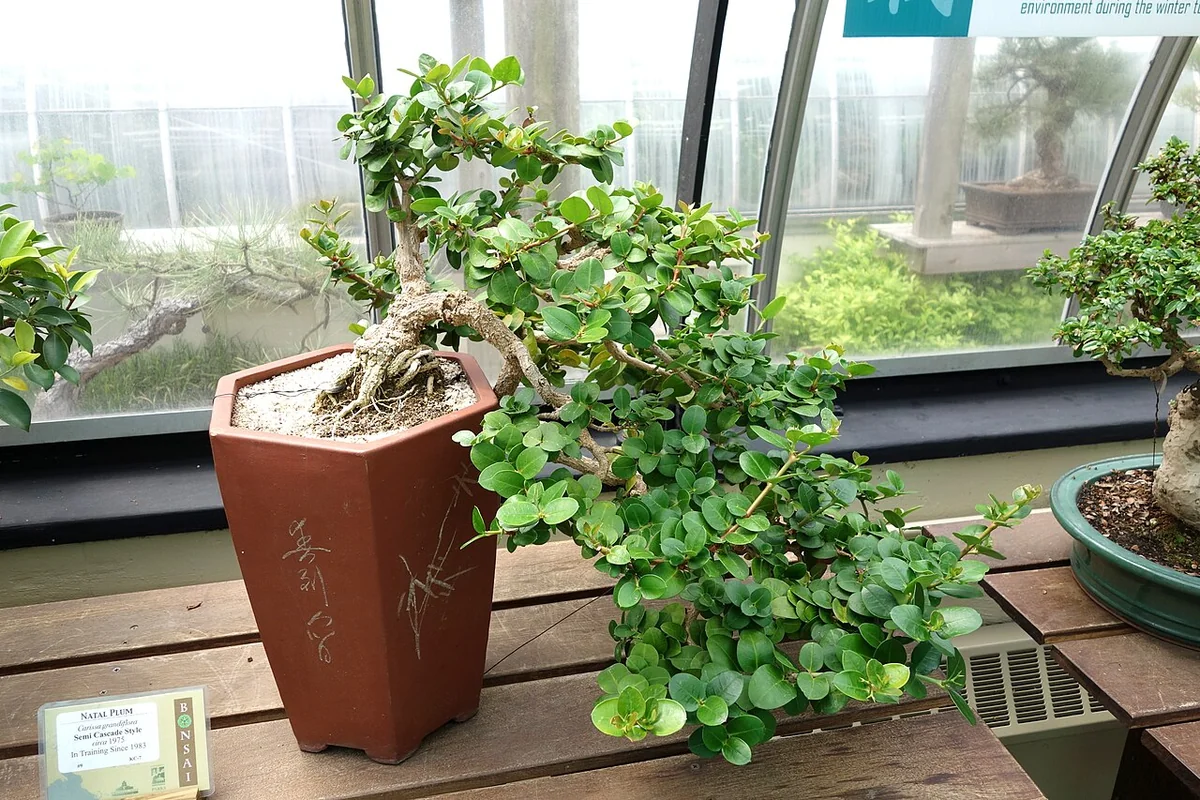
A coastal shrub with a tree shaped possibility
Natal plum combines glossy evergreen leaves, fragrant white flowers and formidable branching spines. Carissa macrocarpa can be trained into a compact woody specimen, but its identity should remain clear when it is offered as an indoor tree. It is naturally a shrub or small tree from eastern and southern African coastal regions, not a thornless plum relative. Its place in a home collection is a bright protected growing space with room around the branches. A sunny conservatory or a summer patio with winter shelter suits its habits more convincingly than a crowded desk where sleeves and hands repeatedly brush its crown.
The name Natal reflects a South African regional association, while the botanical name Carissa grandiflora appears in older references. The plant belongs to the dogbane family rather than the rose family of true plums. Its white five lobed flowers can carry a conspicuous fragrance, and its oval fruit changes colour as it ripens. Cultivars vary markedly in size and habit: a low spreading groundcover selection will not automatically produce the same silhouette as an upright shrub. For a tree form, choose a plant whose existing framework supports that purpose. Removing most of a sprawling specimen is a poor substitute for suitable starting material.
Sunlight, shelter and sensible boundaries
Provide substantial daylight and direct sun after appropriate acclimation. Natal plum tolerates some light shade, yet the flowering display and compactness sought from a conservatory specimen depend on useful illumination. A glossy leaf surface should not be mistaken for evidence that it can thrive in an unlit corner. If the tree sits behind glazing, assess the entire crown rather than the pot's position alone. A tall canopy can miss the usable window entirely. Ventilate a sunny growing room so that strong light is not accompanied by extreme stagnant heat, and keep the branches clear of fragile curtains or narrow walking routes.
Warm seasons outdoors can suit this coastal shrub, provided the first exposure is gradual. A sheltered start reduces the shock of moving leaves from filtered indoor conditions to stronger sun and drying wind. Salt tolerance in a landscape does not make every stressful placement acceptable in a container. In regions with freezing winters, bring the pot into suitable protected accommodation before damaging cold arrives. A cold spell around exposed roots is different from mild weather around an established coastal hedge. Plan the move while the container is manageable and use gloves and secure support so its spines do not turn transport into an avoidable injury.
A draining mix with an observable root ball
Choose a container medium that combines drainage with useful moisture and organic content. Natal plum is not a desert cactus, despite its thick leaves and spines. Let the root ball receive a thorough watering when needed, then allow excess to leave freely. Judge the next watering by the material around the roots, the growing conditions and the tree's activity. A warm sunny plant may need attention more often than a specimen in cool winter shelter. Keep a nursery pot accessible inside any ornamental cover so that water cannot accumulate invisibly around the lower roots for days.
Do not interpret a wet surface as proof that the established ball is evenly watered. Old tightly packed roots can shed water into a surrounding loose layer, especially when repotting has involved a large change of container size. Increase pot size proportionately and make sure water reaches the material the roots actually occupy. Retain the existing planting depth rather than covering the lower stems to hold the tree upright. Support an unstable specimen while roots establish. If the foliage changes after a move, compare root moisture and temperature with its earlier setting before assuming the plant needs concentrated feed or repeated chemical treatment.
Prune with the spines in view
Maintain a tree form through selective decisions about low branches, crossing growth and the balance of the crown. Dense foliage can conceal the forked spines, so inspect the branch before placing a hand inside. Natal plum tolerates shaping, but constant clipping can remove flowering opportunities and leave a rigid outer shell. A natural looking crown may be achieved with fewer well placed cuts. Clean tools after use and avoid contact with the milky sap. For a household with young children or inquisitive animals, the physical position of the spines is a practical suitability issue even when the specimen is small.
Feed during useful growth with a suitable container fertilizer at its labelled rate, accounting for any nutrients already in fresh medium. Flower fragrance is not a reliable measure of whether the roots require feeding. Weak flowering can follow inadequate light or inappropriate pruning as readily as a nutritional issue. Inspect the protected junctions between leaves and stems for scale and other pests, particularly after time outdoors. Remove debris from the root surface and monitor changes in the same parts of the canopy. A clear recent history is more useful than several overlapping treatments whose effects cannot be separated.
Separate ripe fruit from ornamental handling
Ripe Natal plum fruit has documented food uses, but the plant's other parts and its sap should not be treated as food. North Carolina Extension notes the possibility of minor illness from ingesting large amounts of sap, while identifying the ripe fruit as edible. Confirm the exact plant and its treatment history before considering culinary use. An ornamental cultivar purchased for flowers has not necessarily been managed as a food crop. Keep pruned pieces and fallen material away from exploratory mouths. A label that simply says plum is inadequate because it blurs both the botanical identity and the precautions appropriate to this thorny shrub.
This can be a distinctive gift for a grower interested in South African plants, scented conservatory collections or the craft of shaping woody specimens. Any meaning of resilience or careful boundaries should be presented as a personal interpretation of its tough leaves and protective branches, rather than an invented cultural tradition. It is unsuitable as a surprise for someone who needs an entirely child accessible indoor tree. Consider whether the recipient likes fragrant flowers and can maintain a clear area around the pot. A useful present fits the way a room is lived in, not only the appearance of a photograph taken in an empty conservatory.
Let the label describe a living responsibility
Provide the botanical name, cultivar if known, and a plain warning about the spines when handing over a Natal plum. Record its usual growing location and recent root or pruning work. Choose a stable container with functioning drainage, and leave enough space to grip it safely without reaching through branches. The first season should establish a suitable light position and manageable routine before flowering or fruit becomes a target. A well understood Carissa can be an attractive enduring specimen. That result depends on acknowledging its coastal shrub character and practical handling needs throughout the process of training it into a tree.