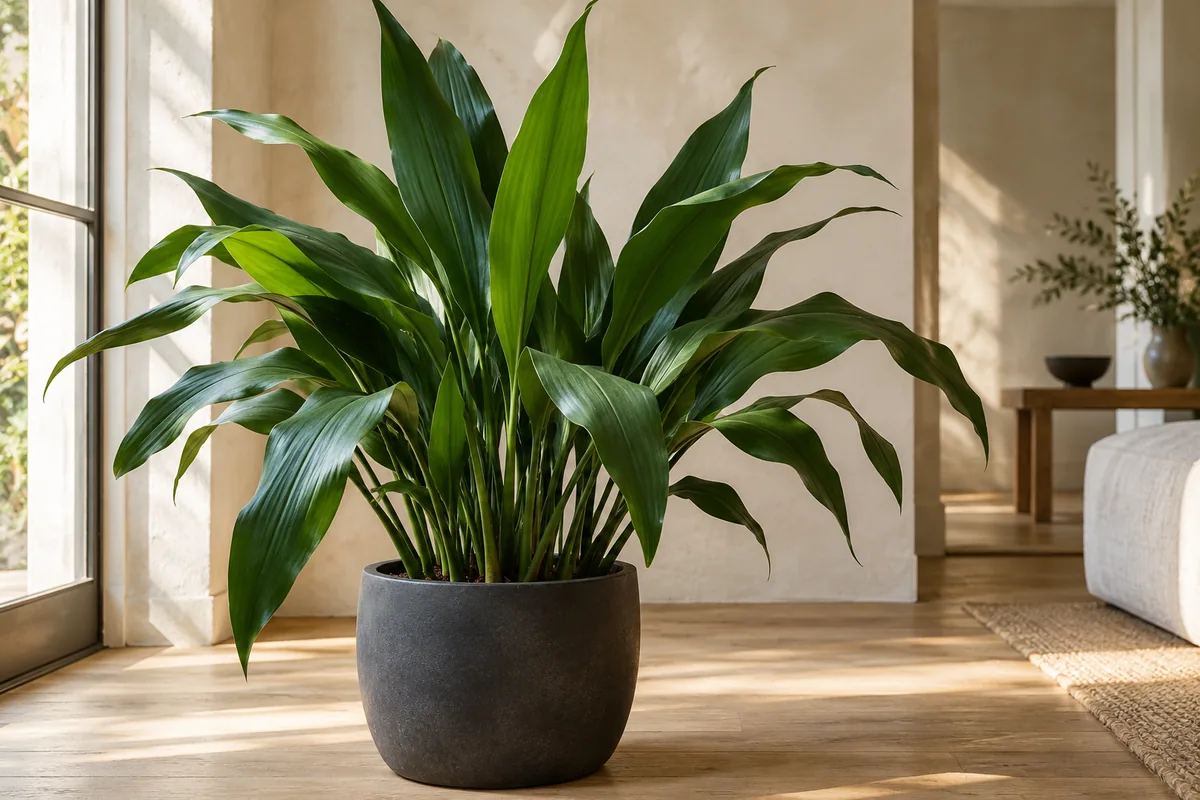
Cast iron plant earns its place through persistence rather than spectacle. Long dark leaves emerge from the soil, hold their shape, and give a quiet corner a clear patch of green. It is often chosen for rooms where brighter light is limited, and that choice can work when watering matches the slower pace. The common name should not become an excuse to ignore the roots or place the pot in complete darkness. Aspidistra elatior is still a living foliage plant with a growing point and a seasonal rhythm. A sheltered position, an open mix, and patient observation suit it better than frequent attempts to accelerate its growth.
Filtered daylight or a reasonably bright shaded position is useful indoors. Strong direct sun can mark the broad leaves, especially if the plant has spent a long time in subdued conditions. A north window may work where the view is open, while a position farther back from another window can provide similar shelter. Look at what the leaves can see rather than relying on the direction alone. Deep porches and nearby buildings can remove much of the available light. Variegated forms may need a brighter setting to keep clear markings, with the same protection from abrupt intense sun and hot glass.
Allow the upper mix to dry before watering and check deeper in the container when the room is cool or dim. Cast iron plant uses water slowly under subdued light. A fixed weekly drink can keep the lower root zone wet even when the surface seems dry. Water thoroughly when it is ready, let excess drain, and empty the saucer or outer planter. A slight pause between proper waterings is preferable to continually adding small amounts near the leaf bases. Learn the difference in pot weight between freshly drained and nearly dry conditions so the decision becomes easier without repeatedly disturbing the roots.
The spreading underground stems need an open mix and a pot with drainage holes. Repot when roots and underground growth have filled the container, rather than on an automatic annual schedule. Increase the diameter modestly and retain the previous planting depth. Leaves emerge directly from the root zone, so burying their bases under a thick fresh layer can keep the crown too damp. If the plant is divided, each section should retain established roots and several leaves. Small divisions develop slowly and need appropriately small containers. A broad decorative planter may look attractive while leaving much of its wet mix unused by the roots.
Individual leaves can last a long time, making surface care worthwhile. Support each blade and wipe it with a soft damp cloth to remove dust. Avoid leaf polishing products and oils. A leaf damaged by a crease or strong sun will keep the mark, so move the pot by its container and give the foliage clearance from furniture and curtains. Trim a fully old leaf near the soil level with a clean tool, taking care around new emerging shoots. A few aged leaves can be removed for a cleaner outline, yet stripping useful green foliage reduces the plant's ability to support fresh growth.
New leaves emerge as tightly rolled spears and gradually expand. Let them open at their own pace rather than trying to separate the rolled tissue. A slow flush is normal and varies with light and temperature. Feed modestly while new growth is active, following the fertilizer directions and accounting for nutrients already present in recently added mix. Heavy feeding will not turn a shaded position into a fast growing one. If the surface develops a pale mineral crust, review the water supply and feeding rate. Flush a freely draining pot when appropriate, then allow excess water to leave fully before returning the container to its place.
Brown tips can follow uneven moisture, accumulated minerals, or dry airflow. Check the pot and the immediate setting before assuming that more water is needed. A heavy damp container beside a heating vent presents two different issues at once: the roots may have plenty of moisture while the leaf edges are drying rapidly. Move the plant away from direct airflow and continue watering according to the mix. Inspect the undersides of older leaves during cleaning, especially where dust makes small changes difficult to see. Removing fallen material from the surface keeps both moisture checks and routine inspections straightforward.
A cast iron plant works best when expectations match its pace. Compare photographs over months rather than expecting a new leaf every few days. A stable clump with firm leaves and occasional new spears can be doing well in a modestly lit room. If growth becomes sparse or the newest leaves are weak, improve the daylight gradually and review root moisture. Avoid changing the container, position, and feeding routine simultaneously. Its appeal lies in a simple repeated leaf shape that settles into the room. Clear drainage, clean foliage, and a measured watering interval help preserve that understated form without adding unnecessary work.