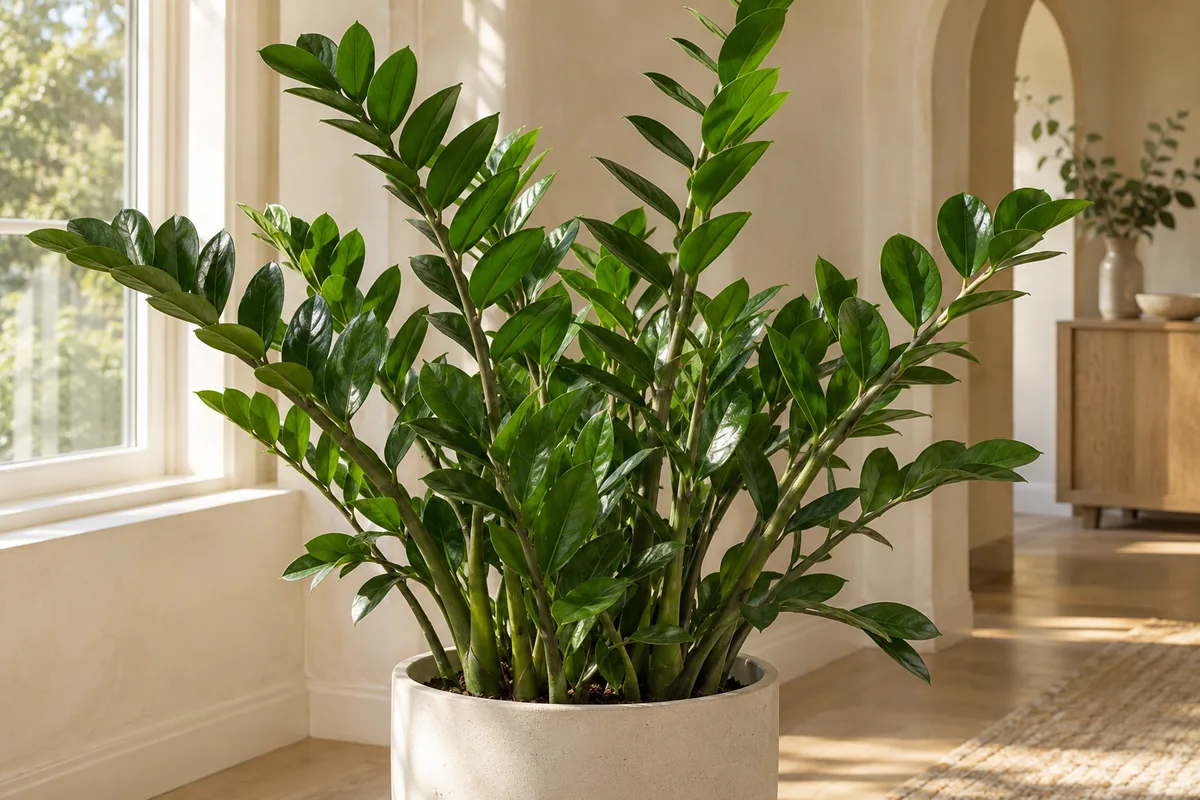
A Zanzibar gem can appear to be a collection of separate upright stems, yet the structures below the mix determine whether those shoots can be divided usefully. Firm rhizomes store moisture and connect the foliage with the roots. When an established plant becomes crowded, division can produce independent sections that already have these resources. The process begins by looking at the underground arrangement rather than cutting between visible leaves at random. A useful division needs a viable growing section and attached roots. If the plant is still small or its structures are closely integrated, leaving it whole may be more practical than creating several weak fragments.
Plan optional division for a period of active growth and prepare the workspace first. Gather small clean drained pots, a suitable free draining medium, and clean sharp tools for any connections that need cutting. Keep gloves available and work away from food preparation surfaces. The upright foliage can be awkward when the root ball is tipped out, so support the base and give the leaves room. Avoid pulling individual leaf structures as handles. If the container has become distorted around thick rhizomes, ease it away carefully or remove the plastic rather than forcing the plant through a narrow opening. Protecting firm material at this stage makes the later divisions more useful.
Gently remove enough loose mix to see how the rhizomes and roots connect. Some sections may separate naturally with limited movement. Others need a clean deliberate cut through an appropriate connection. Look for pieces that retain roots and growing shoots rather than dividing solely to make equal sizes. A larger rooted section can be easier to establish than a very small piece with little reserve. Do not tear the whole clump apart if several sections are tightly intertwined and can remain together in a useful division. The objective is a few viable plants whose structures you understand, not the highest possible count of fragments from one container.
Inspect firmness carefully. Rhizomes and roots can vary in color, so texture is a more useful guide than expecting every part to be pale. Preserve firm material and remove clearly soft deteriorated areas with clean tools if present. Reassess the plan if significant roots are lost, because the remaining sections will need proportionate containers. Fresh cut fleshy surfaces require appropriate care before being placed in a persistently moist environment. Allow a suitable dry settling period according to the size of the cuts and room conditions. Do not leave the pieces in a wet tray or seal them in a damp bag while waiting to plant. Have the medium and pots ready to avoid unnecessary delays.
Select each pot to fit the division's actual roots and rhizome with modest room around them. A large decorative planter may look stable beneath the upright foliage, yet it holds an excessive moisture reserve around a small new section. A sturdy outer cover can supply balance while the inner growing pot remains compact. Use an appropriate airy blend throughout the root zone, with no stone layer offered as a substitute for drainage. Set the rhizomes and leaf bases at their previous suitable depth. Fill around the roots gently and settle the mix without hard compression. Keep the base visible enough to inspect as the new plant begins its next period of growth.
Water conservatively according to the starting moisture, the amount of cutting, and the species' needs. A freshly divided Zanzibar gem should not sit in saturated mix or a saucer full of runoff. When watering is appropriate, let surplus leave completely and check the outer cover afterward. Fresh medium can dry differently from the old crowded root ball, and the division initially has fewer roots using its moisture. Inspect below the surface where practical and learn the new pot weight. The upper layer may look dry while the material surrounding the rhizome remains damp. Do not increase watering because the plant has not produced an immediate new shoot after division.
Give the new plants useful filtered light and a stable suitable temperature. Avoid sudden intense sun and direct heating or cooling airflow. Although the species tolerates lower light, a dim location can slow growth and moisture use considerably during establishment. Leave the roots undisturbed and evaluate the firmness of the foliage and the changing weight of the pot over time. New shoots may take a while to appear. Feeding does not replace the work of root establishment, so delay unnecessary additions and check whether the medium already contains nutrients. Resume an appropriate routine when the plants are settled and growing, rather than following the calendar of the original parent automatically.
As the divisions establish, keep their care individual. Different root volumes, rhizome sizes, and light positions can produce different drying intervals even when every pot was planted on the same day. Record the starting sections if you want a useful comparison later. A plant that remains firm and uses moisture gradually may be making progress below the surface before visible growth extends. Enlarge its container only when there is evidence that more root space would help. Division is a practical way to preserve complete growing structures in separate manageable pots. Thoughtful selection, clean cuts, and measured moisture give those structures room to settle without creating a large damp environment they cannot yet occupy.