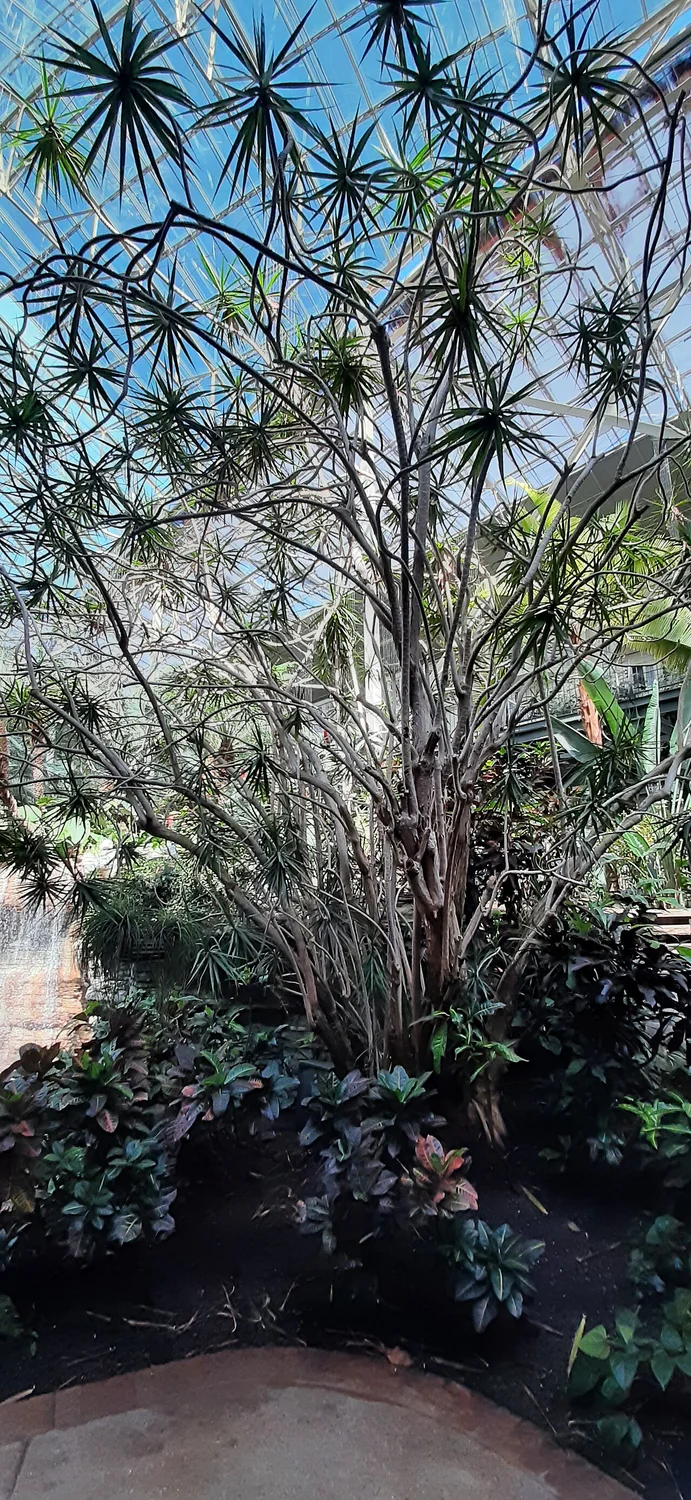
The Two Names of Madagascar Dragon Tree
The Madagascar dragon tree draws an outline through slender canes and fountains of narrow leaves. It is widely sold as Dracaena marginata and treated in some botanical references as Dracaena reflexa var. angustifolia. Both names are useful when searching for reliable care information. The plant is neither a palm nor the large Canary Islands dragon tree, although its common name can invite both comparisons. Nursery specimens may have braided, curved, or staggered canes. Those trained forms are arrangements of living stems, and their future growth needs to be understood separately from the decorative shape they had when purchased.
Its origins lie in Madagascar and nearby Indian Ocean islands. The narrow-leaved variety develops a strikingly different canopy from the broader foliage normally associated with Song of India dracaena. Mature landscape plants can become substantial, while container plants usually remain smaller and can be pruned. The reddish edge on many leaves is a normal feature, with the exact color depending on the cultivar. Keep the supplied identity, especially for striped or multicolored forms. A trade name describing color does not replace the botanical relationship, and it does not mean the plant needs a special feeding regime to maintain its basic leaf pattern.
Narrow Crowns Need Real Daylight
Bright indirect daylight suits the narrow crowns. A well-lit office with room above the plant can work, provided the canes are not placed directly beneath a drying air outlet. Low light can encourage a sparse stretched outline, while sudden intense sun may scorch leaves developed in shade. Evaluate the space needed for the next crown, not just the thin trunk. A desk arrangement can make the plant look narrow from the front while leaf tips project into a corridor behind it. Keep the canopy clear of blinds and shelves so that new leaves can extend without permanent bends or torn tips.
Allow a reasonable drying interval in the upper root zone, then water thoroughly and drain. This dracaena tolerates some dryness, but repeated severe drought can leave a deteriorating crown that does not recover instantly after soaking. Conversely, a cane standing in a constantly wet container can rot while its upper leaves still appear superficially firm. Check the root medium rather than using the woody-looking stem as evidence that all is well. In a pot containing several cut canes, rooting and moisture use may differ among them. Inspect any loose or softened cane instead of simply adding more water to the entire display.
Canes, Regrowth, and Water Quality
Use a freely draining houseplant mix and a modest pot appropriate to the occupied roots. A tall specimen may need weight at its base, but a broad cover pot can provide that without a huge increase in damp growing medium. Keep cane bases at their existing level. During repotting, support the root ball and avoid scraping or constricting stems. Decorative ties on braided or trained plants should be checked as the stems thicken. A trained curve may remain part of the plant's history, but new growth will respond to the current light and available space rather than continuing an exact geometric pattern by itself.
Pruning is a practical way to renew an overgrown dragon tree. A sound cane shortened during a suitable growth period can often produce several new shoots below the cut. That response takes time and is not guaranteed to form a perfectly symmetrical umbrella. Keep some foliage on the overall plant while it recovers if the arrangement allows. The removed tip may be used for propagation with suitable care, but a freshly cut piece should not be treated as a rooted plant immediately. Plan pruning because the structure needs changing, rather than cutting every tip whenever one leaf brushes nearby furniture.
Tip Damage, Water Quality, and Hidden Crown Pests
Water quality deserves attention when persistent tip damage appears. Dracaenas can be sensitive to fluoride, and a suitable nonfluoridated supply may help where that is relevant. Salt accumulation, drought, root injury, and dry air can produce overlapping symptoms, so do not stop the investigation at the first plausible explanation. Feed lightly during active growth using a labelled product and account for nutrients already in fresh medium. Extra fertilizer is not a solution for a dark placement. Judge a change by the next developing leaves. Old brown tips remain as a record and may be trimmed conservatively without expecting them to become green again.
Fine leaves make pest inspection easy to overlook. Check sheltered crown bases for mealybugs or scale and watch for mite stippling on the leaf surfaces. A new plant should be examined before joining other indoor foliage. If treatment is required, identify the issue and follow an appropriate label rather than using several products in succession. Lower leaves naturally age and leave the cane increasingly exposed, but a sudden collapse of multiple new crowns suggests a root or environmental problem. Keep track of who waters the pot in a shared office. Uncoordinated attention can produce more saturation than one caretaker intends.
A Sculptural Gift for a Suitable Household
The dragon tree can suit a modern office or a new apartment whose owner wants a relatively open, sculptural silhouette. Its branching response after pruning may personally suggest adaptation or a new direction, but it should not be given a fabricated ancient symbolism or a promise of professional success. Dracaenas are harmful to pets if chewed, making a freely accessible pot a poor choice for a household with plant-eating animals. Discuss the space before sending a tall specimen. Include both scientific names and an honest note that the cane arrangement can change over time rather than remaining a fixed nursery sculpture.
Lasting cultivation combines measured watering with occasional structural decisions. Let the plant settle before judging every older leaf, keep its root ball accessible, and choose a pruning moment when light and growth can support recovery. If the room is too dark for useful replacement crowns, improve the growing position instead of repeatedly removing weak shoots. The Madagascar dragon tree's appeal comes from the relationship between narrow leaves and exposed canes. Care that understands its capacity to branch, its sensitivity at the roots, and the limits of its trained shape can preserve that character for many years in a suitable interior.