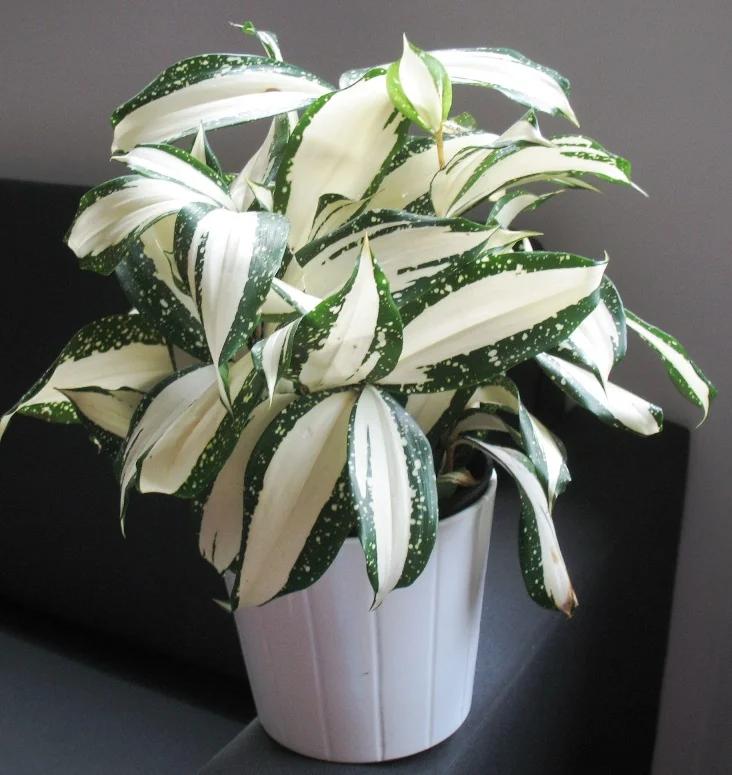
Spotted Leaves on a Branching Cane Plant
Gold dust dracaena breaks the usual dracaena outline. Instead of long strap leaves at the top of a stout cut cane, Dracaena surculosa carries broader oval leaves marked with cream or yellow spots along slender, branching stems. It can create a loose, small tree-like or shrubby presence in an indoor collection, but it should not be described as a towering trunked tree. Its interest is best appreciated at close range. Place it where the spots, leaf pairs, and fine stems are visible, rather than using it as an anonymous green background behind a large palm.
The species comes from western tropical Africa. Its epithet refers to the production of shoots, consistent with the branching habit that separates it visually from many familiar cane dracaenas. Cultivated forms vary in the amount and arrangement of pale marking, so a heavily spotted specimen is not necessarily the universal appearance of every plant sold under the species name. Preserve the actual cultivar label when one is supplied. The gold dust common name is descriptive. It should not be converted into a claim that keeping the plant brings wealth or that its pale markings have a fixed traditional meaning shared across cultures.
Filtered Brightness and Measured Watering
Choose bright, indirect daylight if strong leaf color and a balanced structure are wanted. A shelf near a window or a well-lit office stand is suitable, while direct hot sun may mark the leaves. In insufficient light, the plant's growth and pattern can become less satisfying even if the existing leaves persist for a time. Look at the lower branches as well as the upper tips. Nearby furniture can leave much of a small shrub shaded. If the plant leans strongly, correct the source of the imbalance instead of repeatedly tying its soft stems into an increasingly unnatural upright bundle.
Keep the root medium moderately moist during growth, allowing the upper layer to begin drying before another thorough watering. A small root system should not sit inside a much larger pot of persistently wet mix. Check the center, particularly after moving a nursery plant into fresh material with a different texture. Drain water out of the inner container and remove any surplus from the cover. In cooler, darker conditions, the interval will often lengthen. A spotted leaf may look decorative and firm while the roots are beginning to struggle, so the appearance of the foliage alone should not decide whether the pot needs more water.
Maintaining Roots, Shoots, and Natural Spots
A modest draining container with an airy houseplant medium is a practical choice. Repot when roots and medium condition require it, keeping the stems at the same level. The plant does not need an enormous tub to express its branching character. Several thin stems can seem less stable than a thick cane, but compressing wet compost around their bases is not the answer. Give the roots a suitable volume and use a stable outer pot if necessary. Retain enough space above the medium to inspect new shoots and remove loose debris without pushing it back among the living bases.
Pruning can keep an established specimen balanced. Shorten selected overlong stems with clean tools when growing conditions support recovery, leaving useful foliage on the remainder of the plant. New shoots can alter the outline, so plan for a loose, developing shrub rather than exact symmetry. Sound stem pieces may provide propagation material, but rooting them is a separate project from maintaining the display. Do not remove every colorful leaf in the hope that several bare sticks will rapidly become a fuller tree. A modest intervention followed by observation is usually easier to interpret than simultaneous severe pruning, repotting, and relocation.
Natural Spots versus New Leaf Damage
The leaf spots themselves are normal and should be distinguished from new damage. A stable cream mark has a different appearance and history from expanding brown lesions, pest stippling, or a pale patch caused by sun. Support leaves when wiping dust away with a soft damp cloth. Oils and strong polishing products are unnecessary. If margins begin browning, review water quality, salts, moisture consistency, and dry drafts before adding more feed. Apply a suitable fertilizer lightly during active growth and account for nutrients already present in the potting medium. The phrase gold dust does not mean stronger feeding produces more valuable or brighter leaves.
Look into branch junctions and the underside of leaves for mealybugs and scale. Fine stems and repeated leaf nodes provide sheltered sites that can be missed during a quick watering. A new purchase should be inspected before it is placed among other indoor plants. If a pest appears, separate it while identification and treatment are arranged. Also notice the growing environment: a plant beside a constantly opening door may face cold bursts, while one above office equipment may receive drying heat. Correct the specific problem rather than assuming every dropping leaf is an inevitable feature of tropical plants living indoors.
A Smaller Gift That Still Needs Light
Gold dust dracaena can be a manageable gift for a recipient who enjoys patterned foliage and has a bright shelf or stand. Its speckled leaves may personally suggest small celebrations or the pleasure of noticing detail. That interpretation can be included in a card without claiming a traditional promise of money or luck. Dracaenas are harmful to pets if chewed, so an accessible position in a home with plant-eating animals is unsuitable. Give the botanical name and explain that it is a branching cane plant rather than a miniature palm. Its smaller stature should be a real benefit to the recipient, not an excuse to ignore the need for light.
Long-term care should preserve the balance between open branching and a healthy supply of patterned leaves. Keep the pot reachable, follow changes in new shoot quality, and prune for a clear structural reason when needed. The plant may never become a conventional indoor tree with one grand trunk, and there is no need to force that identity onto it. Dracaena surculosa contributes a different kind of architecture: a light framework of slender stems carrying distinctive spotted leaves. A successful display allows those details to remain visible while providing the steady roots and filtered brightness that make continued renewal possible.