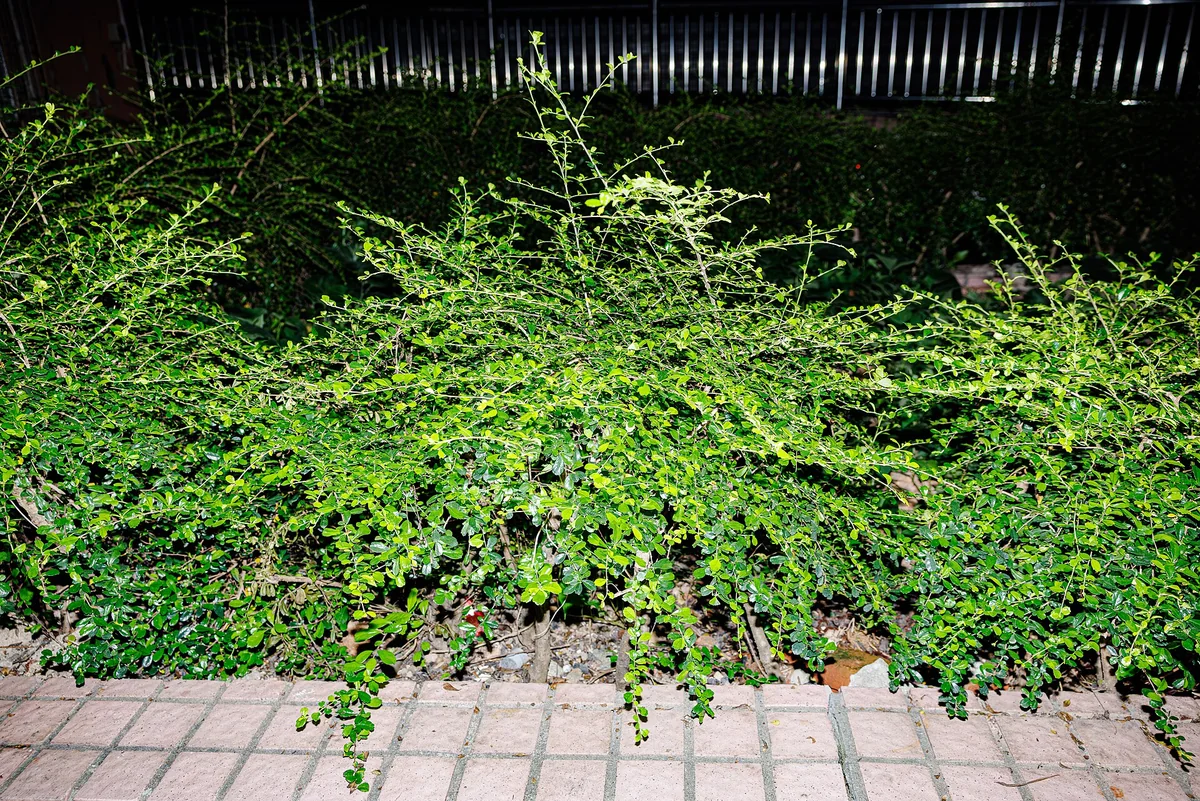
Fukien tea is an ornamental bonsai, not a tea crop
Fukien tea can show a convincing small tree outline through its roughening trunk, close branching and tiny dark leaves. The plant is commonly listed as Ehretia microphylla, with Carmona names still frequent in bonsai shops and older references. Its common name does not make it the Camellia sinensis used for ordinary tea. Treat the tree as an ornamental rather than experimenting with its leaves or berries. It can be maintained indoors under suitable warm bright conditions, but the shallow root container and sensitivity to environmental changes make it a considered growing project rather than a carefree desk accessory.
The plant occurs in parts of eastern and southeastern Asia and the wider neighbouring region. A trained nursery specimen represents the natural shrub reshaped through branch and root management. The small leaves can have a naturally textured, slightly hairy surface; not every pale point on a leaf is an insect. Small white flowers and later fruits can add interest when conditions are favourable. Preserve the exact botanical label and ask about the medium already surrounding the roots. Trees with the same ornamental pot can arrive in very different substrates, and that difference matters more to daily care than the colour of the ceramic glaze.
Warmth and a stable bright window
Give the crown strong natural light, normally very close to a suitable window, while preventing severe scorching from sudden exposure changes. A warm location in the middle of a room is not equivalent to a warm bright growing position. If winter daylight is weak, supplementary plant lighting may be necessary. Keep the tree clear of cold draughts when windows open and avoid direct dry heat from a radiator. The shallow pot can change temperature faster than the rest of the room. A stable suitable address is easier to manage than repeated moves between a display table and a different window.
An outdoor period is possible when the climate is reliably warm enough, with protection and acclimation. Do not follow instructions for a temperate bonsai that is meant to experience freezing outdoor dormancy. Fukien tea's winter problem is usually providing sufficient light and suitable warmth without drying the small root ball or leaving it saturated. Humidity around a plant is a separate issue from water in the pot. A tray should not keep the drainage holes submerged, and repeated misting cannot replace suitable light or a sensible watering routine. Leave enough airflow and access around the canopy for regular inspection.
Water by observing the supplied medium
Keep the roots moderately and consistently moist while allowing drainage and air. Check the surface and the occupied root zone rather than trusting a label that prescribes the same daily interval in every room. A granular mix can lose moisture quickly; a dense retail medium may remain wet below a dry looking top. When a drink is needed, distribute it evenly and let the excess escape. Do not permit repeated complete drying of the fine roots. The appearance of moss or decorative stones is not a reliable substitute for knowing what the actual growing medium feels like.
Constant wetness is also damaging. If leaves lose firmness while the pot remains wet, investigate the roots and temperature rather than adding more water because the tree looks distressed. Learn the container's changing weight and keep a simple care record. A newly purchased tree should not be subjected automatically to complete soil removal, heavy root pruning and a different room on the same day. First determine whether the supplied medium is functioning. Root work is a deliberate horticultural operation, particularly on a species with sensitive roots, not a cosmetic step needed to make the plant resemble someone else's photograph.
Branching needs growth before refinement
Shorten suitable young shoots to maintain a balanced outline once the tree is making reliable growth. Older branches can be brittle, so bending them as though they were soft new shoots can cause damage. Inspect nursery wire and ties frequently because a small stem can thicken unnoticed. Preserve enough leaf area during pruning and avoid reducing a weak tree merely to restore a tight sales shape. Remove damaged material with clean equipment. The desired image of age should come from a functioning framework, not from imposing large cuts on a plant that is still adjusting to its new root and light conditions.
Time repotting to an appropriate period of active growth and assess the existing roots before reducing them. Use a draining bonsai medium that still retains moisture suitable for the room and care schedule. Stabilise the tree so the roots are not rocked by a loose trunk after the operation. Feed established growth carefully with a suitable product at its instructed rate, and avoid concentrated fertilizer on damaged or dry roots. A small white flower is enjoyable, but flowering should not be forced at the expense of recovery. Firm new foliage is a useful first objective for a recently acquired specimen.
Interpret leaf loss rather than chasing it
Relocation, a dry root ball, cold exposure and persistent saturation can all lead to a poor canopy. Compare the history before selecting a treatment. Inspect leaf undersides and sheltered branch junctions for scale, mites or other pests, distinguishing them from the foliage's natural surface. A hard water related nutrient problem should be assessed from the leaf pattern and irrigation conditions rather than treated with several supplements indiscriminately. Keep the tree in an appropriate steady place while observing its response. Moving it daily can create a sequence of additional changes that makes the original cause increasingly difficult to identify.
Fukien tea can make a thoughtful present for someone who has requested an indoor bonsai and understands the attention involved. A personal message about learning and gradual refinement suits the living tree better than an invented promise of luck or automatic peace of mind. It is not a reliable beginner gift for a frequently absent office worker merely because it is small enough to sit beside a monitor. Ask whether the recipient has a bright window and can check the shallow pot regularly. Their willingness to learn matters, but it cannot compensate for a physically unsuitable growing position.
Pass on the nursery information
Give the plant with its accepted and familiar names, details of the substrate and any recent root work, and a practical way to water and empty runoff. Mention that the tea name is ornamental and does not identify the beverage crop. Choose a manageable specimen rather than assuming the oldest looking trunk is the best gift. During the first growing cycle, establish steady warmth, useful light and a reliable moisture assessment. Branch refinement and repeated flowering can follow from that foundation. A living tree with fewer decorative flourishes but functioning roots is more valuable than an impressive composition that the new owner cannot maintain.