The phrase keep moist can lead to a fern sitting in a permanently wet pot. It can also lead to a daily splash that never reaches the center of the root ball. Neither arrangement captures what many common indoor ferns need: a steady supply of moisture with enough air around the roots. The difference becomes clearer when the container is easy to inspect and water thoroughly. A fern perched high above reach may look beautiful while its mix becomes impossible to judge. Bring the practical details into the display from the start, with visible drainage and a pot that can be checked without pulling apart the fronds.
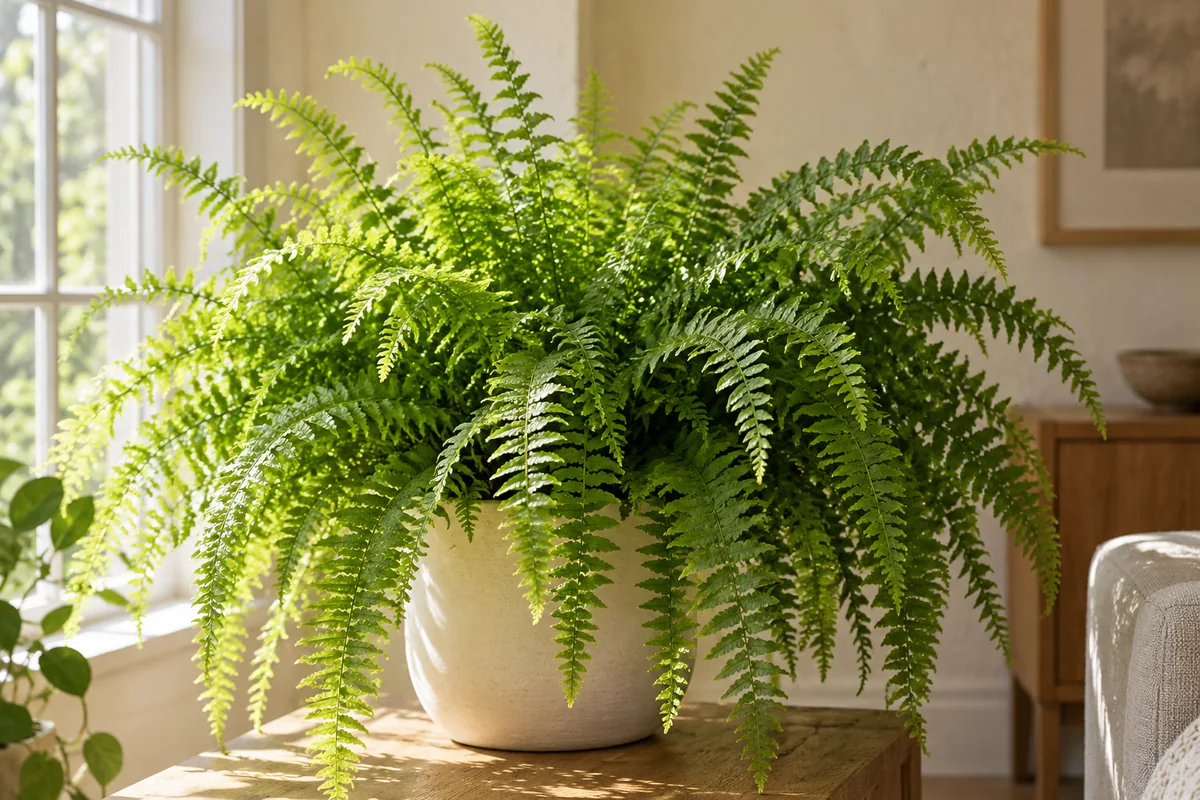
Identify the fern before settling on a routine. Boston fern and bird nest fern both appreciate moisture, yet their structures and watering access differ. A bird nest fern has a central crown best kept clear of standing water, while a Boston fern's dense fronds can divert a pour away from the root ball. Other fern species have different tolerances again. Use the plant's requirements as the starting point and avoid treating all finely divided green foliage alike. A useful general aim for many familiar indoor ferns is a root zone that remains lightly moist, with the surface beginning to dry before the next thorough drink.
Check beneath the surface with a finger or wooden probe, taking care around dense new roots. The mix should not remain muddy and heavy for a prolonged period. Nor should the whole root ball become crisp and pull away from the sides. Learn the pot's weight when it is freshly drained and when it needs water again. Small hanging containers may dry rapidly in bright warm air, while deep glazed pots can hold moisture much longer. The same fern can therefore need a different checking rhythm after a container change. A fixed calendar interval hides those differences instead of helping you understand them.
Water slowly around the surface so the root ball absorbs moisture evenly. Keep sensitive growing crowns clear and avoid relying on runoff alone as proof that the center is wet. A dry shrunken mix may allow water to bypass the roots. Several slow passes or an appropriate controlled rewetting method can help, followed by complete drainage. Empty the saucer or outer planter afterward. Roots left standing in water lose the useful distinction between moist mix and saturation. If the container cannot drain, change the arrangement rather than continually trying to judge an exact small quantity that will remain safely trapped inside.
An open mix should hold moisture while retaining structure. Fine dense material can compact and remain wet around roots even when the top dries. Coarse ingredients suited to the species can help maintain air spaces, with enough moisture holding material for a fern's needs. Repot when roots fill the container or the old mix deteriorates, increasing the size modestly. A very large pot is not a useful insurance policy against drying because the unused wet volume introduces another problem. Keep the original planting depth and avoid packing material tightly against the crown. After repotting, check the new drying pattern rather than assuming it matches the previous one.
Light and air influence the watering interval. Bright filtered daylight supports growth and water use, while a dim position may leave the pot damp for much longer. Strong direct sun and heated airflow can dry delicate fronds quickly without creating a suitable overall setting. Move the fern away from vents and soften excessive exposure where appropriate. Indoor humidity also matters, especially during heating season. A properly maintained humidifier can create a more sustained change than occasional misting. Misting should not replace root watering or be used as proof that a dry room has become suitable. Keep gentle circulation around the foliage and avoid enclosing wet leaves against walls or curtains.
Feed modestly during active growth according to the product directions and account for nutrients already present in fresh mix. A fern that has dried severely needs its basic moisture routine restored before additional feeding is considered. Accumulated salts can contribute to damaged leaf edges, so review fertilizer strength and water quality when deposits appear. Flush a freely draining pot when appropriate and let excess leave fully. Remove old dry fronds carefully near their bases, protecting new curled growth. A crisp old frond will not become green again. New fronds and a steadier moisture pattern are better evidence that the arrangement is improving.
Make access the final test of the display. Can you feel the mix, water the center, inspect the base, and empty collected water without damaging the foliage? If not, a lower stand or a simpler hanging arrangement may serve the fern better. Check more often when the room is bright and warm, then respond to slower drying during dim periods. Moist roots do not require a permanently flooded pot. A suitable mix, clear drainage, useful filtered light, and timely checks create the gentle continuity that many ferns need. With those details working together, their soft fronds become easier to maintain without a daily cycle of guesswork.