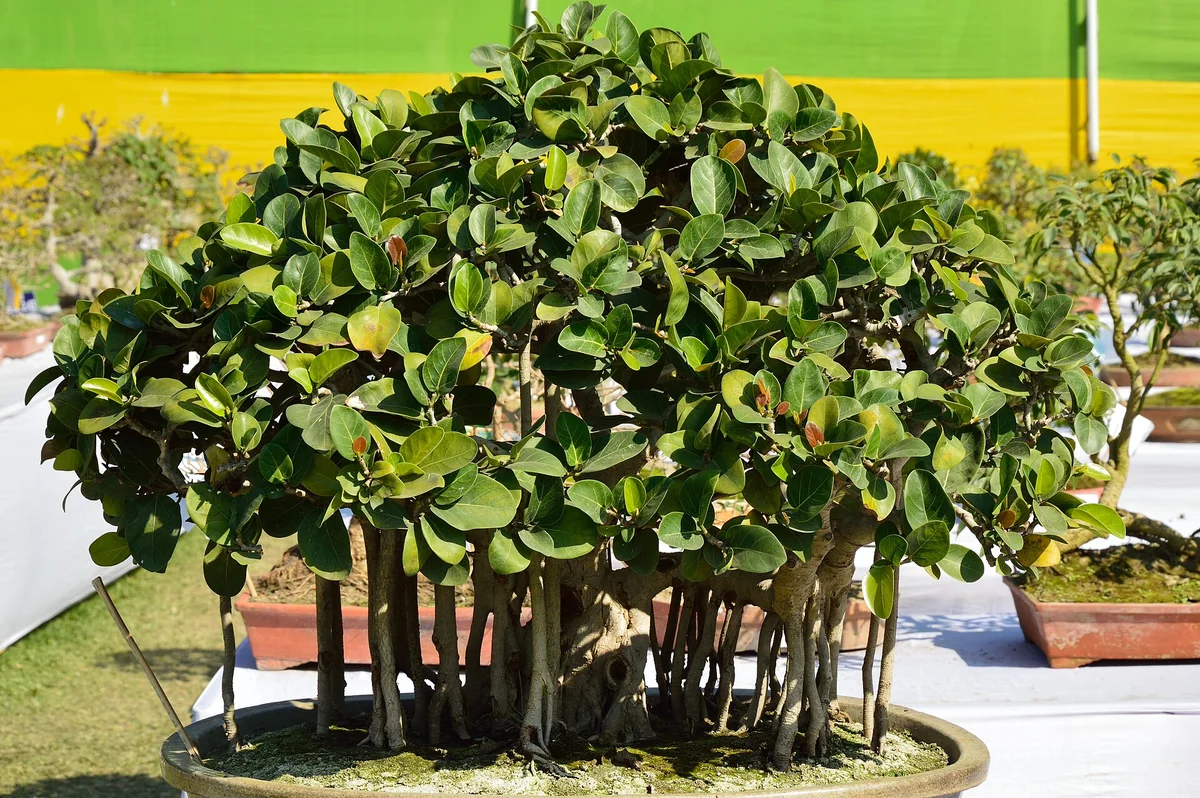
A young banyan beneath a room ceiling
Banyan fig brings the outline of a remarkable forest tree into a much smaller container. Ficus benghalensis is native to the Indian subcontinent and nearby regions, where mature trees can develop wide horizontal branches and descending aerial roots that become supporting columns. Those structures account for the extraordinary breadth of an old banyan canopy. A young indoor plant, often sold under a selection name such as Audrey, is not expected to reproduce that landscape within a living room. Its attraction is the softly textured green foliage, prominent pale veins, and a woody framework that can be shaped to the scale of an interior.
Identify the plant before attaching a cultural story or a care routine to it. Banyan fig is not the same species as the sacred fig, Ficus religiosa, even though both have substantial cultural importance in South Asia. Audrey is a horticultural selection name, not a separate botanical species or a promise of permanent dwarf size. Look for leaves with a sound surface, several active growing points, and a trunk that is not hidden beneath unnecessarily deep compost. The condition of the roots should outweigh the appeal of a fashionable label. An already stressed large specimen may be more difficult to establish than a smaller balanced tree.
Light and a workable indoor position
Give the foliage bright indirect light and enough open space for the canopy to develop evenly. A position near a large window is more useful than a central decorative spot that receives mainly reflected room light. Some direct morning or late day sun may be appropriate after acclimation, while intense afternoon exposure can injure leaves formed under shade. Observe new growth and the distance between successive leaves. A stem that stretches toward the glass while its shaded side thins is asking for a different light arrangement. Turning the pot moderately can help balance growth, but it cannot create light where very little is available.
Water, roots, and a draining container
Allow the upper portion of the mix to dry before watering again, while checking that the deeper ball has not remained wet for an extended period. A substantial nursery pot may need a probe rather than a glance at the surface. When irrigation is needed, apply water evenly until some drains, then remove the surplus. The aim is neither an indefinitely flooded root zone nor repeated complete desiccation. Light and temperature strongly affect the interval. The same tree can use considerably less water after winter cloudiness or pruning, so its previous summer watering routine should not continue unchanged merely because its leaves still look large.
Container size should follow the roots rather than an imagined future banyan forest. Repot into a moderate increase in volume when the current roots fill their space and watering becomes difficult to control. An airy indoor mix with reliable drainage helps preserve root function. Do not bank material against the trunk to hide surface roots or make the tree appear more firmly planted. A heavy outer cover may stabilize a tall tree, but it must allow the inner pot to drain and be inspected. If the pot cannot be lifted easily, arrange access to the drainage tray before the plant becomes too large to move safely.
Training and ongoing maintenance
The gentle texture of the leaves calls for gentle cleaning. Remove dust with a soft slightly damp cloth, supporting the blade and avoiding abrasive rubbing. New leaves and shoots should be left to expand without help. During cleaning, examine protected junctions for mealybugs and look for scale or fine mite damage. Protect the plant from cold air and a heating vent that dries one part of the crown. Increased room humidity can be useful in a dry interior, but repeatedly wetting the leaves does not correct a poor root environment. Keep the growing conditions consistent enough that a developing problem can be traced to a plausible cause.
Training should begin with a desired outline. A young trunk may be encouraged upward as a small tree, or selected cuts can develop a fuller branch structure. Prune above living nodes while retaining enough leaves to sustain the remaining plant, and avoid combining severe pruning with major root disturbance. The latex can irritate skin, so wear gloves and keep cut branches away from chewing animals. Indoor specimens often do not form the dramatic aerial root system shown in photographs of mature tropical trees. Trying to force that effect by keeping the pot permanently wet is likely to harm the ordinary roots instead.
Feed when the tree is actively extending under adequate light, following the product's recommended indoor rate. A fresh mix may already include a nutrient charge, which should be considered before additional fertilizer is applied. A pale damaged leaf does not diagnose a deficiency by itself. Assess root moisture, recent exposure, temperature changes, and the condition of newer leaves. A few ageing lower leaves differ from a broad pattern of decline. Keep notes on major moves and growth flushes so seasonal slowing is not confused with an urgent need for several simultaneous interventions. The next sound leaf is a more useful measure than cosmetic repair of an old scar.
Meaning without unsupported promises
The banyan is India's national tree and has established sacred associations in Hindu and Buddhist settings, including temple landscapes. That history deserves a precise distinction between a living South Asian tradition and a retailer's decorative claim. A small potted banyan can prompt interest in longevity, shelter, community, or the relationship between one trunk and a wider network of roots. It does not guarantee any of those outcomes for its owner. When giving it across cultural contexts, describe the botanical identity and the documented association respectfully, allowing the recipient to decide whether and how that meaning fits the occasion.
A gift matched to the recipient
A banyan fig can mark a significant family milestone, the establishment of a long term home, or the beginning of a project for someone who appreciates its history and has the light to grow it. It is less appropriate as an unexplained sacred object or an oversized surprise for a small apartment. Discuss access by children and pets because foliage and latex should not be ingested or handled casually. Where outdoor conditions permit tree growth, never suggest planting a surplus specimen beside buildings or drains. A manageable indoor tree, a correct label, and a respectful explanation make a more responsible gift than the promise of a giant canopy or automatic good fortune.