Leaves, glands, and the mistletoe name
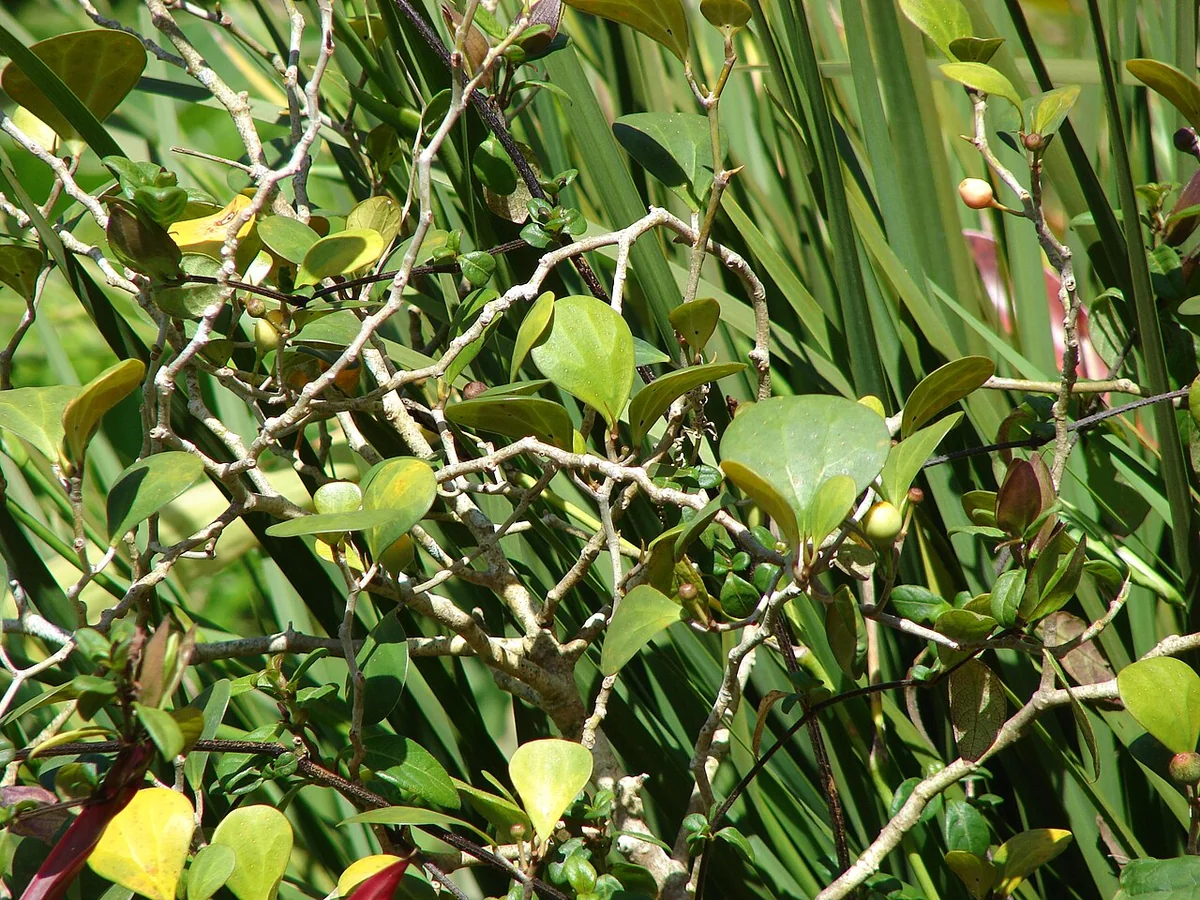
Mistletoe fig has a smaller, more rounded presence than many familiar indoor figs. Ficus deltoidea is native to Southeast Asia and can grow as an evergreen shrub or small tree, sometimes in association with other plants in its natural habitat. Its relatively thick leaves often have a distinctive triangular or spoonlike outline, while their undersides may show small dark glands. Those glands are part of identification rather than pests to scrape away. The species can also produce small figs in container culture. The result is a botanical specimen with several points of interest even when it is maintained well below the dimensions of a forest tree.
The name mistletoe fig does not make it a true mistletoe or imply that it needs to parasitize a household plant. A properly rooted nursery specimen grows in its own container. Leaf shape can be variable within the species, so compare a plant with an authoritative description instead of treating every broader or narrower leaf as proof of a different identity. When buying, look for a firm base, sound roots, and several intact shoots. A plant with fruit may be attractive, but fruit should not be the only criterion. The condition of the growing framework matters more than the number of figs on one particular day.
Light and a workable indoor position
Provide medium to bright useful light, favouring the brighter end when a compact canopy and possible fruiting are desired. Some tolerance of a shaded position should not be confused with equal growth in all parts of a room. A position near an east window can make observation easy without immediately subjecting nursery leaves to severe afternoon heat. Introduce stronger direct sun gradually if that is the available exposure. Small pots heat quickly on a windowsill, so check the temperature at the root zone as well as looking at the leaf colour. Keep the tree clear of glass that becomes cold during winter nights.
Water, roots, and a draining container
The thick foliage is compatible with allowing a meaningful drying interval, although an indoor root ball should not repeatedly be abandoned until every part is desiccated. Check the upper mix and its deeper moisture before irrigating. Water thoroughly when needed, let the pot drain, and remove any surplus caught in a decorative cover. This is usually safer than frequent little additions that keep the surface and stem base damp. A compact mistletoe fig in a generously sized container may dry much more slowly than expected. Match the frequency of inspection to the actual pot rather than to the smaller plants standing beside it.
Potting should preserve an open route for air and draining water. Choose a container with functional holes and use an indoor mix with sufficient coarse structure to resist compaction. When roots have occupied most of the pot and the drying pattern becomes difficult, make a modest increase in size. A shallow sculptural bowl is not automatically the right container merely because the plant can be trained as a miniature tree. Specialist training involves closer attention to root work and irrigation. An ordinary small indoor tree can be maintained in a deeper practical pot, leaving room for a stable root system and straightforward watering.
Training and ongoing maintenance
Pruning can keep the crown in proportion, but it should be based on the arrangement of living branches. Shorten a vigorous extension to an appropriate node and reassess the shape before removing more. Dense growth may need selective thinning so interior leaves receive light. A plant under weak illumination should not be repeatedly cut in an effort to force compactness that its location cannot support. Use gloves when dealing with fig sap and clear cut material from the work area. A supported small trunk and an open crown are more useful than a perfect outline that has been obtained by removing too much functioning foliage.
Feed lightly while fresh growth is developing, using a product suited to indoor container plants and following its dilution instructions. The tree's modest growth rate indoors does not justify a strong dose designed for a fast outdoor crop. If recent compost contains fertilizer, allow for that before adding another product. Clean the leaf surfaces gently and inspect the underside without confusing the normal dark glands with insects. Scale has a different arrangement and texture, while webbing or cottony clusters require their own investigation. An occasional magnified photograph can be helpful for documenting a suspected pest before any treatment is selected.
Small figs add interest but should remain ornamental. Do not assume that fruit is edible simply because the plant belongs to the same genus as a familiar food fig. A single indoor tree may carry figs without providing a reliable household fruit crop, and the timing can vary. Keep dropped fruit away from children and pets and remove it from the mix before it decays. If the plant starts shedding numerous leaves and fruit together, review recent moves, root moisture, and temperature events. Fruiting should never be pursued by keeping a stressed tree continually wet or applying progressively stronger bloom products.
Meaning without unsupported promises
The common name can make this fig appealing as a winter gift, but it does not transfer the kissing customs associated with true mistletoe to the plant. Such a connection would be a playful personal choice rather than a botanical or established cultural relationship. Its small leaves and figs may instead suggest attentiveness to detail or appreciation of quieter forms. A collector might value the opportunity to learn a distinctive identification feature. Avoid making medicinal or protective claims from traditional uses mentioned elsewhere. For a foliage tree in a home, its appearance and accurately described origin provide sufficient material for a thoughtful message.
A gift matched to the recipient
A compact mistletoe fig can suit a birthday, a new reading corner, or an exchange between people already interested in unusual houseplants. It is more manageable than a large canopy tree for a bright apartment, provided it still has a stable well lit position. Ask whether the recipient prefers a normal plant or a miniature training project before choosing the pot. Include the correct botanical name so the natural leaf glands are not later mistaken for disease. Explain that the figs are for display and that cut tissue releases potentially irritating latex. An appropriate plant matched to the owner's habits is a better gift than a complicated display chosen only for its fruit.