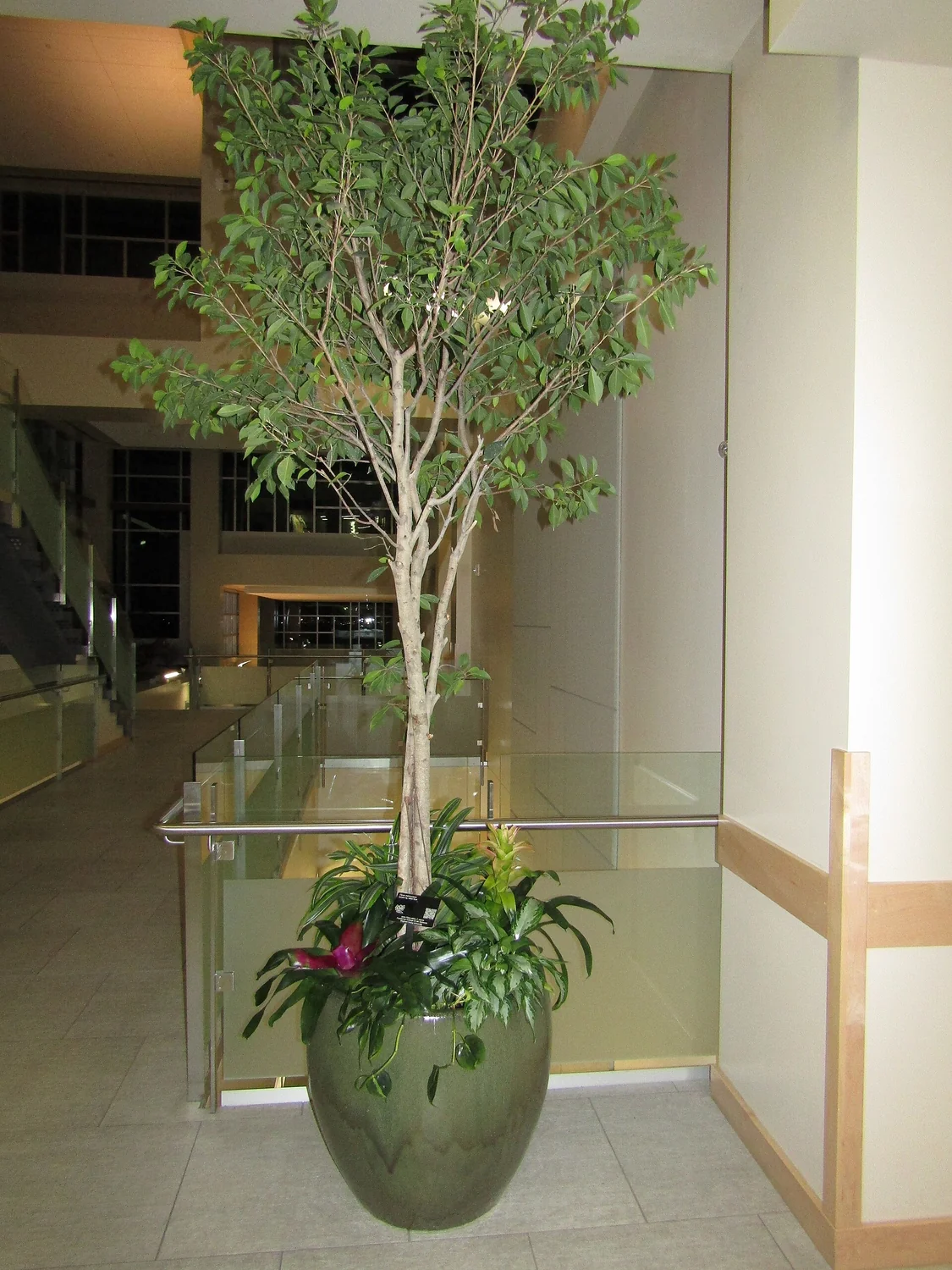
Natural growth and nursery shaping
Indian laurel fig can look very different depending on the way a nursery has trained it. A small tree with a rounded crown, a clipped standard, and a miniature plant over swollen exposed roots may all be sold under Ficus microcarpa. The natural species is a substantial tropical or subtropical Asian tree, not a naturally dwarf plant with a ready made decorative trunk. Some retail forms involve pruning, root exposure, or grafting, so an unusual base should be understood as horticultural presentation. For an ordinary indoor tree, look for a stable root system and several well positioned branches rather than assuming the most elaborate trunk will be the simplest to maintain.
Small oval leaves and flexible branching make this fig useful when a room needs a finer texture than a fiddle leaf fig provides. It can also become dense enough to shade its own interior, which affects long term pruning decisions. Native and naturalized outdoor trees can develop aerial roots and broad crowns, and their roots can damage nearby structures. Those landscape characteristics are reasons to retain a houseplant in a managed container rather than plant an unwanted specimen outdoors in a suitable warm climate. Check regional guidance before any outdoor introduction. Indoor culture is primarily about foliage and framework, with fruiting neither necessary nor routinely expected.
Light and a workable indoor position
Bright light is the first requirement for a compact canopy. Place the tree close to a substantial window where the outer and inner branches receive useful illumination. Introduce direct sun gradually if the plant has previously been shaded. A small tree can survive a period in a dim reception area, yet survival over a short display interval is not evidence of a sustainable long term position. Watch the length of new shoots and the retention of leaves on lower branches. If all new growth extends toward one side of the room, address that light imbalance before repeatedly cutting the outline back into a ball.
Water, roots, and a draining container
Warmth should be reasonably consistent around the pot as well as the leaves. A cold stone floor beside winter glazing can chill the roots even when a thermostat across the room reports a comfortable temperature. Raise the pot on a stable insulated base if necessary and keep leaves off the glass. Avoid a stream of hot dry air from an office vent. Higher humidity can support more comfortable growth, but a daily mist is not a substitute for an appropriate room environment. A humidifier used correctly and maintained cleanly changes ambient conditions more reliably than occasional wetting of the foliage.
Water after checking the actual root zone. A clipped canopy may use less water than the same tree before pruning, and a shallow decorative container behaves differently from a deep nursery pot. Feel the upper mix and inspect deeper moisture before deciding. Irrigate the entire ball, allow free drainage, and remove collected water. If a dense old root mass sheds water down the outside, apply it in smaller passes so the interior can rehydrate. The tree should not alternate between an extremely dry ball and several days in a flooded cover. Reduce the frequency as light and growth decline rather than following the summer routine unchanged.
Training and ongoing maintenance
Root work deserves more restraint than the sculpted appearance of a retail plant sometimes encourages. A normal indoor tree does not require the intensive root pruning used for specialist miniature training. Repot when the available mix has become occupied and the plant is difficult to water evenly. Choose a modestly larger container with a stable open mix and keep the established trunk base exposed at the same level. Remove obvious dead material if found, but do not strip healthy roots simply to reshape them. A sound ordinary pot can be hidden in a decorative cover while still being lifted out for maintenance.
Prune branches in relation to the living structure beneath them. A shoot can be shortened to an outward facing leaf or node to make the crown more balanced. Repeatedly shearing only the outside can leave a shell of foliage with bare twigs inside. Allow light into the framework gradually and avoid making a major reduction during a period of root stress. Latex released by cuts can irritate skin, so wear gloves and protect the work surface. Check training ties and old supports before they press into the bark. A thickening trunk should not remain trapped by a nursery label wire hidden beneath the crown.
Inspect for scale, mealybugs, and mites while cleaning leaves or pruning. A sticky surface beneath the plant may be an insect clue rather than a reason to polish the foliage. Check the underside of leaves and the protected junctions between small twigs. General yellowing above persistently wet mix requires a separate root assessment, while a dry crisp margin after an exceptional hot day calls for a review of water availability and exposure. Light feeding during active growth is usually more useful than large infrequent doses. Keep the fertilizer strength within the product's instructions and account for any nutrient charge in fresh compost.
Meaning without unsupported promises
The species has a visible horticultural association with the craft of miniature tree training. That is a history of shaping and care, not proof that every indoor specimen carries a fixed message or a promise of luck. A giver could reasonably connect an Indian laurel fig with patience, skill, or the development of a project over time, especially for someone interested in plant form. Describe that connection as personal meaning. Do not attach the traditions of another fig species automatically to this one. A sculpted retail root base can be appreciated as an example of nursery technique without inventing an ancient origin for its particular shape.
A gift matched to the recipient
This tree can be a considered gift for a new office, a housewarming, or a milestone in a craft or design practice if the owner has appropriate light. Establish whether the recipient wants an ordinary small tree or the more demanding maintenance of a miniature presentation. They are not interchangeable gifts. Avoid a pot so shallow or ornate that watering becomes an inconvenient performance. Keep foliage and cut material away from pets and children, and explain the possibility of irritating latex. A correct label and a practical account of the tree's existing care are more useful than a claim that the plant will bring success simply by standing near a doorway.