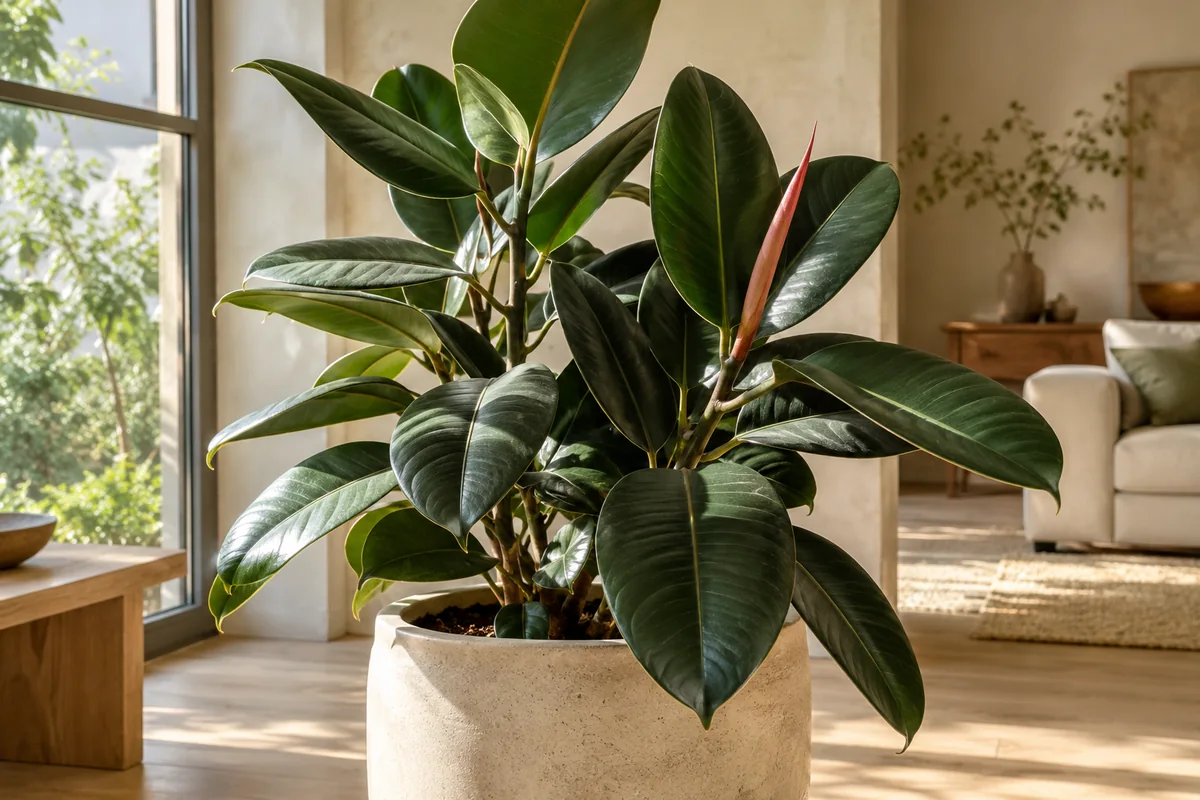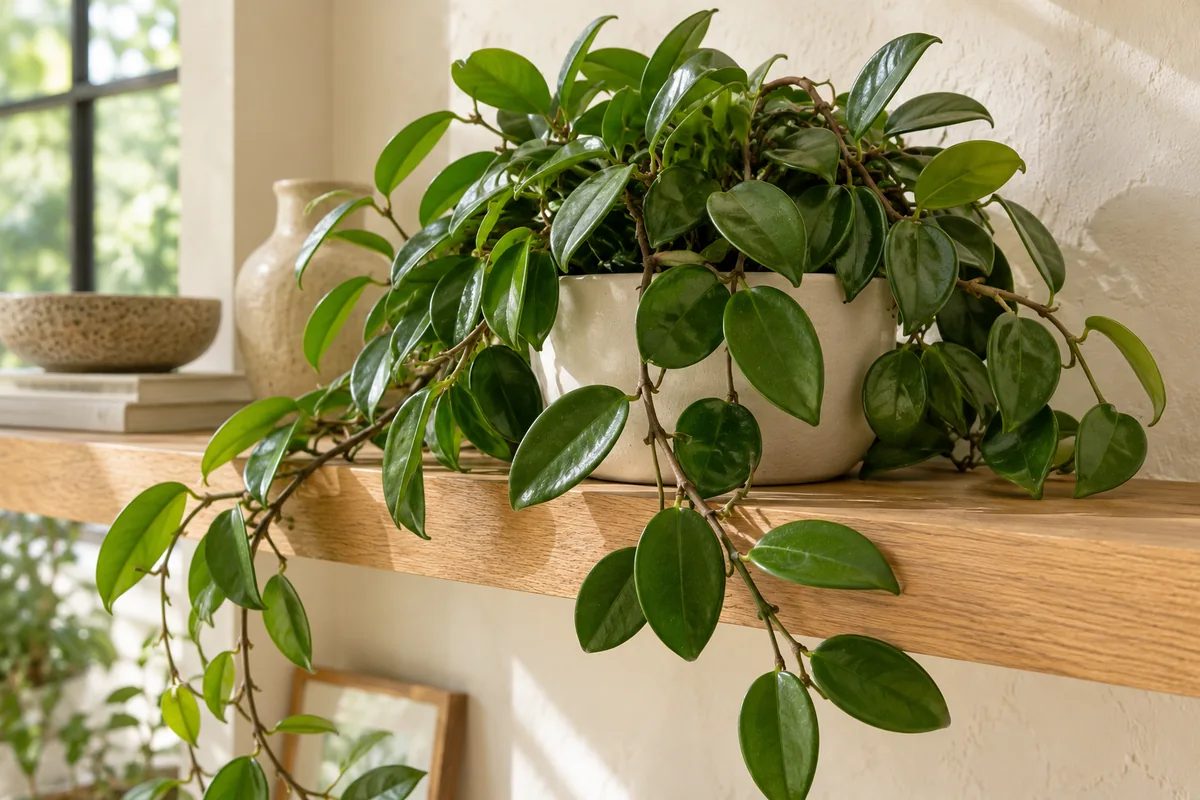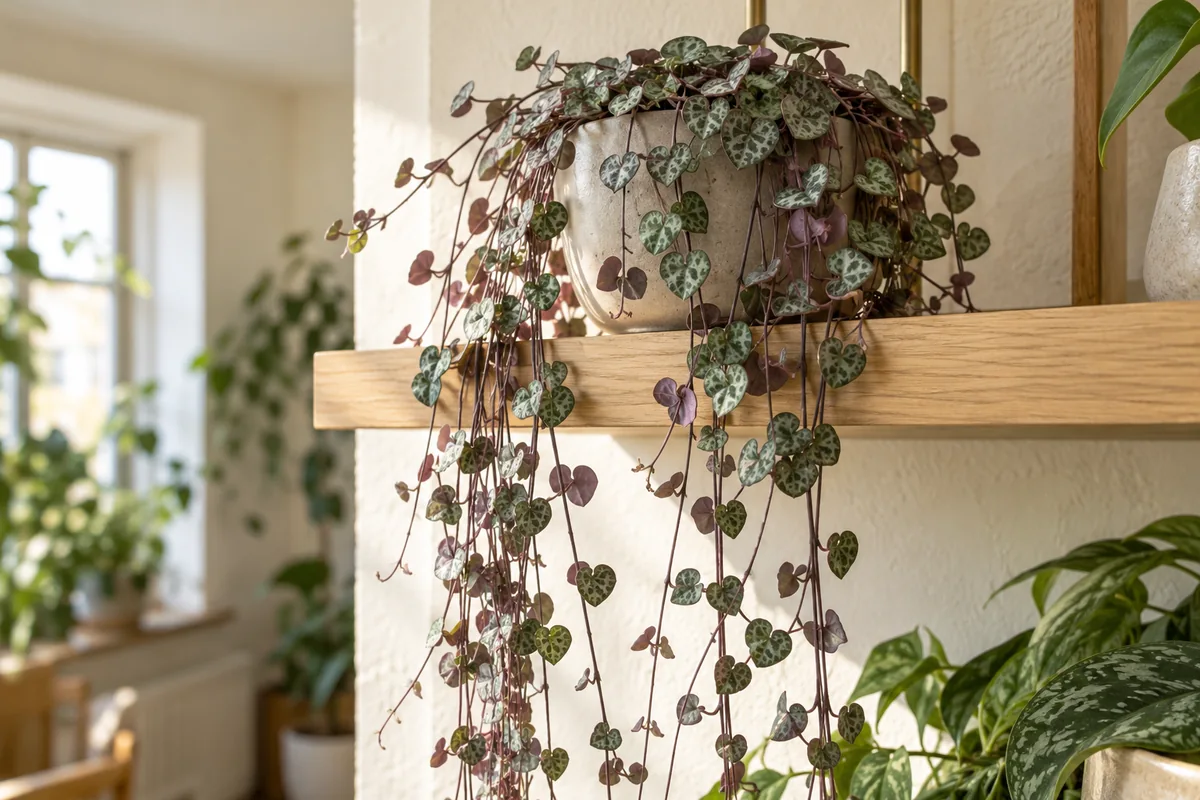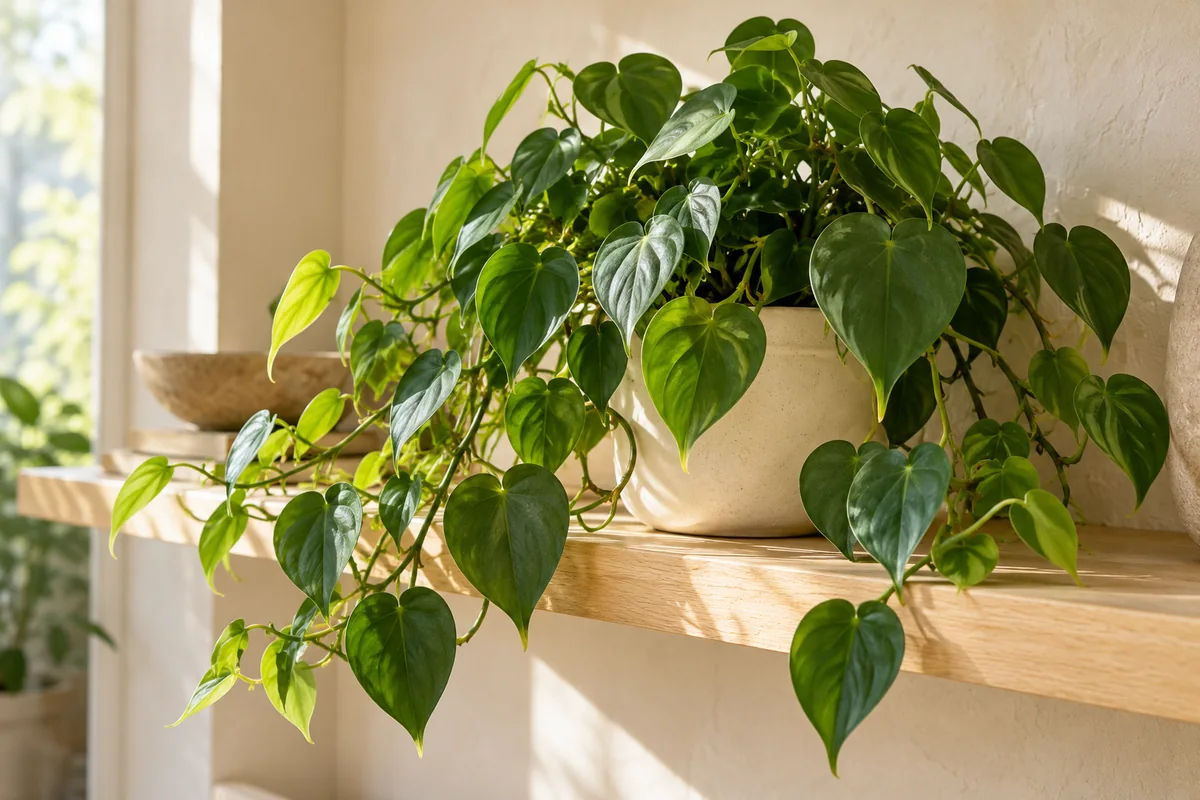
A beautiful leaf is not always a useful cutting. For many popular trailing houseplants, the small section of stem beneath the leaf is what determines whether the piece can grow into a new vine. Nodes are the joints where leaves and buds attach, and they are important landmarks when choosing propagation material. Once you learn to follow the stem instead of looking only at the foliage, cutting decisions become much clearer. Pothos, heartleaf philodendron, and satin pothos provide accessible examples. This guide concerns ordinary stem propagation. Some plants can be grown from leaves by other methods, so identifying the species remains the first useful step.
Begin with a vine still attached to its pot. Follow one leaf stalk back to the main stem and look at the point where the two meet. You may see a slight thickening, a small aerial root, a bud, or the remains of an older leaf attachment. That area is a node. The length of relatively plain stem between neighboring nodes is an internode. A leaf stalk is not the same structure as that main stem, even when it is long and firm. Cutting only the stalk below a leaf can leave you with a piece that stays attractive for a while but lacks the growing point needed for a new shoot.
Look at several nodes before making a cut, since their appearance can vary along one plant. Newer portions may have close joints and obvious buds, while an older stretch has longer spaces and leaf scars. An aerial root is a helpful clue on some vines, but its absence does not automatically make the node unsuitable. A node with damaged or collapsed tissue is a poor choice even if it carries a large leaf. Choose firm material with a sensible amount of foliage. A very long vine places a larger demand on new roots and is harder to support than a compact section containing a few sound nodes.
Plan where the cut should fall relative to the nodes you want to keep. For many stem cuttings, a clean cut just below the lowest retained node leaves that joint available for rooting. Keep the upper end and lower end clear in your mind when cutting middle sections without the original growing tip. Laying them in the same orientation on a tray and labeling them promptly can prevent confusion. Do not make every possible cut at once simply because the vine has many joints. Retain enough plant on the parent and enough useful structure on each cutting. The plant's actual growth pattern matters more than dividing it into equal measured lengths.
Decide how the node will contact the rooting environment before removing leaves. In water, the selected lower node should remain submerged while the leaves stay above the surface. In a suitable rooting medium, position the node near or within the surface according to the species and keep leaf stalks from being buried unnecessarily. A sprawling cutting can be held gently against the medium rather than forced upright if that fits its habit. Avoid scraping large areas of stem to reveal a node more clearly. The tissue is already present, and extra damage can make a manageable propagation piece less resilient during the period before roots develop.
Some plants reveal why the distinction between roots and shoots matters. A detached leaf may form roots under certain conditions yet never develop the new stem you hoped to obtain. Root formation alone does not guarantee that the necessary growing point was included. A stem cutting with a viable bud or tip is a more useful choice for species that need one. Conversely, plants such as some peperomias and begonias can produce new plants through specific leaf cutting methods. Do not apply those exceptions to every houseplant. When a propagation claim seems to rely on one leaf from an unrelated species, check a reliable horticultural reference before sacrificing valuable foliage.
After choosing the node, the ordinary conditions of propagation still apply. Use clean tools and containers, suitable light, steady warmth, and a rooting setup that contains moisture without excluding air. A perfect node can fail in a stagnant wet pot or dry on an exposed hot windowsill. Keep the cutting stable and inspect it without repeatedly pulling it apart. Look for firm roots and eventual new growth. If the node darkens and becomes soft, examine the conditions rather than assuming the presence of an aerial root guaranteed success. The node is a useful part of the starting material, not a substitute for the environment required to establish it.
Photographs can help build confidence. Take a close picture before cutting, mark mentally where the node and bud sit, and compare that image with the cutting after it roots. Keep a brief record of which sections produced shoots and which remained inactive. Over several attempts, the structure becomes easier to recognize without elaborate measuring. This observation is useful during pruning as well, because leaving a node on the parent influences where new growth may appear. A deliberate cut that preserves the right structures gives both plants a clearer path forward. It also saves the disappointment of tending a decorative leaf for months while waiting for a vine it cannot produce.