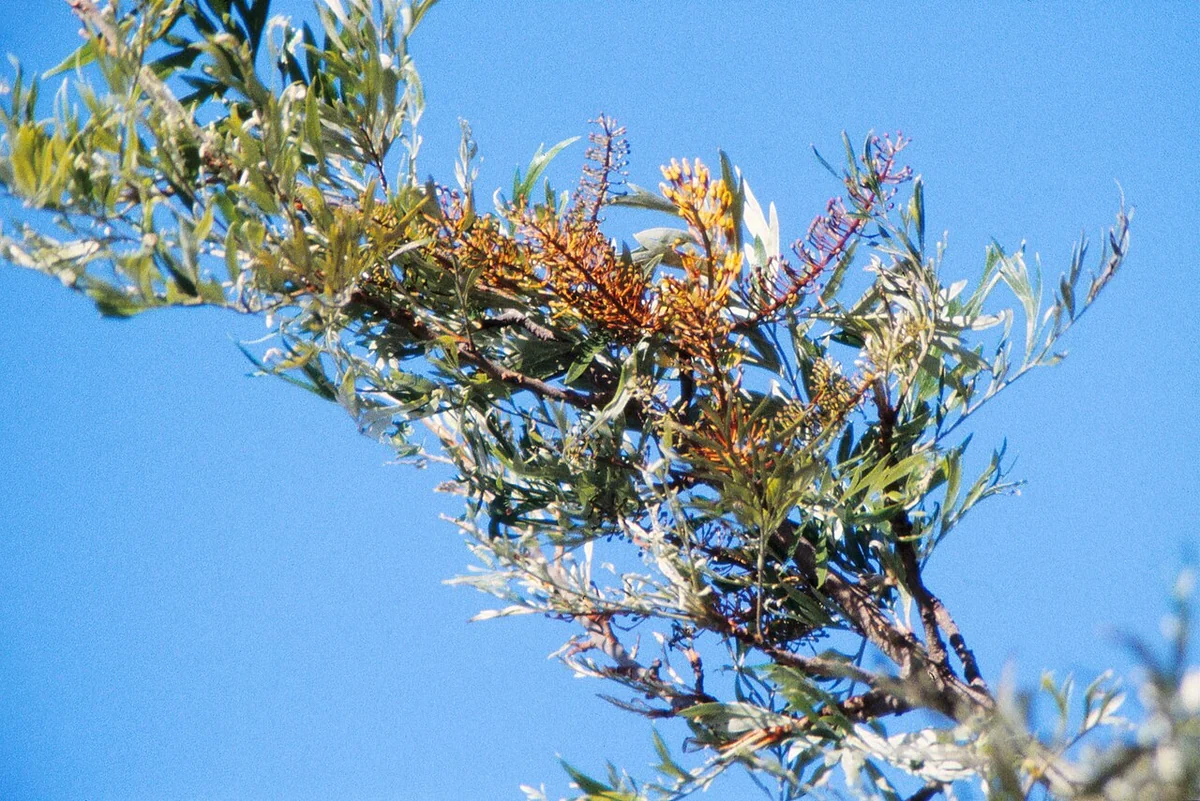
Silky oak is a juvenile conservatory project
A young silky oak can resemble a feathery indoor tree, with deeply divided foliage giving a lighter texture than many broad leaved houseplants. Grevillea robusta is not a true oak and is not naturally a small room tree. In suitable outdoor climates it becomes very large. Its indoor role should therefore be described honestly as a young specimen for a bright spacious conservatory, with a plan for its eventual size. A small nursery pot does not promise a permanently compact adult. Choose it because the available growing space and long term arrangements fit the plant, rather than because its fine leaves look delicate.
The species is native to eastern Australia and belongs to the Proteaceae family. Mature trees can develop substantial trunks, wide branches and conspicuous yellow orange flowers, a very different scale from the juvenile sold as an ornamental pot plant. Those adult photographs should not be used to promise a flower display from a small indoor tree. The interest under glass is usually the leaf texture and developing framework. Retain the botanical label so the plant is not confused with a fern or a small true oak. Its individual leaf divisions can look fernlike, but its growth is that of a woody tree.
Light and height need an honest assessment
Provide a very bright growing position with appropriate sunshine after acclimation. A seedling raised under shade may be damaged by an abrupt move to intense direct exposure. The whole crown needs useful light; a tall specimen placed beside a low window can grow above the brightest part of the room. Check the eventual height of both the tree and any supplementary light fixture. An ordinary office corner is unlikely to provide the same opportunity as a spacious conservatory. If the only way to keep it inside is repeated severe cutting before it has established a sound framework, reconsider the selection.
Leave enough space for the divided leaves and side branches to develop without constant contact with people or furniture. Fine foliage can conceal the volume that the plant occupies as the trunk extends. A suitable outdoor season may provide stronger light in appropriate climates, but movement should be gradual and weather conditions must be suitable. Protect a container specimen from cold that it cannot tolerate. Before choosing a large tub, decide how it will be moved and where it can spend winter. A living tree should not be planted outdoors in an unsuitable region simply because it has outgrown a temporary indoor display.
Support firm growth at the roots
Use a draining container mix that retains enough moisture for an actively leafy young tree. Keep the stem at its previous level and choose a pot that stabilises the framework without surrounding small roots with excessive unused wet medium. A stake may help a newly established specimen, but ties need regular checks as the trunk thickens. Do not leave the pot in collected runoff. The fine foliage above does not mean that the roots prefer permanently waterlogged material. Inspect the root ball when deciding whether repotting is needed, and separate necessary structural support from an automatic increase in container size.
Water thoroughly when the occupied mix begins to need replenishment, allowing the excess to drain freely. Young container plants cannot rely on the same established root reserves as a mature landscape tree described as drought tolerant. In warm bright conditions a small pot may dry quickly; under weaker winter light the interval may extend. Learn the difference through observation rather than applying a fixed schedule copied from a tropical foliage tree. If the foliage loses firmness above wet mix, examine roots, drainage and temperature. A drink added without checking can worsen a saturated condition while appearing to be attentive care.
Keep nutrition measured
Feed active growth with a suitable product at a modest recommended rate, remembering that fresh potting mix may already contain nutrients. Grevilleas belong to a family often associated with sensitivity to excessive phosphorus, so avoid concentrated phosphorus rich supplements chosen simply to imitate the flowers of a mature tree. The exact requirements should follow reliable species guidance and the product label rather than a universal rule applied to every Australian plant. A dim room cannot be corrected by stronger feeding. Look at the strength, colour and spacing of the newest growth and examine the root environment before adding several amendments.
Prune with a clear structural purpose. Remove damaged material and guide a young framework while the plant can still be handled safely. Constantly cutting a fast growing tree to force it into a very small corner is not the same as cultivating a suitable indoor specimen. Leaf and twig shedding should be expected as part of maintenance, and a crowded room needs easy access for cleaning beneath the pot. Avoid promising a mature flower display or a centuries old bonsai appearance from repeated clipping. The tree's natural eventual scale remains relevant even when the current plant is attractive and manageable.
Plan for the next stage before it arrives
At each seasonal check, ask whether the existing growing place still meets the tree's height and light needs. A seedling that once fitted a windowsill may require a floor position that receives less useful light. Simply moving it downward to make room can therefore create a new problem. If the site has a practical size limit, arrange a suitable long term conservatory home or choose a smaller species before the tree exceeds it. Any outdoor planting decision must consider local climate and ecological guidance. Giving away an oversized plant without explaining those constraints merely passes the same difficulty to another person.
The fernlike foliage and Australian origin can support a personal gift message about botanical curiosity or an interest in tree diversity. They do not justify claims that silky oak purifies an office or guarantees a soothing environment. This is a gift for someone with a sufficiently bright spacious growing area and an understanding of its juvenile indoor role. It is generally unsuitable as a surprise for a small apartment or a permanently shaded reception desk. Discuss the plant's future before choosing a tall specimen. A truthful description of its scale is more valuable than a decorative promise that the pot will keep it small forever.
A useful specimen has a documented future
Pass on the species name, nursery conditions and any feeding or repotting information. Choose a stable draining container that can be moved safely, with room to inspect the root zone. Inspect foliage and branches for pests before introducing the tree to a collection, especially after an outdoor season. Keep maintenance records so ordinary seasonal changes are not confused with a new issue. Silky oak can provide an interesting view of a large tree's early growth under suitable protection. Its value lies in that honest growing project, not in presenting a temporary juvenile as an effortless lifelong office decoration.