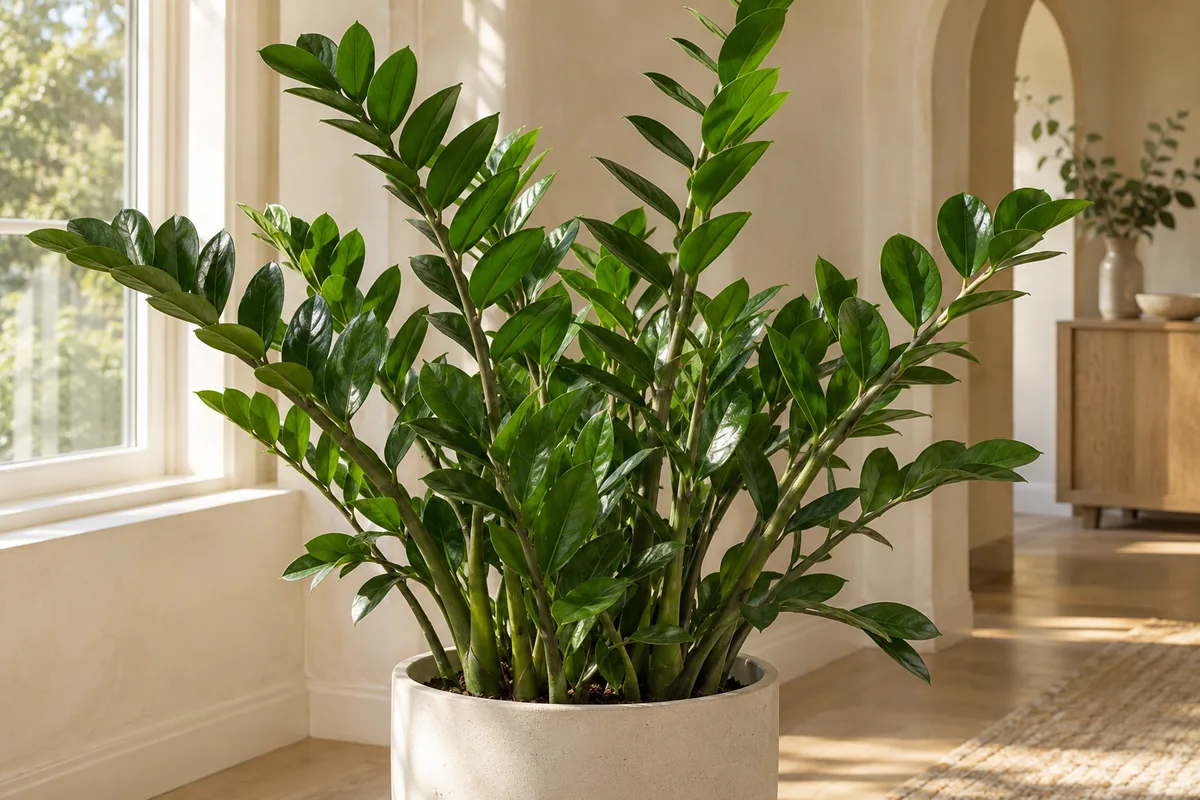
Zanzibar gem has a way of looking polished even when nobody has touched it for a while. Its glossy leaflets and upright stems make it a natural choice for a quiet corner, and its unhurried pace can make new growers nervous. A long pause between shoots is common. Repeatedly watering or feeding to encourage activity is usually the wrong response. The plant stores water in thick underground structures and uses that reserve gradually. Its care becomes much more predictable when those storage organs, the depth of the pot, and the amount of daylight guide decisions instead of the desire to see immediate growth.
Choose a position with bright indirect daylight when possible. Zanzibar gem tolerates reduced light, which is useful in rooms where other foliage plants become sparse, yet tolerance should not be confused with a preference for darkness. A plant placed far from a window may grow slowly enough that its mix stays damp for a very long time. Direct afternoon sun can mark leaves that developed in shade. Move toward a brighter window gradually and check the leaf surfaces for fading. A space near an open doorway can work if temperature remains steady and the leaves are not repeatedly brushed by people passing through.
Let the potting mix dry thoroughly before watering again. Check beneath the surface with a wooden probe and lift the pot when practical to learn the difference between wet and dry weight. A large decorative container can conceal a moist nursery pot for weeks. Remove the inner pot for watering, wet the mix evenly, and allow excess water to drain before putting it back. Do not leave a reservoir in the outer container. The swollen bases and fleshy roots already provide storage; continually moist surroundings add little benefit and can cause the underground parts to soften before the foliage looks noticeably different.
An open potting mix is especially useful for this plant. Coarse mineral particles and a suitable amount of bark can create spaces through which water and air move. Use a container with drainage and avoid a substantial jump in size during repotting. The roots need room to grow, yet unused wet mix surrounding a small root system dries slowly. Repot when the plant fills its container or the thick underground growth distorts the pot. Gently examine the root ball and keep firm structures intact. Place the plant at its former depth, keeping stem bases clear instead of burying them under a new layer.
A new shoot often appears suddenly as a tightly folded spear, then extends and opens into a fresh row of leaflets. The newest growth may be lighter than established foliage and darken as it matures. Let it develop without trying to open the leaflets by hand. Turn the pot a little if shoots begin leaning toward the window, provided the container remains stable. Very long weak growth can signal that the position is too dim. Better light will influence later shoots; it will not shorten the stems already present. Give the plant time to respond before making another major adjustment.
Zanzibar gem needs only modest feeding while it is growing. Follow the directions for a houseplant fertilizer and avoid concentrated applications to a very dry root ball. Fresh commercial mix may supply enough nutrients for a period after repotting. A slow plant in weak winter light does not need regular feeding merely because the bottle suggests a frequent summer routine. White deposits on the pot or mix surface suggest that minerals are accumulating. Review fertilizer strength and the water supply, then flush a freely draining container when appropriate. Extra nutrients cannot turn a dark position into a productive growing space.
Cleaning is straightforward because the leaflets have smooth surfaces. Support each stem and wipe gently with a damp cloth rather than bending the whole branch toward you. Inspect the joints and lower stems during cleaning, where small changes can otherwise remain hidden. Yellowing confined to an old stem may be part of normal turnover, especially if the rest of the plant is firm and growing. Several stems yellowing together, a sour smell from the mix, or a soft base require a root inspection. Do not cover the surface with decorative material that prevents you from seeing or feeling the mix when a problem is developing.
A compact care record can prevent the most common mistake. Note when the pot was watered, whether it drained freely, and how long the lower mix took to dry. Recheck that interval after moving the plant or changing the container. Established Zanzibar gem often needs less attention than the surrounding houseplants, so keep it on its own routine. If it outgrows the space, divide rooted sections during a suitable period of active growth rather than repeatedly pruning the leaflets. A bright position, a sensible pot, and an honest drying interval preserve the clear upright shape that makes this plant so useful indoors. Leave enough space above the crown for new shoots to open without brushing a shelf or neighboring plant.