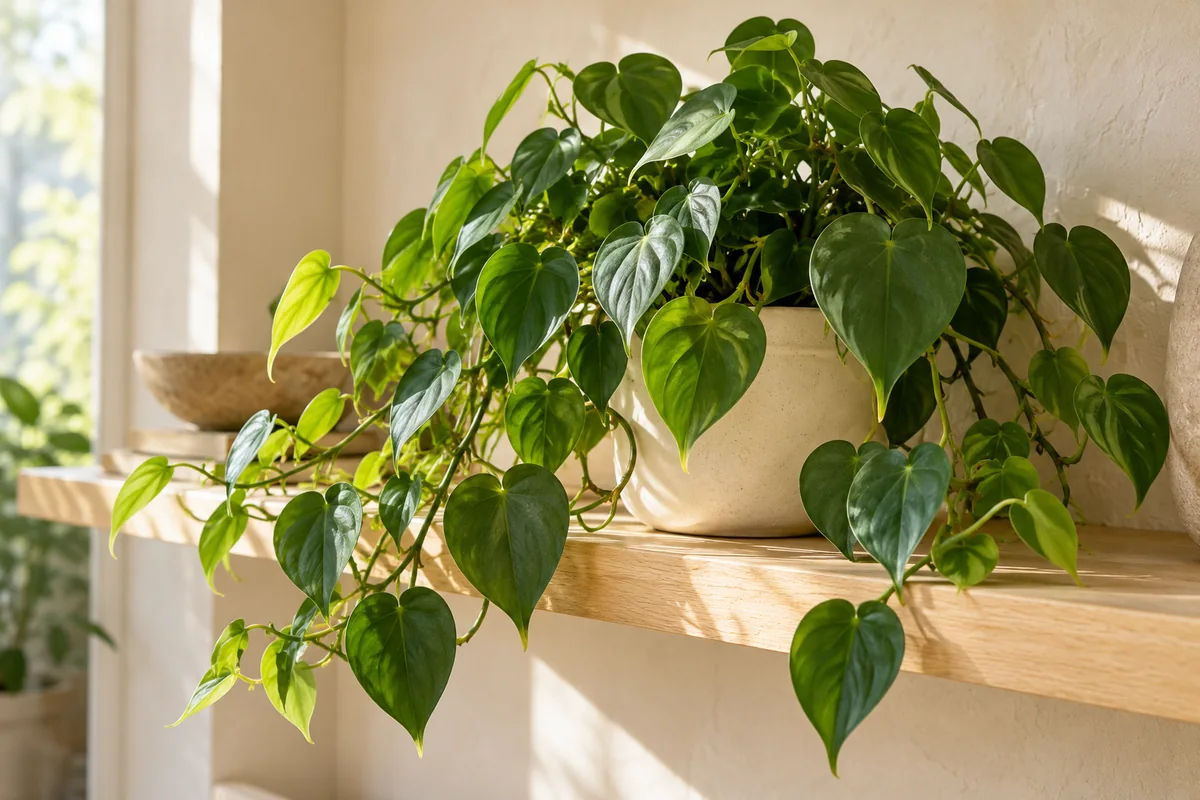
A heartleaf philodendron often starts as a small leafy pot and quietly becomes part of the furniture. One vine follows the shelf, another curves around a picture frame, and a third disappears behind the bookcase. Its relaxed habit is appealing, provided the growth still receives light and the pot remains accessible. Keeping this plant full does not require constant attention. It requires noticing where the stems are going. Place the crown where daylight reaches it, leave enough room to water thoroughly, and guide the vines before their direction becomes awkward. The plant will usually look more settled when its natural movement has a little structure.
Bright indirect light encourages useful growth without exposing the soft foliage to abrupt strong sun. Heartleaf philodendron can tolerate less light than some houseplants, yet long bare stretches and increasingly small leaves suggest that the position is too dim. Check the top of a high shelf rather than assuming that height automatically means brightness. A crown above the window frame can be surprisingly shaded. Move the plant closer to the window gradually if needed and protect it from intense afternoon sun. Rotate the pot occasionally when one side of the crown becomes noticeably fuller than the other.
Allow the upper mix to dry before watering, then wet the entire root ball and let excess water drain. A lightweight pot and slightly dry surface can help identify the right moment, with a finger or probe confirming the moisture below. Limp leaves need a moisture check first. A dry root ball and a saturated one can both produce a tired appearance for different reasons. Empty water from decorative outer containers after the inner pot drains. Small frequent splashes near the main stem leave the rest of the roots with uneven moisture and make it harder to understand what the container actually needs.
Use a loose houseplant mix with enough structure to remain open between waterings. Coarse bark and a suitable mineral amendment can improve a dense mix, depending on the room and container. A drainage hole is essential for a straightforward routine. Repot only when roots have filled the available space or the plant dries so rapidly that thorough watering no longer lasts a sensible interval. Increase the diameter modestly. Long vines do not automatically require a large pot, and an oversized container can keep unused mix damp. Maintain the previous planting depth and avoid covering the vine bases with a thick new layer.
Trim a vine just above a node when it becomes too long or loses its attractive proportion. The remaining stem may branch from a nearby growing point. Choose different cutting positions so the outline stays natural rather than forming a rigid edge across every vine. The removed sections can be rooted if each includes a node. A leaf without a piece of stem and a node cannot become the same complete new plant. Established cuttings can be added back to the parent pot to create a fuller crown. Give the new roots an appropriate settling period instead of burying fresh unrooted pieces deep in old dry mix.
The vines can trail freely or climb a support. A small trellis, pole, or plank can keep the plant compact and make the main stems easier to inspect. Attach stems with loose soft ties and leave the leaf stalks free. Aerial roots are part of the climbing habit and can be guided toward the support. Larger leaves may develop as an established plant climbs in good conditions, though a typical indoor trailing specimen keeps its familiar smaller foliage. Choose the arrangement that suits the available light and space. Repeatedly forcing vines around sharp corners can crease stems and interrupt otherwise smooth growth.
Clean the leaves with a damp cloth when dust becomes visible, supporting delicate vines as you work. Check the underside of leaves and the joints between leaf stalks and stems. Remove old yellow foliage and fallen material from the mix surface. Feed lightly during active growth according to the product instructions, considering nutrients already in fresh potting mix. A plant producing small widely spaced leaves usually needs a review of light before stronger feeding. If several leaves yellow at once, inspect the root zone and drainage. A single older leaf dropping from a long vine tells a different story from an entire crown changing color.
Keep the pot accessible even when the vines become part of a display. Being able to lift the container, inspect its underside, and empty the saucer prevents many avoidable problems. Take a photograph occasionally to judge whether the crown is filling out or simply sending longer runners into the room. If it looks sparse, improve the light and use selective pruning while the plant is actively growing. Several shorter leafy vines usually create a more generous shape than one uninterrupted stem. A clear route for the vines and a dependable moisture check let heartleaf philodendron retain its easy, informal character.