A plant moved closer to a sunny window can look better positioned to everyone except its leaves. Foliage formed in a shaded room developed under different conditions, and a sudden intense beam may leave pale dry patches within a short time. More light can be useful, yet the transition deserves care. Begin by understanding what the plant needs and how much the new exposure differs from the old one. A gradual move gives you time to observe the response and adjust watering. It also makes it easier to distinguish a useful brighter setting from one that is simply too intense or too hot for that particular foliage.
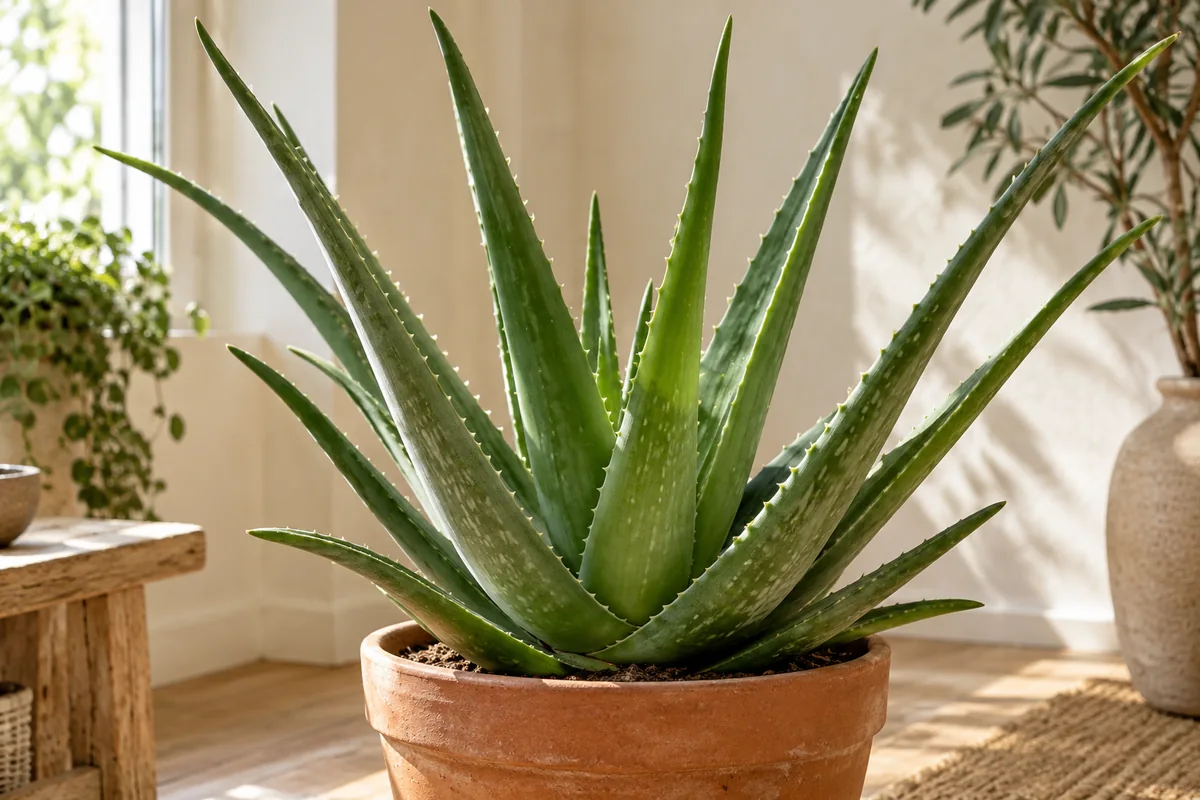
Identify the species before planning the move. A jade or aloe generally needs stronger light than a calathea or bird nest fern. A sun loving plant can still be marked by abrupt exposure after a long period in shade. A shade adapted species may need permanently filtered light rather than a gradual path to full afternoon sun. Check the proposed window through the day and note when direct light reaches the leaves. Outdoor trees, neighboring buildings, curtains, and season all alter the pattern. The word sunny is too broad to describe the actual hours and intensity that the plant will experience at its new position.
Start with a sheltered spot near the brighter window or use a suitable sheer curtain to soften direct exposure. Increase the amount of stronger light in measured steps over several weeks when appropriate for the plant. There is no universal timetable that suits every species, season, and room. Watch the leaves and avoid moving so quickly that damage appears before the previous change can be evaluated. Keep the pot stable and the crown visible. If daily moving is impractical, a fixed sheltered position with gradual curtain adjustments may be easier to maintain than carrying a large specimen back and forth through the room.
Look for dry pale patches on the side receiving the strongest beam, unusual bleaching, or leaf edges that become crisp after the move. These signs need to be read alongside moisture and temperature, yet their timing and location can reveal an exposure problem. Existing marks do not become green again. Reduce the intensity or duration as appropriate and judge the next leaves rather than trying to repair old tissue with extra fertilizer. Do not repeatedly wet the foliage as a general solution. A wet root ball or damp leaf surface cannot make every species tolerate an unsuitable amount of direct sun.
Check the temperature around the leaves as well as the brightness. A plant close to glass can become warm in afternoon sun and then cool sharply overnight. Keep foliage from touching the pane and leave space for air to circulate gently. Avoid direct airflow from a heating or cooling vent. A brighter window beside a frequently opened cold door introduces several changes at once, making the response harder to interpret. Choose a position that improves useful light while remaining reasonably stable. The goal is a better growing environment, not the strongest exposure available regardless of every other condition.
Water use may increase in the brighter position, especially once new growth becomes active. Check the mix more often, using touch, a probe, or container weight to understand the root zone. Do not add a fixed extra amount simply because the plant moved. A deep pot can still remain wet beneath a dry surface. Water thoroughly when the plant is ready and let excess drain, emptying the saucer afterward. If the mix dries very rapidly, inspect root crowding and absorption before assuming that constant small splashes are the answer. The new setting may reveal an existing container problem that was less obvious in shade.
Keep other major changes limited while the plant adjusts. Repotting, heavy pruning, and stronger feeding at the same time can make the response difficult to read. Feed according to active growth and product directions, taking account of nutrients already in the mix. A photograph before the move and another after several new leaves have opened can show whether spacing and size are improving. Old stretched stems will not shorten. Once better growth is established, selective pruning may refine the shape if the species responds well. Let the plant demonstrate that the brighter arrangement is useful before making additional structural changes.
Review the position again as seasons change. A beam that was gentle in one month may become longer or fall on a different part of the canopy later. Trees can add summer shade and remove it in winter. A successful move is therefore the beginning of a familiar observation routine rather than a permanent guarantee. Watch new foliage, keep the root zone accessible, and adjust in small practical steps. Gradual acclimation respects the leaves already present while giving future growth a better setting. Useful light, sensible temperature, and responsive moisture checks work together to make a sunnier window an improvement the plant can actually use.