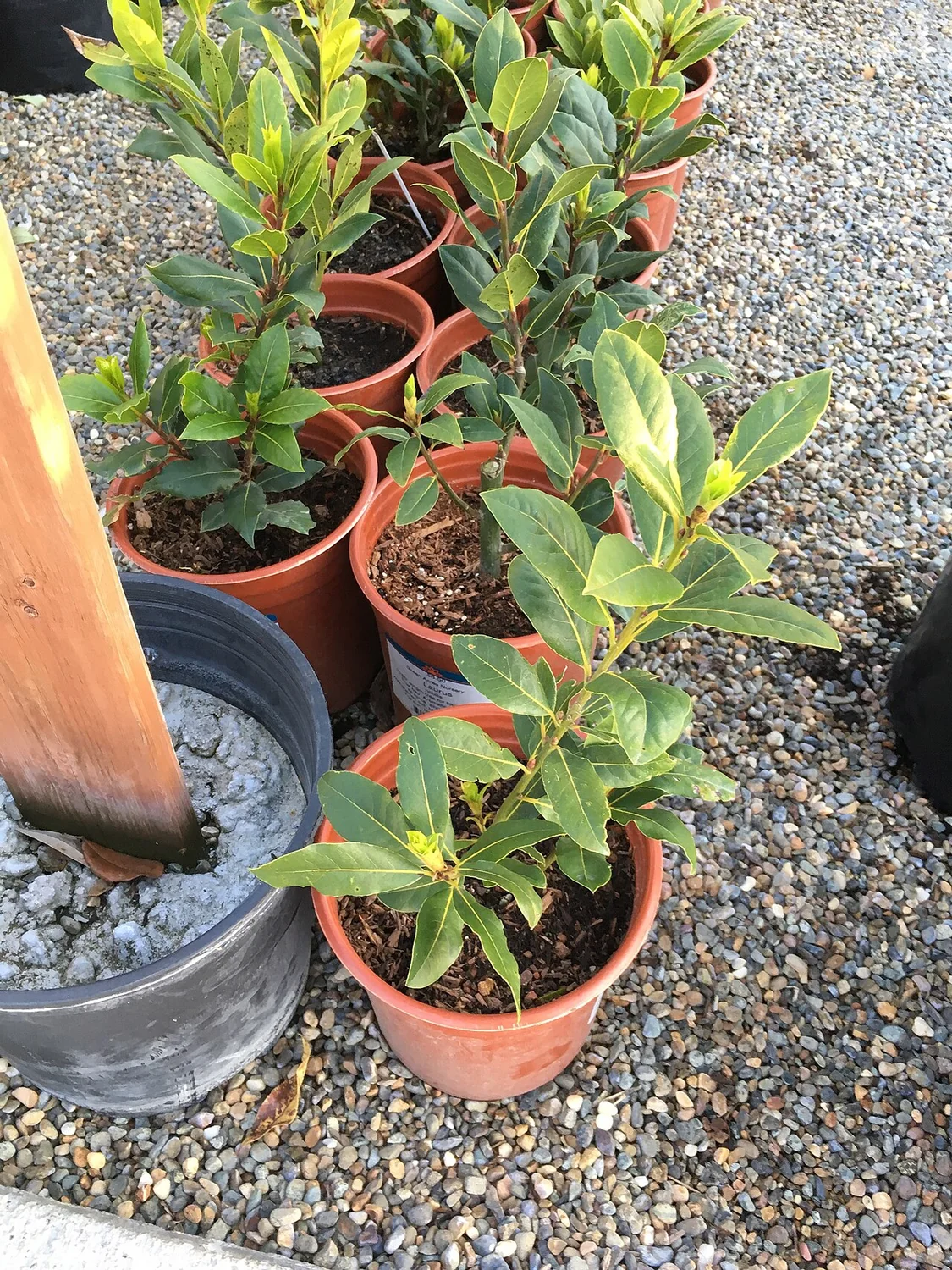
Know which laurel you are bringing home
Bay laurel can make a fine small tree for a bright cool growing space, especially when trained with a visible stem and a rounded crown. The botanical name Laurus nobilis matters. Several unrelated plants are called laurel, and a culinary use associated with bay should never be transferred to a different plant on the strength of a common name. Buy a clearly identified specimen and retain its label. A useful herb garden tree can also be ornamental, but the decision to grow it indoors must consider its light and seasonal needs rather than only the attractive clipped shape.
Bay comes from the Mediterranean region and is an evergreen woody plant rather than a soft annual kitchen herb. In suitable ground it can become a substantial tree, which explains the persistence of its framework and its response to careful pruning. Container growing keeps it manageable through a combination of restricted root space and maintenance. It does not make the species naturally miniature. Named forms can differ in leaf shape or colour, so compare the actual nursery plant with the general description. A standard trained over several years is also a maintained horticultural form, not an effortless shape that will look after itself indefinitely.
A cool bright room is different from a kitchen shelf
Provide strong daylight, with sun or bright partial shade according to the local conditions. A cool conservatory, bright enclosed porch or an arrangement that includes a suitable outdoor season can work better than a constantly hot dim kitchen. Keep the canopy away from a cooker, heating vent or a crowded shelf that shades most of its leaves. If the plant is displayed for an occasion in a darker room, treat that as a temporary placement. The permanent growing address should support firm leaves and branching, not simply make the tree convenient to reach while cooking.
A trained bay often spends summer outside in a sheltered position. Introduce stronger exposure gradually after indoor protection and avoid a windy corner that can rock a high crown. Where winters are severe, container roots need protection even when a bay planted in a mild garden survives outdoors. Bring the tree into suitable cool shelter or protect the tub according to local conditions. Check drainage after rain. A plant that is quiet through winter still needs occasional moisture assessment; evergreen leaves do not become independent of the roots merely because growth has slowed.
Give the root ball a stable container
A loam based or similarly substantial draining container mix can support a woody bay better than loose material that collapses rapidly. Use a pot only sensibly larger than the existing root system when repotting is justified. Keep the collar at its old depth and leave a little practical space below the rim for watering. A heavy formal crown should not sit over a narrow unstable base. Check the stake and tie on a standard as the trunk thickens. The pot should also be easy to inspect, rather than permanently hidden inside a sealed ornamental vessel that collects every watering.
Water according to the moisture within the occupied root ball. In summer a leafy clipped head can use water quickly, even though bay is often described as reasonably drought tolerant once established in the ground. Wet the roots thoroughly when needed, let the excess leave and remove it from any saucer. Through a cool dimmer season, the interval can become much longer. Brown leaf edges are a reason to inspect the pattern and conditions, not a diagnosis by themselves. A dry centre, a wet lower layer and cold damaged foliage require different decisions from the person caring for the pot.
Pruning and harvesting should work together
Shape the tree with enough foresight that a small maintenance cut does not become a recurring severe reduction. A standard needs some light inside its crown, while a looser tree can show more of its branching naturally. Remove damaged growth and shorten selected shoots to suitable leafy points. Taking leaves for cooking is also a form of pruning, so avoid repeatedly stripping the same small section. A new or struggling tree should establish before carrying a heavy harvest. If the specimen came from an ornamental supply chain, confirm that its treatment history permits culinary use before putting leaves into food.
Use an appropriate container fertilizer while growth is active, allowing for any nutrition already in the medium. The rate should support balanced new growth rather than a soft flush in poor light. Bay does not need to be fed each time a few leaves are harvested. A constrained pot can accumulate salts when multiple products are added without a plan. When growth becomes weak, compare light and roots before assuming a larger feed is the missing ingredient. Keep feeding and watering records with a tree that is cared for by more than one person, especially in a shared workplace collection.
Look inside rolled young leaves
New growth deserves inspection because pests can remain hidden where the leaves curl or cluster together. Bay sucker damage, scale insects and unrelated environmental browning are not interchangeable conditions. Examine what is present before deciding on a response, and avoid stripping a whole canopy merely because a few leaves look imperfect. Dust can be removed gently from accessible foliage while the stems are supported. Check an outdoor tree before returning it near indoor plants. A stable bright position makes subsequent changes easier to read than repeated moves between a hot room and cold glass whenever the foliage looks temporarily dull.
Bay can carry a personal association with achievement or a well tended kitchen garden, but a giver should distinguish a chosen message from a claim that a tree guarantees success. A graduation or promotion gift may use the plant's formal outline as a symbol of growing responsibility. A gift for an enthusiastic cook may instead emphasise the relationship between a cultivated plant and everyday meals. In either case, ask whether the recipient has the appropriate light and cool seasonal accommodation. A living tree is an ongoing task, not a permanent decorative trophy requiring no practical attention.
Keep the useful identity with the plant
Provide a legible Laurus nobilis label, a manageable draining pot and the supplier's information about culinary use. Do not exchange it for a different laurel simply because the leaves look similar. Choose a crown size the recipient can move and inspect without assistance. For the first year, the priorities are establishing the seasonal position, maintaining root aeration and learning the watering pattern. A sound leafy bay with a clear framework is already a successful container tree. Its usefulness and appearance develop through appropriate repeated care, rather than through the quantity of leaves removed or the speed of formal clipping.