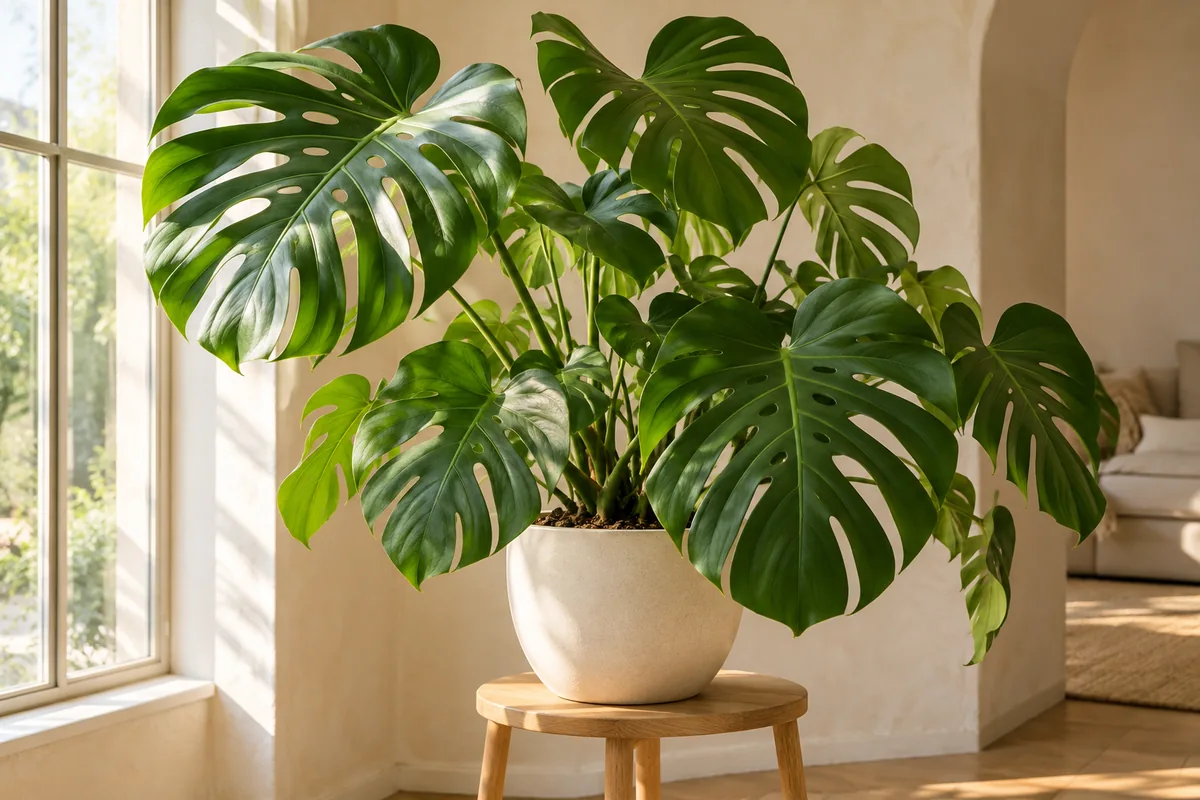
A single monstera leaf in a vase can remain attractive for a long time, yet it is not necessarily the beginning of another climbing plant. New growth needs a suitable piece of stem carrying a node and its growing potential. The long stalk attached to a leaf is different from that main stem. Before cutting, trace the plant carefully and find the joints where leaves and aerial roots emerge. Once those structures are clear, you can choose a section that includes what the new plant needs. The size of the leaf is less important than preserving the correct stem material and keeping the cutting manageable while roots form.
Choose a firm section from a plant that is growing steadily. A cutting with a suitable node and a modest amount of foliage is easier to support than a large tangled branch. Consider the parent plant's remaining shape before removing it, especially if the main stem is tied to a pole. Use clean sharp tools suitable for the stem's thickness and wear gloves while handling cut material. Keep the work away from food surfaces. A mature stem may require more controlled cutting than soft pothos growth, so support the section rather than letting its own weight tear the final connection. Make a deliberate clean cut with the necessary node intact.
Examine the cutting without stripping away useful structures. An aerial root can help you identify the node and may be included, though a large old root does not replace the need for viable stem tissue. Keep the leaf stalk and blade above the rooting environment rather than submerging them. If the cutting is too top heavy, use a stable container or external support instead of burying more stem indiscriminately. A broad leaf can act like a lever and repeatedly move the base. Reducing that movement helps developing roots maintain contact with water or medium. The support should hold the stem gently without pinching the leaf stalk.
For water rooting, choose a clean vessel with enough space to remove the roots later. Keep the appropriate node area in contact with water and the foliage above it. A narrow decorative neck can become awkward once roots branch, so prioritize access. Place the vessel in bright filtered light at a steady suitable room temperature. Strong direct sun can warm the water and expose the cutting to an abrupt change. Refresh the water when needed to keep it clean and maintain the level. Do not add concentrated fertilizer at the start. Observe root growth without repeatedly lifting the cutting out and letting its weight bend the new structures.
A suitable propagation medium provides another route. Use a small drained container with a lightly moistened airy material that contacts the node without remaining saturated. Make the planting space before inserting the cutting, settle gently, and provide a support if needed. Avoid a very large pot, since the cutting initially has little root system to use its moisture. Maintain conditions appropriate to the species and the chosen medium. A sealed enclosure is not automatically necessary for a large monstera cutting and can create persistent condensation around foliage. The practical aim is stable contact, useful light, and enough moisture for roots to develop without leaving the stem in stagnant wet conditions.
Expect variation in timing. Temperature, light, stem maturity, and the condition of the cutting all influence progress. A root tip may appear before any visible new shoot, and a cutting can spend time developing its underground structure before extending another leaf. Do not disturb it merely because it has not matched a timetable seen elsewhere. Inspect if the stem becomes soft or clearly deteriorates. Firm tissue with gradual root extension is a useful sign. Keep the setup consistent and record the date if that helps observation. Rooting is a developmental process rather than a deadline, and repeated changes can make it harder to identify what the cutting actually needs.
Move a water rooted cutting into a small appropriate pot once it has a practical developing root network. Use a suitable houseplant blend with enough fine contact around the young roots, even if the mature plant later occupies a coarser mix. Guide the roots into a prepared opening rather than forcing them through compressed material. Keep the stem at an appropriate depth and the leaf stalk free. Water carefully, let surplus drain, and check moisture frequently during the transition. A heavy leaf may still need temporary support. The first container should serve the roots present now, not the canopy you hope the plant will produce over the next several years.
As the new plant establishes, provide room for its climbing form. Position a suitable support thoughtfully and fasten the main stem rather than the individual leaf stalks. Let roots occupy the first pot before increasing its size, and adjust watering from actual moisture use. New leaves may differ in size and divisions from the large leaf on the original cutting; development reflects the plant's maturity and conditions. Do not assume that a small initial leaf means the propagation failed. A viable node, firm roots, stable light, and manageable moisture give the new monstera a useful start. The following growth can then be guided gradually as the plant builds its own structure.