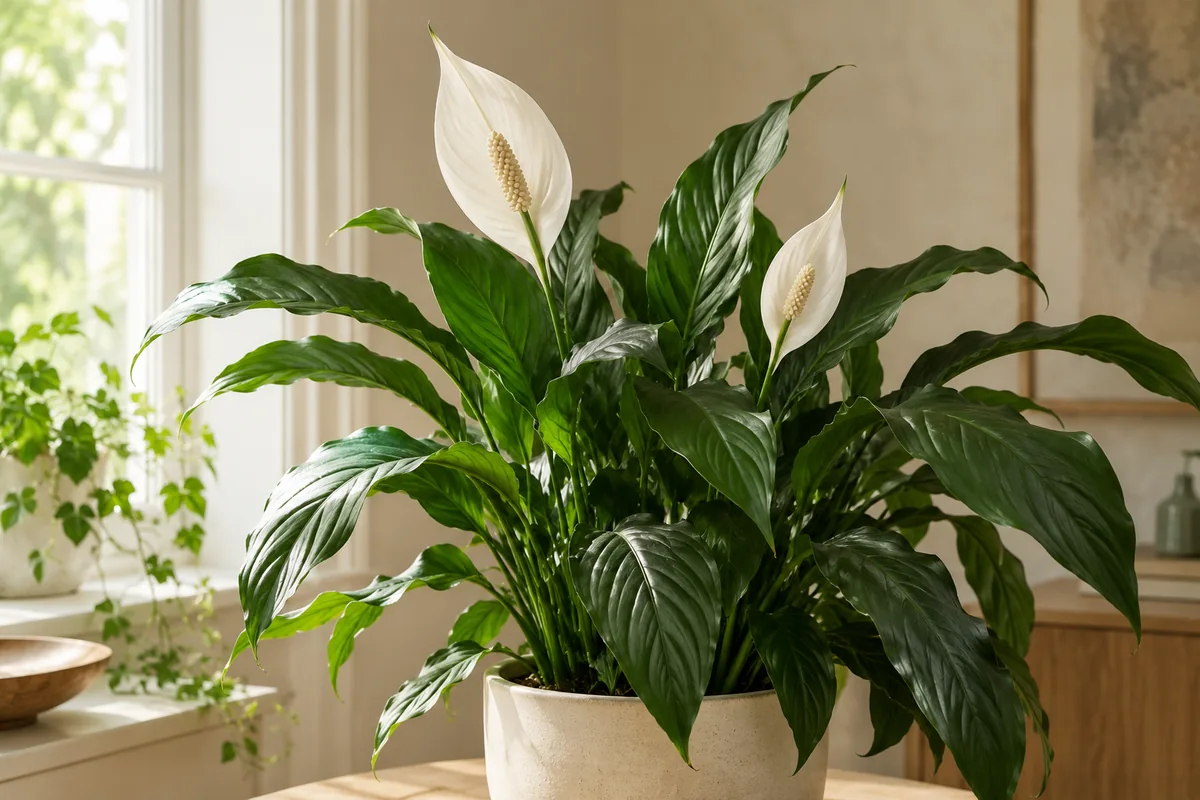
The familiar peace lily droop is a useful signal, though it is a late one to build an entire routine around. A plant that repeatedly collapses and recovers may keep growing, yet its leaves are being asked to cope with avoidable swings in moisture. Check the pot before that dramatic stage arrives. The surface, the weight of the container, and the firmness of the newest leaves give earlier clues. With a bright sheltered position and a root zone that drains freely, peace lily care can feel much calmer than the cycle of finding a limp plant and rushing it straight to the sink.
Choose bright indirect daylight, with protection from intense afternoon sun. Peace lilies tolerate relatively subdued light, which explains their popularity indoors, but a dark corner can produce slower growth and fewer white spathes. Flowering depends on the plant and conditions, so a leafy specimen without blooms is not automatically missing a particular additive. Move it closer to useful daylight gradually if the stems are stretching or new leaves are noticeably smaller. Keep foliage away from cold window glass and direct airflow from vents. A stable room temperature supports more predictable moisture use than a position repeatedly exposed to hot or chilly drafts.
Water when the top of the mix has begun to dry while the deeper root zone still holds a little moisture. The aim is an evenly moist, aerated root ball rather than continuous saturation. Use a finger or wooden probe to check below the surface, then water thoroughly and allow excess to drain. Empty the saucer afterward. If the leaves droop while the pot is heavy and wet, more water may make matters worse. Inspect drainage and roots before responding. A peace lily can wilt from a root problem as well as from dryness, so its posture needs to be read alongside the container.
An open houseplant mix and a drainage hole make the routine easier to manage. The mix should absorb water evenly and release the excess without compacting into mud. A decorative outer planter can conceal collected water, so remove the inner pot for a thorough drink whenever possible. Repot when roots fill the container and the mix dries unusually quickly, increasing the diameter only modestly. Maintain the previous depth, with the crown clear of buried material. A very large pot is unnecessary for a modest clump and may leave wet mix outside the active root zone. Check the new drying pattern after any container change.
Brown leaf tips can have several contributing causes, including irregular moisture and accumulated mineral salts. Review watering, fertilizer strength, and the local water supply before making repeated adjustments. If deposits form on the surface or pot rim, flush a freely draining container when appropriate and let it drain completely. Water with lower mineral content can be useful where the usual supply leaves substantial residue. Existing brown edges remain as marks. Trim them only if their appearance bothers you, leaving a narrow dry margin rather than cutting well into green tissue. New leaves provide a clearer indication of whether the revised routine is working.
The white display is a modified leaf called a spathe, surrounding a central flower structure. It gradually changes color as it ages and does not remain white indefinitely. When an old flower stalk has finished, remove it near the base with a clean tool without damaging neighboring growth. Do not assume a fading spathe needs extra fertilizer. Feed according to the chosen product directions while the plant is actively making leaves, accounting for nutrients already present in new mix. Too much feeding can add to salt buildup. A pause during a dim period is a reason to watch conditions rather than intensify treatment.
Wipe broad leaves with a soft damp cloth, supporting each blade as you clean. Dust tends to settle near the central vein and can hide small changes in color or texture. Remove old yellow leaves and keep fallen material off the soil surface so moisture remains easy to inspect. A mature crowded clump can be divided during active growth, with each division retaining roots and several leaves. Match the new container to the size of the division. Small rooted sections need time to establish and should not be placed in a broad deep pot simply to make the display look finished immediately.
A steady routine starts with learning how quickly this particular pot dries in its particular position. Check more often during warm bright weather and less urgently when daylight weakens, without assuming that a season alone dictates an exact interval. Note whether the newest leaves open cleanly and whether repeated drooping becomes less common. Make one substantial adjustment at a time so the response is understandable. A peace lily does not need to be continually rescued to look full. Accessible drainage, useful filtered light, and timely moisture checks support the upright foliage and clear white spathes that make it a familiar indoor favorite.