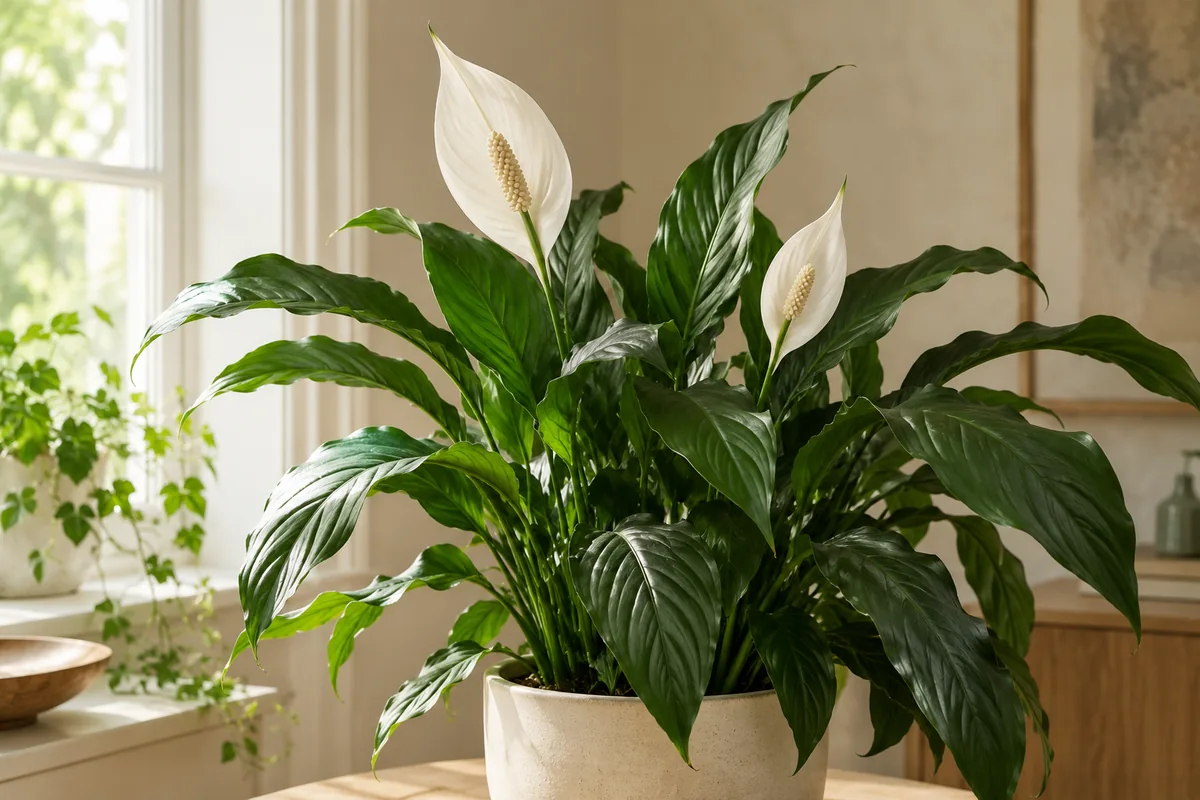
A mature peace lily often contains several growing crowns packed into one pot. Each crown is a small center from which leaves emerge, and some have enough roots to become separate plants. Division works best when you follow those centers rather than slicing the pot into arbitrary equal portions. A few well rooted sections are easier to establish than many fragments carrying only a leaf or two. Take a close look at the plant before deciding how far to divide it. If the pot contains one small crown, ordinary care and a later repot are more sensible choices than forcing a propagation project from insufficient material.
Plan the work during a period of active growth when the plant has access to steady warmth and useful indirect light. Prepare pots with drainage holes, fresh moisture retentive but airy mix, and a tray for handling the root ball. Water a dry plant in advance and allow it to drain so the roots are pliable rather than brittle. Avoid dividing immediately after a major move or while the plant is already wilted from uncertain watering. Wear gloves during handling and keep sap away from skin and eyes. The working area should allow you to lay sections down gently without bending their leaf stalks against a hard edge.
Release the plant from the container by loosening the sides and supporting the root ball. A plastic nursery pot can sometimes be squeezed slightly to free a tight mass. Pulling on the leaves risks separating foliage from the structures you need to preserve. Once the root ball is out, clear away loose outer mix and look for the spaces between crowns. Trace each crown down to a portion of the root system. Roots may overlap considerably, so the visible number of leaf clusters is not a promise of the same number of easy divisions. Choose the natural separations that leave each piece with a coherent base and substantial roots.
Ease neighboring crowns apart with your fingers where they separate readily. If a firm connection needs cutting, use a clean sharp blade and cut through that connection deliberately. Avoid sawing repeatedly across a wide area of fine roots. Keep the pieces shaded and prevent exposed roots from drying while you prepare the remaining sections. Remove collapsed roots if present, leaving firm roots attached even when they are curved or untidy. There is no need to make a root ball look symmetrical. A slightly irregular division with several leaves and sound roots is a more useful new plant than a neatly trimmed piece that has lost most of its support.
Choose a pot that comfortably contains each root portion with a modest amount of fresh mix around it. Place the crown near its former soil level, keeping the leaf bases above the surface. Fill around the roots gently and tap the container lightly to settle air gaps without pressing the material into a dense block. Water slowly through the pot, then let it drain completely before setting it back into a decorative cover. Check that the crown remains upright after watering. If it wobbles, adjust the surrounding mix or add temporary support rather than burying the plant deeper. Keep the saucer empty between ordinary moisture checks.
Put the divisions in bright indirect light away from strong sun and moving air from a vent. Leaves may droop temporarily after the roots have been handled. That appearance should prompt a moisture check, not an automatic second watering. The mix should remain lightly moist while still allowing air around the roots. A small division can use water more slowly than its original crowded pot did. Check below the surface and compare the weight of the pot over several days. A warm sheltered position supports recovery, while repeated moves around the home add uncertainty. Keep each plant where you can inspect the crown and the drainage without disturbing it.
Watch for new leaves emerging from the center of a crown. Existing blooms may fade during establishment, and removing a spent flower stalk can tidy the plant without requiring broader pruning. Avoid feeding heavily while the roots are settling. Fresh mix may already contain nutrients, and additional fertilizer cannot repair physical disturbance. If a plant continues to collapse while its mix remains wet, inspect the base and pot drainage. A soft crown is different from a firm crown carrying temporarily drooping leaves. Remove declining material when needed and keep it off the moist surface. New growth and a more predictable drying pattern are better measures of progress than an immediate return to the original leaf posture.
Once a division is producing fresh leaves and staying stable between waterings, ease it into the position you intend to use long term. Continue checking the actual mix instead of returning to the exact schedule used for the old plant. Different crown sizes and pot materials can create different drying times among plants divided on the same day. Record which crown received the most roots and how each section responded. That information helps with future repotting decisions. A successful division is simply a rooted plant that can continue growing steadily in a manageable container. It does not need to flower immediately or fill the new pot within a few weeks.