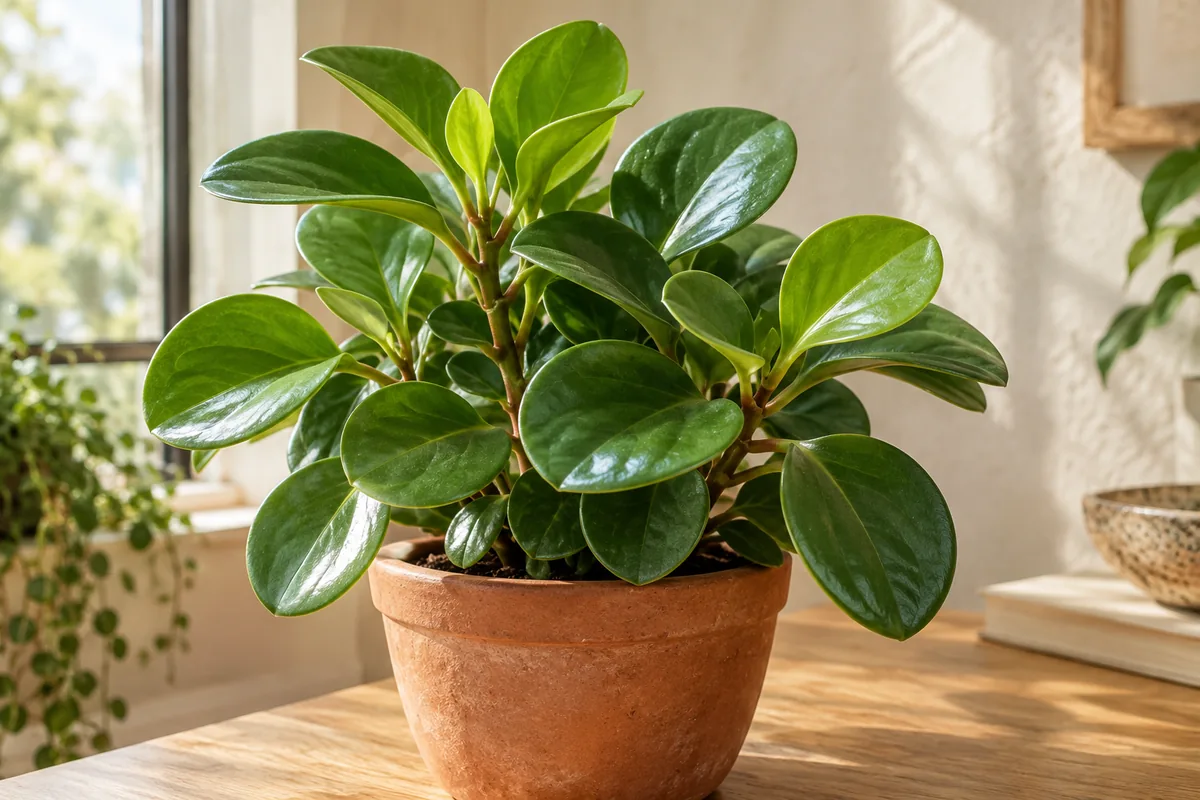
Peperomia obtusifolia fits comfortably into places where a climbing plant would soon become awkward. Its rounded leaves and short sturdy stems create a compact shape that can sit on a desk or bright shelf without needing a trellis. The small scale can tempt frequent watering, especially when neighboring pots dry faster. Its thick leaves tell a different story. This peperomia holds some water in its foliage and usually benefits from a pause between thorough drinks. Give it a modest container and a clear view of daylight, then learn the root ball's pace instead of treating every small houseplant as if it needs the same amount of attention.
Bright indirect daylight supports compact stems and well formed leaves. A position near an east window often works, while a stronger exposure may need a light curtain. Variegated forms benefit from a bright setting that protects pale areas from harsh sun. A very dim shelf can produce longer spaces between leaves and a stem that leans toward the window. Move the pot closer gradually if needed and assess the next stretch of growth. Older stretched stems will not shorten after the move. Keep leaves away from cold glass and direct heated airflow, and leave enough space around the pot to check the mix without bending the foliage.
Allow the upper portion of the mix to dry before watering again. A finger or wooden probe can confirm that moisture is not lingering just below a dry surface. When the plant is ready, wet the mix evenly and let excess drain through the holes. Empty the saucer or outer pot. Thick leaves can soften when the plant is dry, yet soft stems combined with wet mix require a closer inspection of roots and drainage. Avoid adding little splashes every day. They keep the stem bases damp while leaving deeper areas inconsistently watered, making it difficult to judge what the root system actually receives.
Choose an open mix and a pot sized to the root ball. Peperomia roots are relatively modest compared with the thick foliage above them, so a large container is usually unnecessary. Repot when roots have filled the existing space or the old mix no longer drains predictably. Increase the diameter only slightly and keep the stems at their previous depth. A draining nursery pot inside a decorative container can work well if collected water is emptied. Lift the inner pot for watering when possible. Coarse structured ingredients help keep the mix open, while enough finer material remains to hold moisture for the roots between drinks.
A compact plant can be shaped with selective pinching or pruning during active growth. Remove a growing tip just above a suitable leaf joint when a stem becomes longer than the display allows. The remaining stem may branch from nearby points. Avoid cutting every stem at once if the plant would be left with little foliage. Rooted cuttings can add fullness later, provided they are established in appropriately small pots first. Leaf and stem propagation approaches differ, so choose a method suited to the material you have. A fresh piece placed deeply in saturated mix is unlikely to benefit from the constant wetness.
Narrow upright flower spikes may appear above the foliage. They are part of the plant's normal growth and do not need a special treatment. Leave them if you like the texture or remove a finished spike carefully with a clean tool. Feed modestly while the plant is making new leaves, following the chosen fertilizer directions and accounting for nutrients already present in fresh mix. Slow growth in a dim season is not a reason to increase the dose. If a pale crust forms around the pot rim, review the water supply and feeding rate. Accumulated salts can be addressed through a suitable flushing routine in a freely draining container.
The smooth leaves are easy to clean with a soft damp cloth. Support each blade rather than pulling on the thick stem, which can snap if bent sharply. Move the plant by its pot and keep it away from the edge of a busy desk where sleeves or cables catch the foliage. Inspect the joints and undersides while cleaning. Remove fallen leaves from the mix surface so moisture and stem bases remain visible. A single old leaf dropping may be ordinary turnover. Several soft or yellowing leaves together should prompt a check of the root zone before another watering or stronger fertilizer is considered.
Compare the newest leaves over time. Firm blades, reasonable spacing, and a stable drying interval show more about the setting than a temporary pause between shoots. If the plant starts leaning or opening its outline, improve the light and consider selective pruning once growth resumes. Keep the pot modest and accessible as the foliage fills out. Peperomia obtusifolia works well because its needs can fit a small simple arrangement. Useful filtered daylight, a root zone that dries sensibly, and gentle handling preserve the compact rounded shape without requiring constant repotting or an elaborate collection of care products.