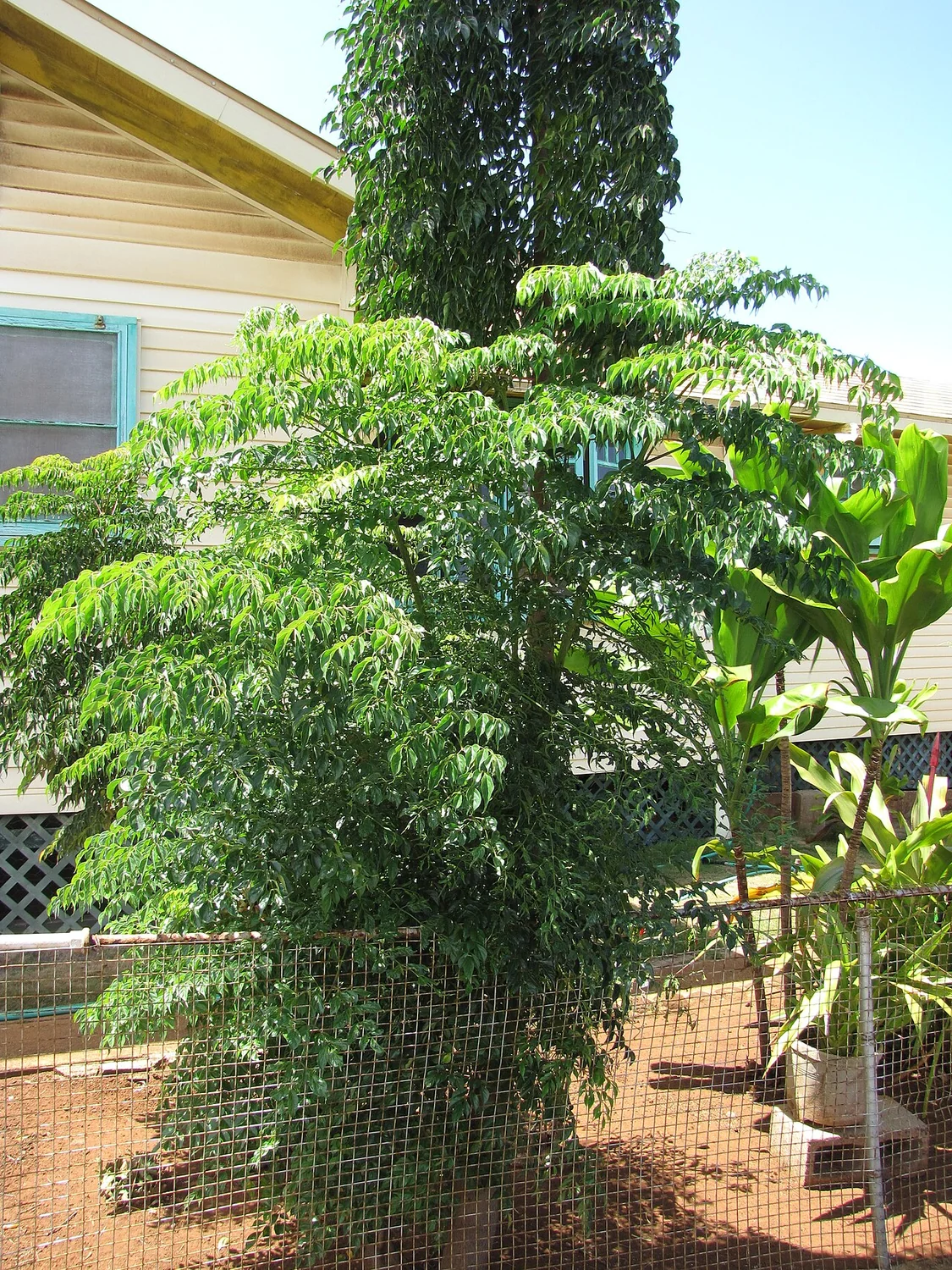
The tree inside a compact China doll plant
China doll tree is often sold at a size that hides its true identity. A compact mound of glossy leaflets in a small pot is a juvenile Radermachera sinica, a species capable of becoming a substantial tree in its Asian forest range. Its leaves are divided into many smaller leaflets, producing a fine canopy that can look almost polished. The common name is a horticultural label rather than evidence that the plant remains a miniature ornament. In a bright protected interior it can be maintained at a manageable size, but its need for light, root space, and pruning increases as that nursery mound develops woody stems.
The species occurs across parts of southern China and neighbouring Asian regions. Mature trees can carry pale trumpet shaped flowers, which place them within the Bignoniaceae family. A houseplant is usually grown for foliage and should not be judged unsuccessful because it does not produce those flowers. A labelled young tree provides an opportunity to see a different stage of a forest species, rather than a guarantee of a flowering indoor crop. When choosing one, look through the dense upper leaves to the base. Several closely planted seedlings can create an instant bushy effect while concealing weak stems or an already crowded root system.
Light and a workable indoor position
Bright indirect light is central to preserving a compact canopy. A position close to a substantial window is more useful than the middle of an office where the leaves receive only reflected room light. Strong direct exposure may be possible after gradual adjustment, but a sudden hot beam can damage tender nursery foliage. Observe the newest shoots and the retention of lower leaflets. If growth lengthens and the interior thins, first improve the light arrangement. Repeatedly trimming a shaded tree cannot supply the energy needed to rebuild its crown. A suitable growing light can supplement an inadequate window, provided it reaches the whole plant.
Water, roots, and a draining container
This tree can react to abrupt environmental changes with leaf drop. Delivery, repotting, pruning, and a move into a different light level should not all be imposed together without a reason. Begin with a suitable stable position, check moisture carefully, and allow the next growth to show how the plant is adjusting. Keep it clear of a heating register or a cold draft from a regularly opened door. A new owner who responds to each fallen leaflet by relocating the pot may prolong the unsettled period. The pattern of decline and the condition of the stem are more informative than one day's collection of shed leaves.
Maintain a moist but aerated root environment rather than a fixed calendar dose. Check below the surface and water the entire ball when the upper portion has dried enough to need it. Let excess escape freely and clear the saucer. A dense cluster of seedlings in a small nursery pot can dry quickly during warm active growth, while a larger newly repotted container may stay wet at its margins. Those two conditions should not receive the same response. If water is running around a dry central ball, apply it in slower smaller passes. Do not leave the pot submerged to compensate for a previously missed watering.
Training and ongoing maintenance
Repot when roots and watering behaviour show that the old space is no longer workable. Use an open container mix and a modest increase in volume, keeping stems at their existing depth. Avoid separating a dense group of healthy roots simply because several trunks are visible; unnecessary damage can be followed by more leaf loss. Equally, investigate a clearly failing individual stem rather than assuming all seedlings share one condition. Remove decorative surface material enough to inspect the base. An inner pot that drains into an accessible tray is easier to manage than a large sealed planter whose lower moisture cannot be checked.
Pruning can encourage useful branching and keep the tree within its assigned room area. Pinching a young active shoot differs from cutting an older weak framework back to bare wood, so choose the intervention according to the plant's condition. Make selected cuts above suitable growth and retain enough leaf area for recovery. A sudden substantial reduction also changes water use, which should be reflected in subsequent moisture checks. Stem cuttings can be used under appropriate propagation conditions, but a collection of detached glossy leaflets is not the same material. Keeping any new plant identified is especially useful when it is grown beside several similarly textured indoor trees.
The glossy leaflets make dust and pest damage visible when examined closely. Inspect their undersides and the junctions of compound leaves for aphids, mealybugs, scale, or mites. A fine canopy can hide a problem until growth becomes noticeably sparse, so routine observation is preferable to waiting for a large collapse. Feed modestly while the tree is producing new growth in adequate light. Root disease associated with excessive moisture will not be corrected by a stronger nutrient dose. If decline persists, review drainage, the duration of wetness, temperature events, and the amount of usable light before deciding whether the plant needs a different growing area.
Meaning without unsupported promises
China doll can be given a personal meaning of intricacy, learning, or the gradual development of a larger project from a small beginning. Those are interpretations of its juvenile form, not a fixed cultural promise contained in the common name. The species' Asian origin and botanical family can be described accurately without inventing a palace history or assuming that every Chinese household assigns it the same significance. A recipient who enjoys plant development may appreciate learning that a small leafy pot represents a young forest tree. That genuine contrast offers more substance than claims about guaranteed luck, healing, or prosperity.
A gift matched to the recipient
This plant can suit someone establishing a bright study, expanding a houseplant collection, or celebrating a personal milestone with a requested foliage tree. It is less considerate as a surprise for a dark office or a person who repeatedly rearranges plants and furniture. Ask whether the owner can monitor a relatively small root ball through the first weeks. Choose a firm balanced specimen rather than one wrapped so densely that the stems cannot be inspected. Treat leaves as ornamental and consider any pets or children that investigate plants. A clear label, a workable pot, and patience during transition give the recipient a realistic starting point.