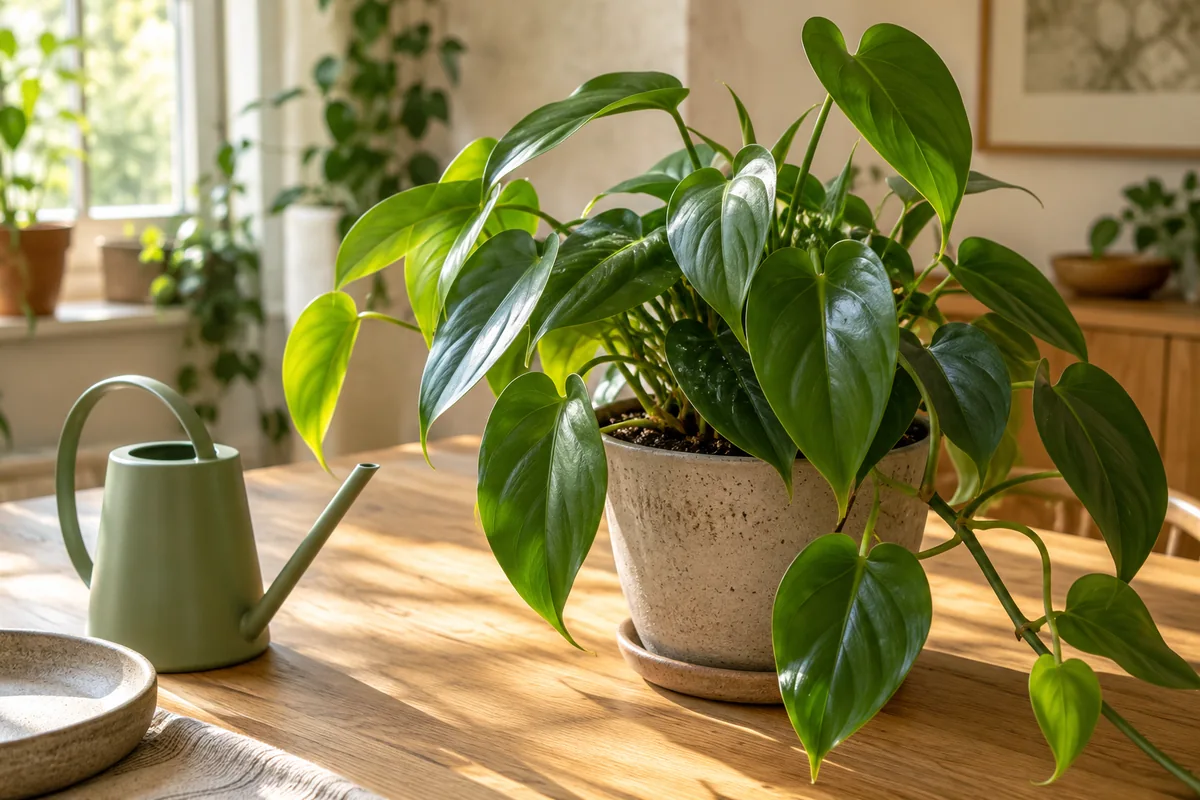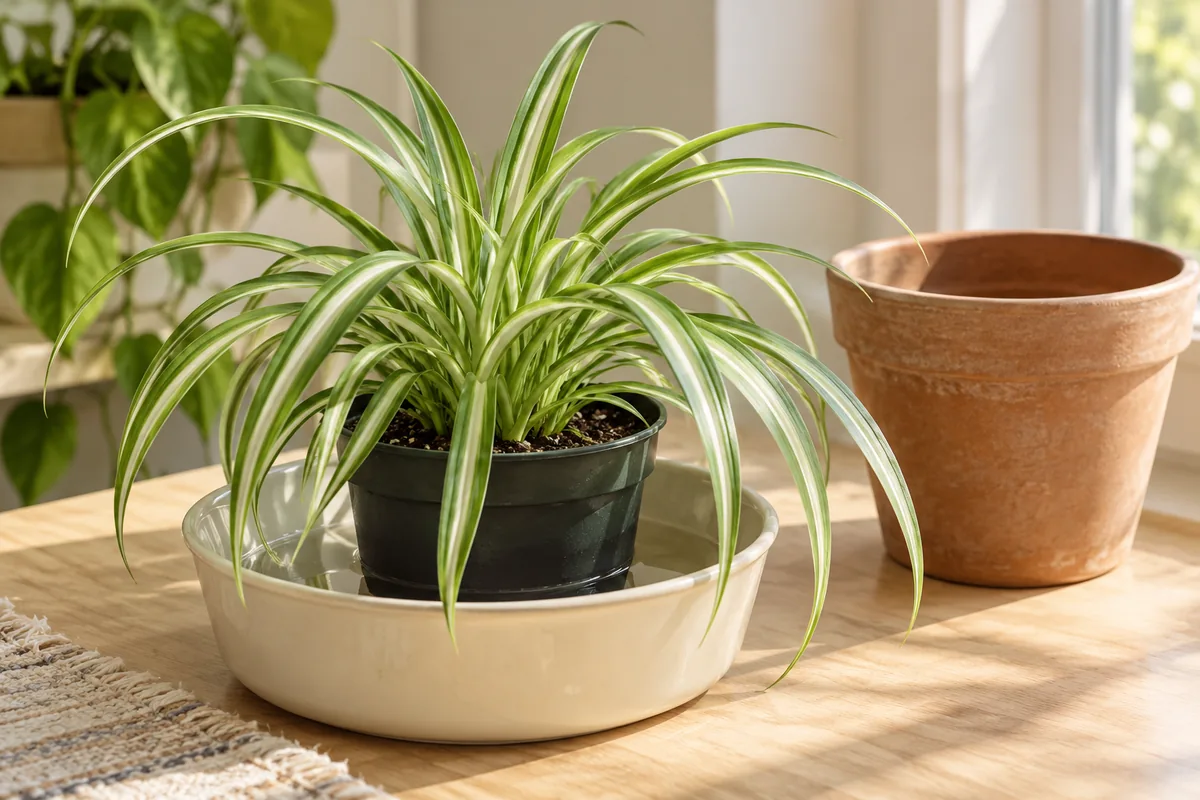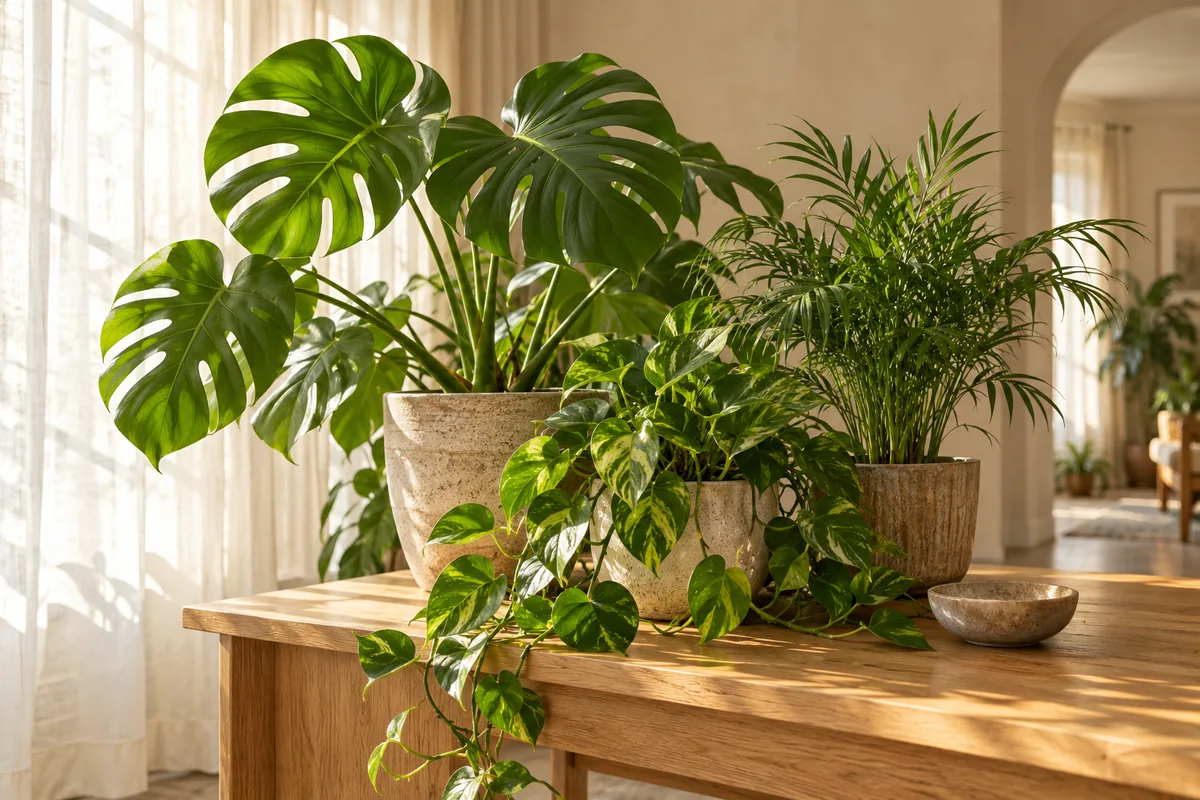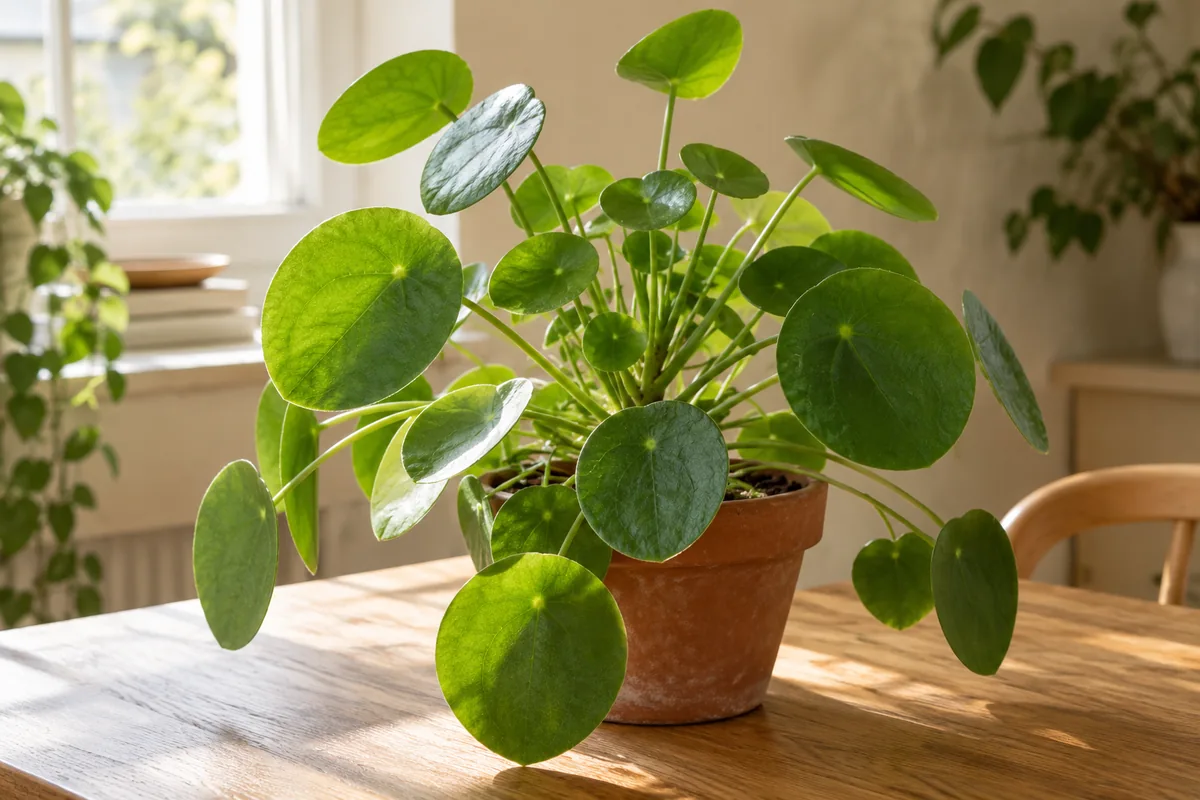
A plant can develop a clear front without anyone deciding to give it one. Leaves turn toward the window, stems follow, and the side facing the room gradually looks less full. A small turn of the pot can help new growth distribute more evenly, especially in a plant whose leaves point strongly toward one source. Rotation is useful when it is deliberate. Spinning a heavy pot whenever its shape looks awkward does not replace enough daylight and can disturb supports or delicate vines. Look at the plant's structure first, then choose a manageable way to turn it while keeping the roots and growing arrangement stable.
Plants respond to light through the direction and form of new growth. Existing leaves may change their angle, while new stems develop toward the brighter side. A pot close to one window naturally receives uneven illumination. Rotation can distribute that exposure over time and reduce a strong lean in many ordinary foliage plants. It cannot create additional light in a dim room. If every new stem is long and thin, improving the position may be more useful than repeatedly changing orientation. Watch the spacing and size of the newest leaves, which show whether the overall light is adequate for the shape you expect.
Use small regular turns rather than waiting for a dramatic tilt and reversing the plant abruptly. There is no single angle or interval that suits every species and room. A fast growing Chinese money plant may respond differently from a slow cast iron plant. Choose a simple cue, such as checking the orientation during a normal moisture inspection, and turn only when useful. Marking the front of the nursery pot with a discreet removable indicator can help you track the change. Keep the display natural rather than trying to make every leaf face an identical direction, which is neither necessary nor realistic for a living plant.
Consider sun exposure before turning. A leaf that has faced the shaded room may receive much stronger direct sun after a large rotation. If the window is intense, introduce the new exposure gradually or soften it with a suitable curtain. A plant adapted to filtered light can develop marks when a previously sheltered side suddenly faces a hot afternoon beam. Existing damaged areas will remain, so judge the response through fresh growth and the absence of new patches. Do not assume that more water can compensate for every abrupt light change. Root moisture and leaf exposure are related but separate parts of the growing setting.
Supports and climbing stems need particular attention. A monstera attached to a pole or a hoya trained on a trellis should move as a complete arrangement, with ties remaining loose and the container stable. Do not twist the pot while vines remain attached to a wall or a separate piece of furniture. That can pull on stems and roots. Trailing plants may need their vines gathered and supported briefly so they do not catch. If the plant has become too intertwined to move comfortably, simplify the route before making rotation part of the routine. Access is a practical requirement, not a decorative afterthought.
Some displays intentionally have a front, such as a climbing plant against a plank or an arrangement placed close to a wall. Rotation may be inappropriate if it hides the useful face or bends stems away from their support. In that case, improve the light reaching the display and accept a natural directional shape. Flowering plants may also need stable conditions while buds develop, depending on the species. Learn the plant's particular habits before applying a general turning routine. The goal is a comfortable growing arrangement, not constant movement that keeps every pot technically facing a different direction each week.
Check stability whenever a large plant is turned. The canopy's weight may be uneven, and a pot that sat securely in one orientation can lean differently after movement. Lift or slide the container using appropriate help and protect the floor, keeping hands away from fragile leaf stalks. Empty hidden water from an outer planter before moving it. A heavy floor specimen does not need to be rotated if handling it creates an avoidable problem. A brighter position, a secure support, or a different display arrangement may achieve a sensible outline with less disturbance to both plant and room.
Photographs from the same position make the result easier to evaluate. Compare the overall outline over several weeks rather than expecting an immediate correction after each turn. Old stretched stems will not shorten, so selective pruning may be appropriate later once the growing conditions improve. New growth should be the main guide. Rotation works best as a small part of an already suitable light arrangement. With useful daylight, a stable container, and a clear route for stems and leaves, deliberate turns can keep many houseplants from leaning strongly in one direction while preserving the relaxed shape that makes them interesting indoors.