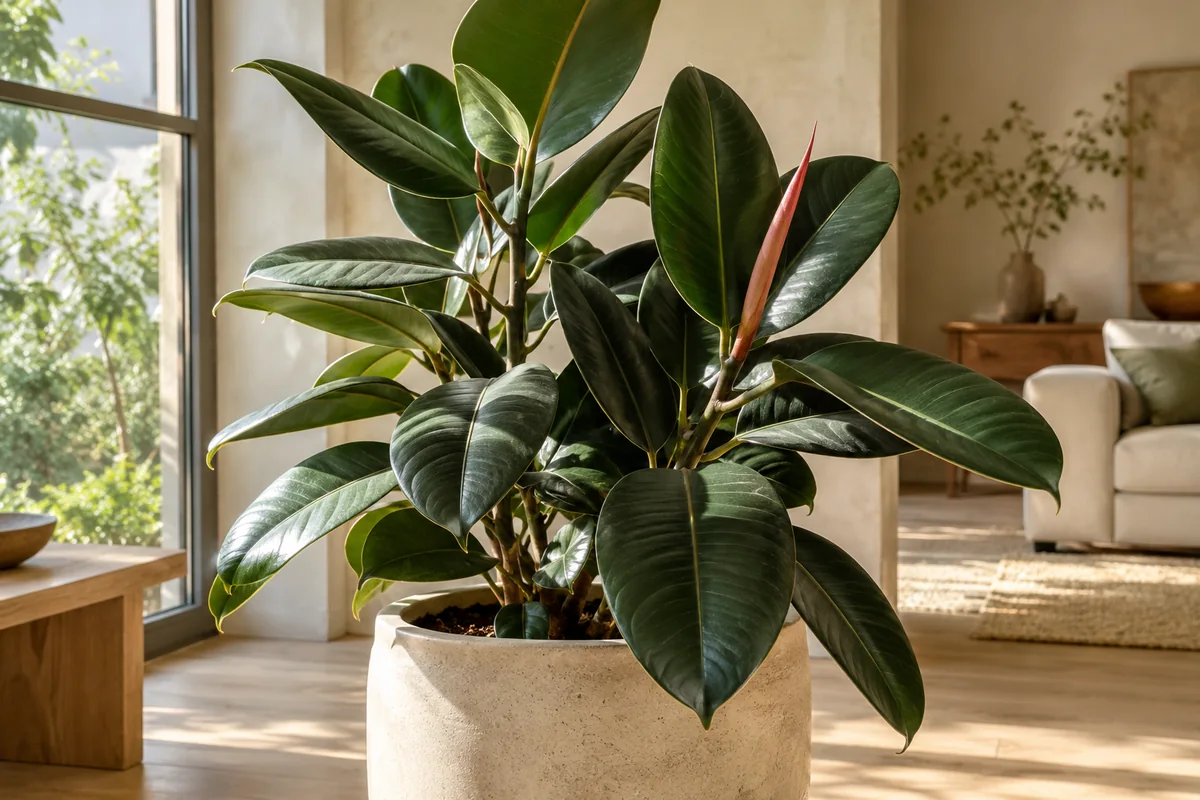
A rubber plant rarely stays the size it was when it first fitted on a side table. Its thick leaves and upright stem gradually turn it into a floor plant, and the space chosen early can shape how evenly it develops. A bright corner near a window gives the stem a better chance of carrying leaves along its length. A dim corner often produces a tall narrow outline that needs attention later. Think about the next season of growth when positioning the pot. Leave room above the newest leaf and enough space around the sides to clean the foliage and check the mix comfortably.
Ficus elastica appreciates strong indirect daylight and can adapt to some direct sun when introduced gradually. Variegated forms generally need a bright position to maintain a clear pattern, with protection from abrupt exposure to intense sun. A leaf grown in a dim room will not immediately cope with a hot afternoon window. Move the pot in stages and look for bleaching or dry patches on the exposed side. Keep it away from frequently opened cold doors and from hot airflow. Stable conditions help new leaves open cleanly and make it easier to distinguish a normal seasonal slowdown from an unsuitable growing position.
Let the upper portion of the mix dry before watering, then soak the root ball thoroughly and allow drainage. Use a finger or wooden probe to check moisture beneath the surface, especially in a large floor pot. A dry crust can sit over a damp center. Conversely, a shrunken dry root ball may allow water to run down the edges without wetting the roots. Apply water slowly in more than one pass when needed and check whether the container becomes evenly heavier. Empty collected water afterward. A routine based on the condition of the mix works better than watering simply because the leaves look glossy.
Choose a loose mix and a pot with working drainage holes. The container should be stable enough for the increasingly tall canopy without surrounding the roots with an excessive volume of wet material. A weighted outer planter can add stability while a properly sized inner pot handles the root zone. Remove that inner pot for watering whenever practical. Repot during active growth when roots have filled the available space and moisture becomes difficult to manage. Increase the diameter modestly, keep the original planting depth, and avoid burying the lower stem. Fresh mix should settle around the roots without being compressed into a solid block.
Broad rubber plant leaves collect dust quickly. Support each blade from beneath and use a soft damp cloth to wipe its surface. Do not use oils or household polishing products to create additional shine. The natural finish is enough, and plain water keeps the surface easier to inspect. A new leaf emerges inside a protective sheath before expanding. Allow it to open without pulling on the edges. The discarded sheath can be removed from the pot surface afterward. Slightly different color on a fresh leaf is normal; evaluate its final appearance after it has had time to mature and firm up.
Turn the pot periodically if the stem consistently leans toward one window. A stake can support a young stem while it strengthens, attached loosely with soft material and checked as the trunk expands. Pruning the growing tip can encourage branching, though the exact response depends on the plant and available light. Plan a cut during active growth and choose a height that suits the eventual outline. The plant releases milky sap when cut, so protect the work surface, wear suitable gloves, and keep the cut material away from eyes and mouths. Clean the tool after finishing and let the remaining stem settle in its usual position.
Feed according to the fertilizer instructions while the plant is making new leaves, allowing for any nutrients already in recently added mix. A plant paused in weak light needs a review of its position before extra feed. Lower leaves may occasionally age and fall, yet a sudden sequence of dropped leaves calls for a closer inspection. Check recent temperature changes, soil moisture, and water sitting in the outer planter. Avoid changing every condition at once. If a brighter location is needed, make the move gradually and allow several weeks for new growth to show whether the adjustment is useful.
Keep a simple photograph of the plant from the same angle every month. The picture reveals changes in stem direction and leaf spacing that are easy to miss day by day. When the canopy reaches the limits of the room, decide whether a planned pruning session or a brighter larger position suits it better. Removing a few damaged leaves will tidy the outline, but the future shape comes from light and new growth. A stable root zone, clean foliage, and room for the stem to develop give a rubber plant the strong deliberate presence that makes it such a familiar indoor choice.