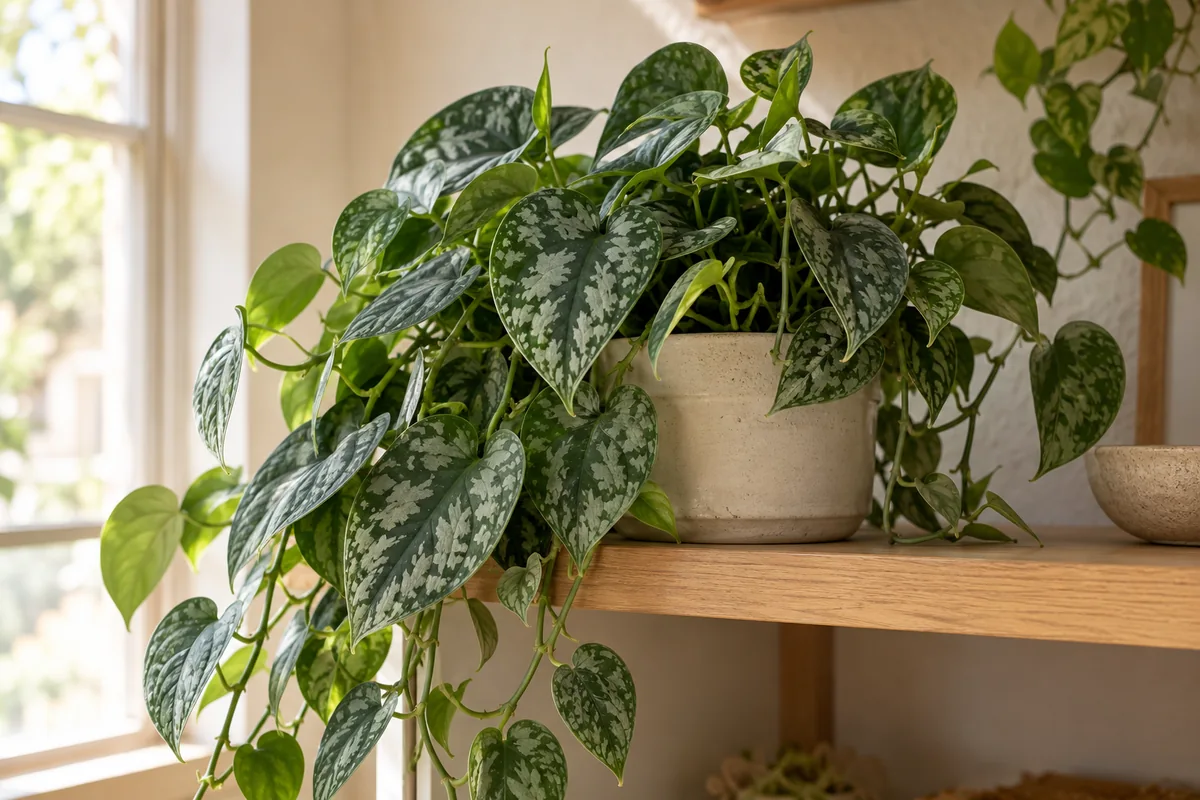
The silver pattern on satin pothos looks different as the light moves across a room. Its leaves have a soft surface rather than the glossy finish of golden pothos, and that texture is part of the appeal. Scindapsus pictus is a different plant despite the familiar common name. It still makes graceful trailing or climbing vines, yet it benefits from its own moisture checks instead of being watered automatically with every neighboring pot. Give the crown useful daylight and leave the vines where they can be inspected. The markings remain most convincing when the leaves are clean and the growth is supported by a stable root zone.
Bright indirect daylight is a useful starting point. A sheltered position near a window helps maintain a compact vine without exposing soft leaves to sudden strong sun. Intense afternoon light can leave pale dry areas, especially after a move from a dim shop or shelf. Introduce brighter conditions gradually. A dark position may lead to smaller leaves and longer gaps along the stem. Check the crown at the top of a shelf, where the window frame can shade the pot even when vines hang into a bright room. Turn the container occasionally if the whole plant begins favoring one side strongly.
Allow the upper mix to dry before watering again, checking below the surface and using the pot's weight as another clue. Satin pothos leaves may curl when the root ball is dry, yet curling alone does not identify the cause. A heavy wet pot needs an inspection of drainage and roots before another drink. When watering is appropriate, wet the root ball evenly and let excess drain through the holes. Empty the saucer or outer planter. Small repeated splashes near the stem make moisture uneven and can keep the base damp without supplying the whole root system with a useful thorough watering.
Use an airy houseplant mix and a container only modestly larger than the roots. Coarse bark and a suitable porous ingredient can help maintain structure in a fine mix, depending on how quickly the room dries the pot. Repot when roots have filled the available space or the old mix no longer behaves predictably. Long vines do not automatically justify a large container. An oversized pot can leave a substantial volume of wet mix outside the active roots. Keep the previous planting depth and settle material around the root ball gently. Check the drying pattern afterward rather than assuming the new arrangement will match the old one.
A trailing display is easy to arrange if the stems receive light along their route and do not catch on doors or furniture. A support can create a more compact upright form. Fasten the main stem loosely and leave leaf stalks free to move. Aerial roots may attach to a suitable surface over time. Larger leaves can develop as an established plant climbs in good conditions, while a typical shelf plant retains its familiar juvenile outline. Avoid twisting stiff stems around very tight loops. A simple route makes cleaning and watering easier and prevents hidden sections from remaining pressed against damp walls or dark furniture.
Prune a stretched vine just above a node during active growth when the plant needs a fuller shape. The remaining stem may produce new growth from nearby points. Root the removed sections only if they include a node, since a detached leaf without the required stem tissue cannot produce the same complete new vine. Several established cuttings can be returned to a suitable pot to create fullness at the crown. Keep new roots gently moist while they settle, then return to the usual drying rhythm. Do not bury fresh unrooted pieces deep in an old container simply to conceal a bare patch immediately.
Wipe leaves gently with a soft damp cloth when dust becomes visible. Support each blade and avoid scrubbing at the silver areas, which are part of the leaf rather than dirt to remove. Feed modestly during active growth according to the fertilizer instructions, allowing for nutrients already included in fresh mix. A plant with long thin growth usually needs a light review before stronger feeding. Remove fully yellow old leaves and keep fallen material off the surface. Several leaves changing together calls for a check of watering, drainage, and recent temperature changes. Read the whole plant and pot instead of treating one symptom in isolation.
The newest leaves offer the clearest comparison after a change in care. Look at their size, spacing, and firmness once they have opened fully. Older curled or marked leaves may keep their shape even when later growth improves. Keep a simple note of watering dates and the moisture condition beforehand, particularly after moving the plant. Satin pothos does not need a complicated display to show its pattern. A bright sheltered position, a modest draining pot, and a clear path for the vines let the silver foliage remain distinct while making the routine manageable through both active growth and quieter indoor seasons.