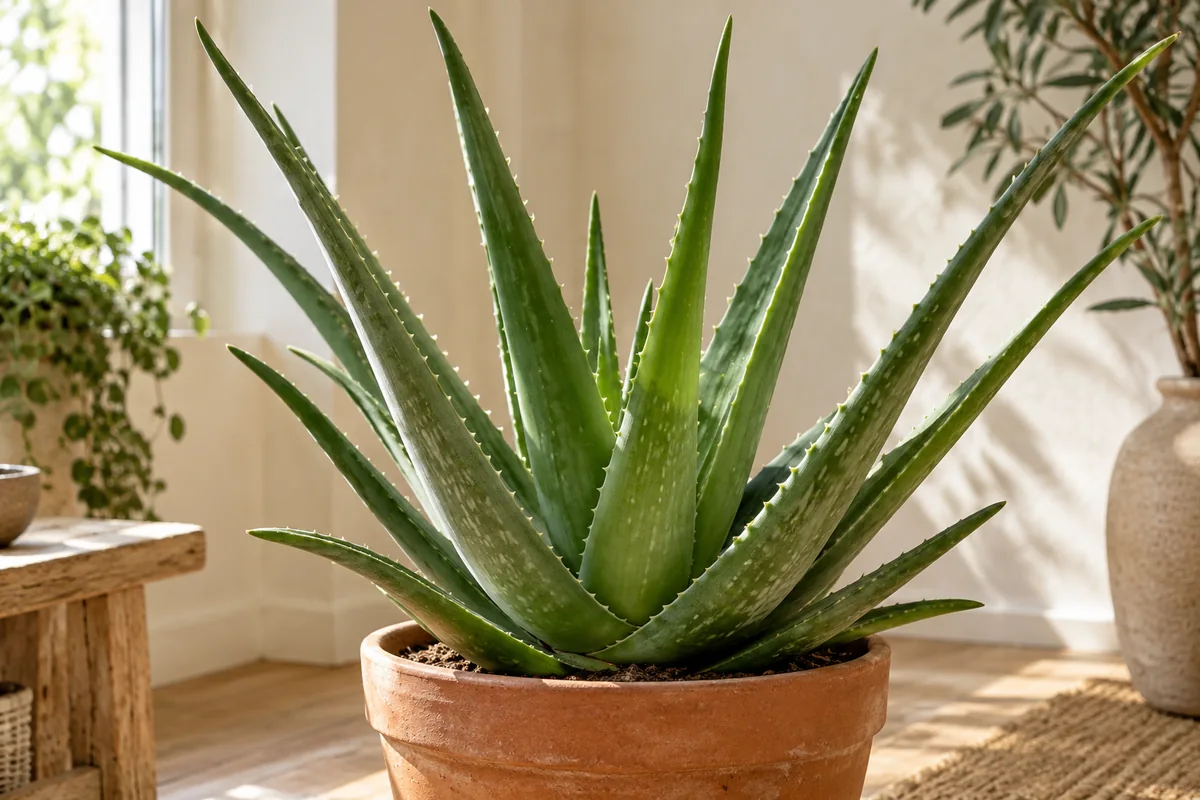
A small aloe rosette appearing beside the main plant is worth watching before you try to remove it. These offsets can become new plants, especially once they have developed roots of their own. A tiny cluster of leaves pressed against the parent may still depend heavily on the shared connection. Give it time to grow large enough to handle without gripping fragile tips. This guide concerns ordinary cultivated aloe offsets, not using cut leaves for other purposes. Identify the plant first and look at its growth pattern. The most practical propagation material is a firm young rosette with a visible base and a useful root portion.
Choose a period of active growth and prepare a small pot with drainage holes. An airy mix suitable for succulents should release excess water readily and contain particles that keep it from compressing into a heavy mass. Avoid choosing a large pot simply because the offset will eventually grow. A small root system cannot use the moisture held in a broad volume of mix. Set out a tray, clean sharp tools, and gloves if the leaf margins are awkward to handle. Let an overly wet parent pot dry toward its usual watering point before working. A saturated root ball makes connections harder to see and encourages unnecessary pulling.
Release the parent plant from its container by supporting the base and loosening the sides. Brush away loose outer mix until you can trace the offset back to its connection. Do not pull the small rosette upward by its leaves. Look for roots attached to its own base and determine whether it separates naturally or remains connected by a firm piece of stem. A rooted offset is usually easier to establish than an unrooted one. If the young plant has almost no independent structure, consider returning it to the parent pot and waiting. There is no requirement to separate every visible offset during the same repotting session.
Ease a rooted offset away along its natural connection, using a clean cut only where necessary. Preserve the roots attached to the young rosette and avoid trimming them merely to create a tidy outline. If separation leaves a fresh wound, allow the cut surface to dry and seal in a shaded airy place before it meets damp mix. The time required depends on the size of the wound and room conditions, so inspect the surface rather than following a rigid hour count. Keep the leaves out of strong sun during this interval. Do not coat the wound with kitchen powders or unverified household mixtures in an attempt to accelerate the process.
Set the offset into its prepared container with the roots directed into the mix and the rosette base above the surface. Fill around it gently so it stands securely without burying lower leaves. An offset that lacks enough roots may need a simple temporary support. Do not solve wobbling by planting the entire rosette deeply. Use a mix that is dry to barely moist at planting, taking particular care if a cut was made. Established roots and freshly cut tissue have different needs, so the first watering should follow the condition of both the roots and the wound. A deep initial soaking is not a necessary ritual for every separated aloe.
Place the new pot in bright indirect light while the offset settles. Strong sun can overwhelm a small recently disturbed plant even if the mature parent tolerated that exposure. Gradually increase brightness once the rosette remains firm and begins establishing. Check the mix below the surface before watering, allowing it to dry appropriately between applications. A newly separated aloe does not need a constantly wet root zone to make up for its smaller roots. Empty the saucer after watering and keep the pot from sitting in accumulated water inside a decorative cover. Pay particular attention in cool weather, when a small pot may still dry much more slowly than expected.
The inner leaves provide a useful place to watch for new growth. Outer leaves can change slightly after handling, so avoid treating every small mark as evidence that the offset needs fertilizer. A firm base and gradual development are better indicators. If the base becomes soft or translucent while the mix stays wet, examine it promptly. A plant leaning because the roots have not anchored is different from a rosette collapsing from tissue damage. Do not tug on the leaves repeatedly to test rooting. Gentle observation and the eventual appearance of fresh central growth can show progress without breaking the new roots you are waiting to encourage.
Keep the offset in its modest container until the roots have occupied the available space. Once it is established, adapt watering and light to its actual growth and the conditions in your room. Feeding can wait until active growth is clear and should follow the directions for a suitable product. Return the parent aloe to a stable pot as well, checking whether its reduced number of rosettes changes water use. Label the offset with the separation date and note whether it had roots or needed additional time to establish. That record helps you choose the right moment for the next young rosette, making propagation a measured extension of normal repotting.