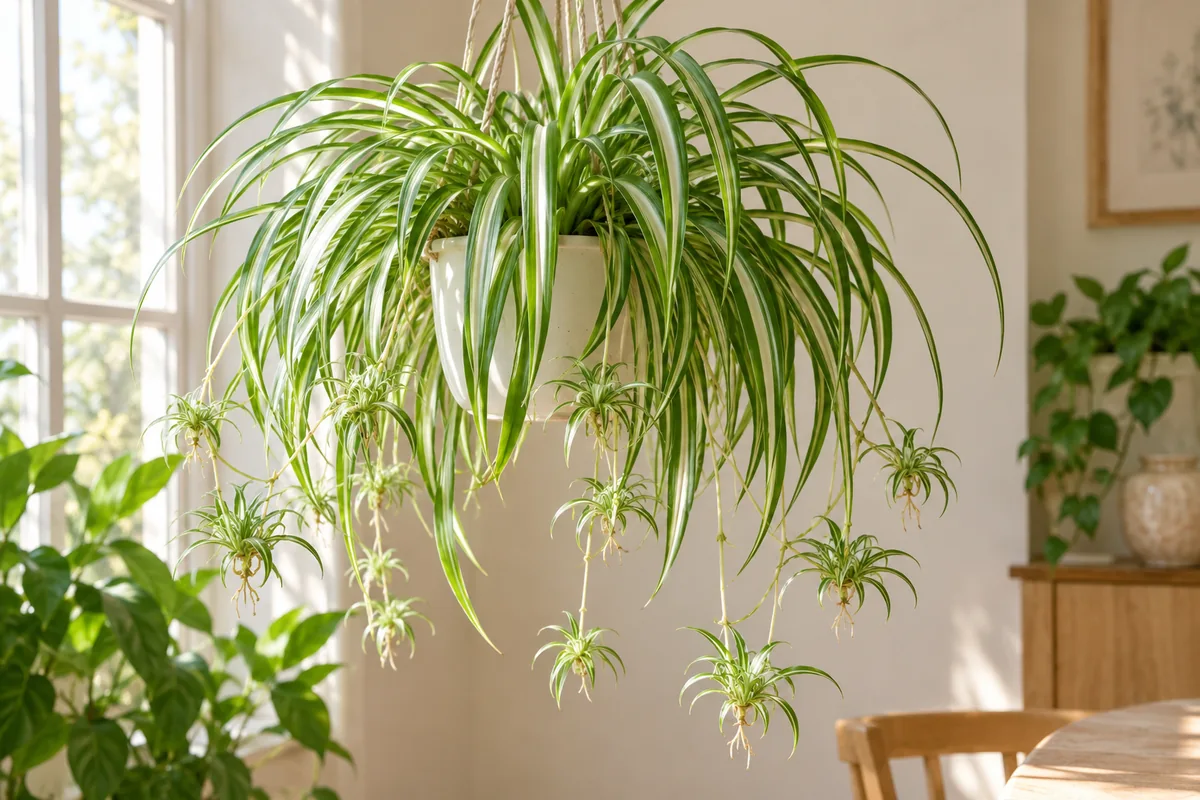
The little plants hanging from a spider plant are hard to ignore. They turn a simple pot of striped leaves into something that seems to be reaching into the room. Before those plantlets appear, the main plant needs a comfortable place to build its crown. Light and root moisture matter more than tricks intended to force new runners. A shelf near a bright window can suit it well, provided the leaves have room to arch without resting against a radiator or catching whenever a curtain moves. Start with the conditions around the parent plant and let the trailing stems develop at their own pace.
Bright indirect daylight helps maintain a dense fountain of leaves and clear variegation. An east window often supplies useful gentle morning light. If the leaves begin developing pale dry areas in strong afternoon sun, use a light curtain or move the pot slightly farther from the glass. Very dim conditions tend to produce slower growth and a looser outline. Rotate the container occasionally if the crown leans noticeably toward the window. A hanging position should still allow light to reach the top of the pot. Placing the crown above the window frame can leave it darker than the long dangling leaves suggest.
Water when the upper mix begins to dry, checking the root zone rather than adding a little water every day. Spider plants have thick roots that store moisture, so they can tolerate a brief drying period better than constant saturation. Apply enough water to wet the whole root ball and allow excess to drain away. Empty the saucer or outer pot after drainage finishes. If a plant wilts while the pot feels heavy, inspect the mix before adding more water. Roots that remain wet for too long cannot support foliage as effectively, and another soak can extend the same underlying problem.
Brown leaf tips are common and do not always point to a single cause. Irregular watering, accumulated fertilizer salts, and minerals in the water supply can all contribute. Review those factors together instead of repeatedly increasing humidity or feeding. If deposits collect on the mix, flush the freely draining pot with suitable water and let it drain fully. Use fertilizer modestly during active growth. Water with low mineral content may help when the local supply leaves conspicuous deposits. Existing brown tissue will remain brown. Trim only for appearance, following the leaf outline and leaving a narrow edge of dry tissue rather than cutting deeply into green growth.
Repot when the thick roots occupy most of the container, push the plant upward, or leave so little mix that watering becomes difficult. A slightly wider pot usually provides enough room. A much larger pot can hold wet material beyond the new roots and make moisture harder to judge. Use a loose houseplant mix and a container with drainage holes. Keep the crown at the same depth, with leaf bases above the surface. Avoid packing the mix tightly between roots. Water gently to settle the fresh material, then resume checking moisture instead of assuming the new container will dry at the previous rate.
Long flowering stems may carry tiny flowers followed by plantlets. Their appearance depends on maturity and growing conditions, so a young plant without runners can still be growing normally. Leave the stems attached if the cascading display suits the space. To start a new plant, choose a plantlet with visible root beginnings and place its base on lightly moist mix in a small pot. It can remain connected to the parent until roots establish, then be separated with a clean cut. Several rooted plantlets in one modest container create a fuller shape sooner than a single very small division in an oversized planter.
Keep the leaves clean with a gentle rinse or careful wipe, supporting the crown so the roots are not pulled loose. Remove dry leaves from the base to keep the surface visible and make watering easier. The narrow blades can crease permanently if bent sharply, so move the container by its pot rather than gathering the foliage into a handle. Check hanging hardware and choose a saucer arrangement that will not drip onto furniture. A mature spider plant becomes heavier after watering than it appears when dry, especially once a dense mass of roots and several trailing stems fill the container.
Judge progress by the new leaves emerging at the center. Firm, well colored growth and a stable drying pattern matter more than a perfect set of old tips. If the plant starts looking thin, reassess the light reaching its crown and remove only foliage that has truly finished. A very crowded specimen can be divided into rooted sections during active growth, giving each piece a suitably small pot. Keep the main plant in a position where you can inspect it easily. When light, drainage, and access are right, both the arching foliage and the dangling plantlets become easier to maintain through changing indoor seasons.