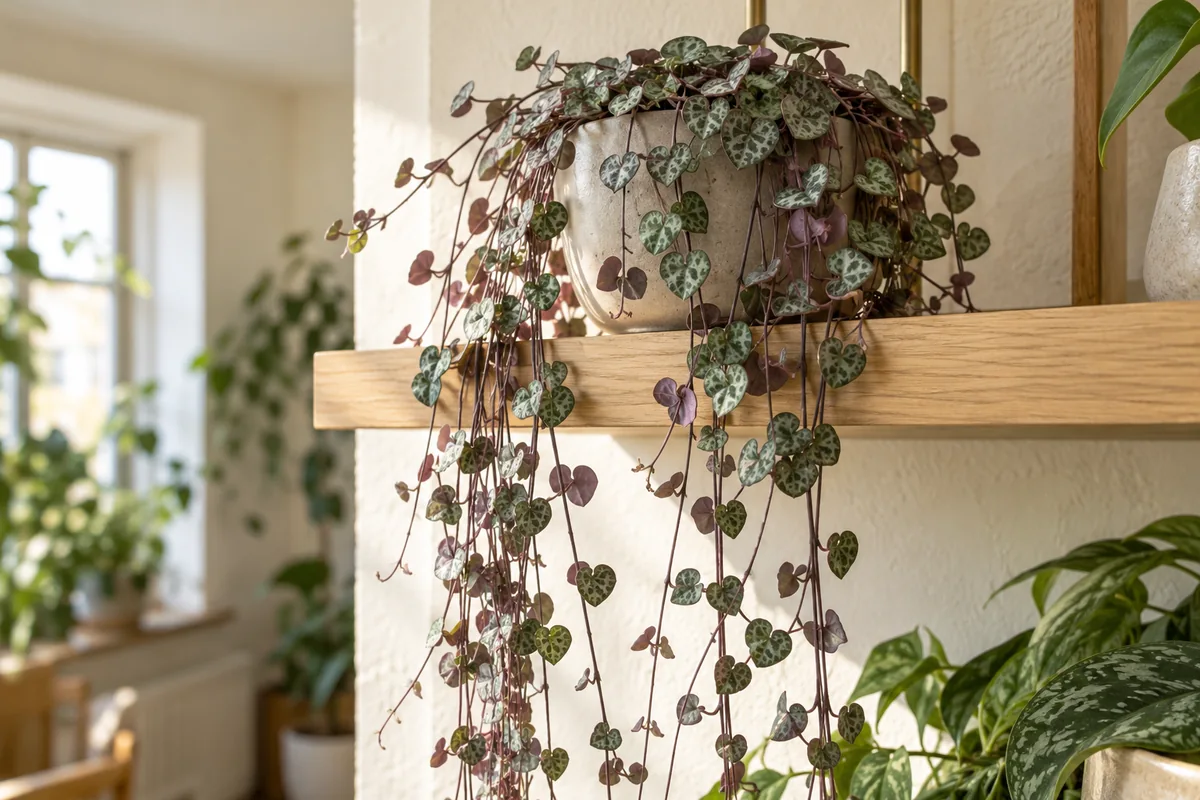
String of hearts can become a tangle before it becomes a large plant. Its fine stems catch around one another, and a small movement of the pot can bring several vines along for the ride. Start with a place where they can hang freely without brushing a doorway or winding through neighboring foliage. The small patterned leaves need useful light from the crown downward, while the roots prefer a sensible drying interval. A tidy growing arrangement does more than improve the display. It lets you check the mix, move the pot for watering, and follow a vine without pulling on a delicate junction hidden in the tangle.
Ceropegia woodii appreciates bright light indoors, including some gentle direct sun after gradual acclimation. A sunny window softened by a light curtain can work, depending on the strength and duration of exposure. A plant that has grown in shade may develop marks if placed abruptly in intense afternoon sun. Increase brightness in stages and watch the next leaves. Long gaps between small leaves often suggest that the position is too dim. Check the light reaching the top of a high hanging pot. Vines dangling into daylight do not fully compensate for a crown hidden above the window frame or behind a deep shelf.
Allow the root zone to dry substantially before watering again. The plant stores moisture in its small thickened structures and does not need continually wet mix. Use the pot's weight and a wooden probe to check deeper moisture rather than relying on the surface alone. When watering is needed, wet the mix evenly and let excess leave the drainage holes. Empty the saucer or outer planter. A very small pot may dry quickly in a bright warm position, yet a large deep container can remain damp for a surprisingly long time. Match the interval to the actual root zone instead of watering with every neighboring vine.
Use a coarse open mix suited to a succulent root system and a modest container with drainage. Some commercial succulent mixes are finer than their label suggests, so inspect the texture and adjust with a suitable porous ingredient when necessary. Repot only when the roots have occupied the available space or the mix has deteriorated. Increase the diameter modestly and retain the previous planting depth. A broad oversized pot filled with damp unused mix makes care harder. Keep the crown visible and avoid burying clusters of stems under a thick decorative layer that prevents a clear moisture check.
The vines can be shortened when they outgrow the display, using clean cuts near suitable nodes. Removed sections can be used for propagation with a method appropriate to their nodes and thickened structures. Pinning a section gently onto suitable lightly moist mix can help create additional rooted points without immediately detaching it from the parent. Keep the contact area in place without crushing the stem. Once roots establish, the new section can be separated if desired. A bare leaf without the necessary growing tissue is different from a complete stem cutting, so inspect the material before assuming that every fallen piece can become a new plant.
Long wiry stems are easy to damage during cleaning or rearranging. Lift the pot with one hand supporting the trailing growth when needed, and untangle vines slowly from their ends rather than pulling through a tight knot. Small tubular flowers may appear on an established plant and can be left to complete their display. They do not require a special change in watering. Remove fully dry leaves and fallen material from the surface so the crown remains accessible. If several vines decline together, inspect the root ball and drainage before pruning away all the affected growth or adding another drink.
Feed lightly during active growth according to the chosen product instructions, considering nutrients already present in fresh mix. Strong feeding cannot shorten long gaps produced by weak light. Mineral buildup around the pot is a reason to review fertilizer use and the water supply. Flush a freely draining container when appropriate and allow full drainage. During a dim cooler period, growth may slow and the mix may take much longer to dry. Continue checking rather than applying the same quantity on the same weekday. Thick leaves that become soft need to be read with the root moisture, since both prolonged dryness and damaged wet roots can affect firmness.
Look at the newest stretch of vine to judge the growing position. Closely spaced leaves with a clear pattern usually offer a more useful sign than the condition of an old tangled section. Improve light gradually if new growth becomes thin, then trim older bare lengths later if the display needs reshaping. Keep the crown and drainage accessible as the vines lengthen. String of hearts is at its most attractive when its delicate lines can hang without obstruction. A bright position, a small open root zone, and patient handling preserve that light trailing shape without turning every watering into a difficult untangling session.