Water running out of the bottom of a pot does not always mean every root has received a drink. In a very dry root ball, the water may simply follow a gap between the mix and the container. In a crowded pot, a fast pour can find a narrow channel and leave other areas almost untouched. A slower approach is more useful. Check that the plant is ready for water, apply it across the surface, and notice whether the mix actually absorbs it. The aim is an evenly moistened root ball followed by free drainage, not merely a splash large enough to produce a puddle beneath the pot.
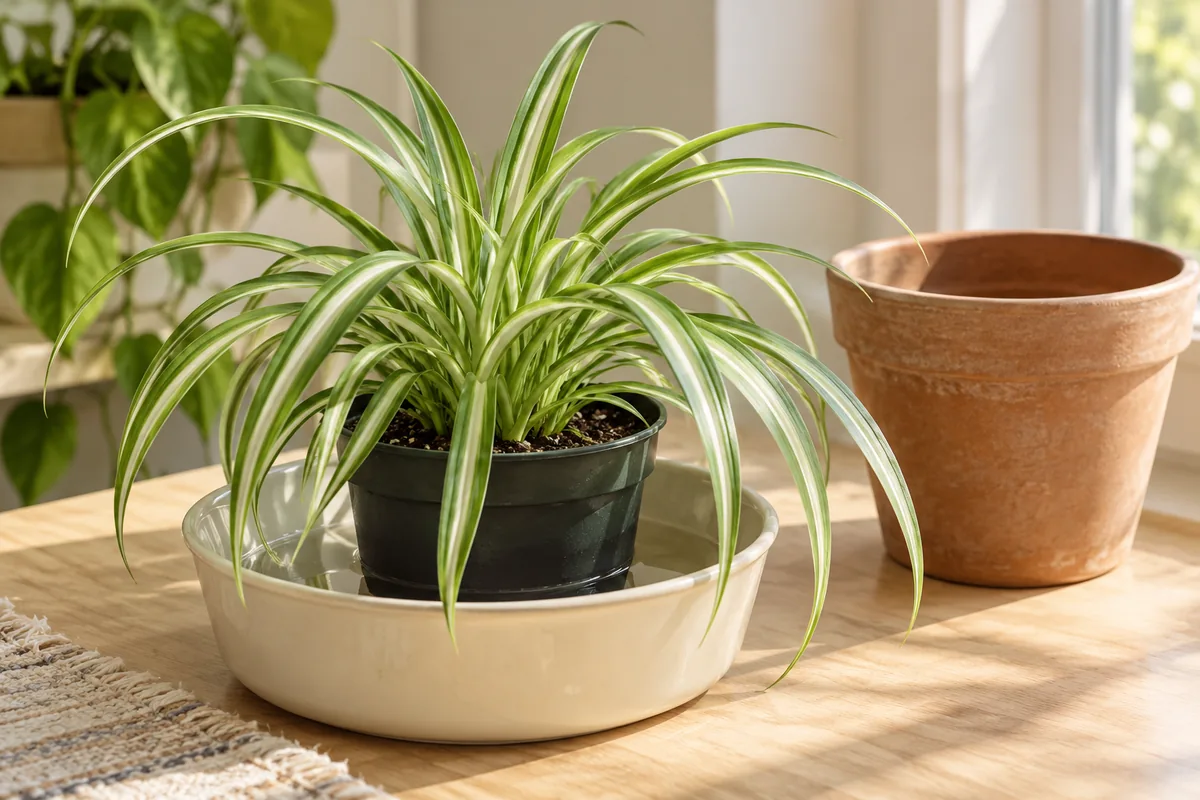
Begin with a container that has drainage holes and a place where excess water can leave safely. A sink, tub, or suitable tray makes thorough watering easier than trying to protect a carpet while keeping the pot in place. Remove the nursery container from a decorative outer planter when possible. Check that roots, compacted material, or an unsuitable liner are not blocking the base. A layer of stones inside a pot does not replace a drainage hole. The entire growing arrangement should let excess water escape and allow the container to be returned to its position without leaving a hidden reservoir beneath the roots.
Confirm moisture before pouring. The correct moment differs among plants and changes with the room, season, container, and mix. A fern may need attention while its deeper roots still hold gentle moisture, while a succulent usually needs a more complete drying interval. Feel beneath the surface, use a wooden probe, or compare the container's weight with its familiar dry weight. A plant that looks limp in heavy wet mix needs inspection rather than another automatic drink. Top watering is a technique for supplying water once it is needed; it does not decide the timing by itself or make every pot ready on the same day.
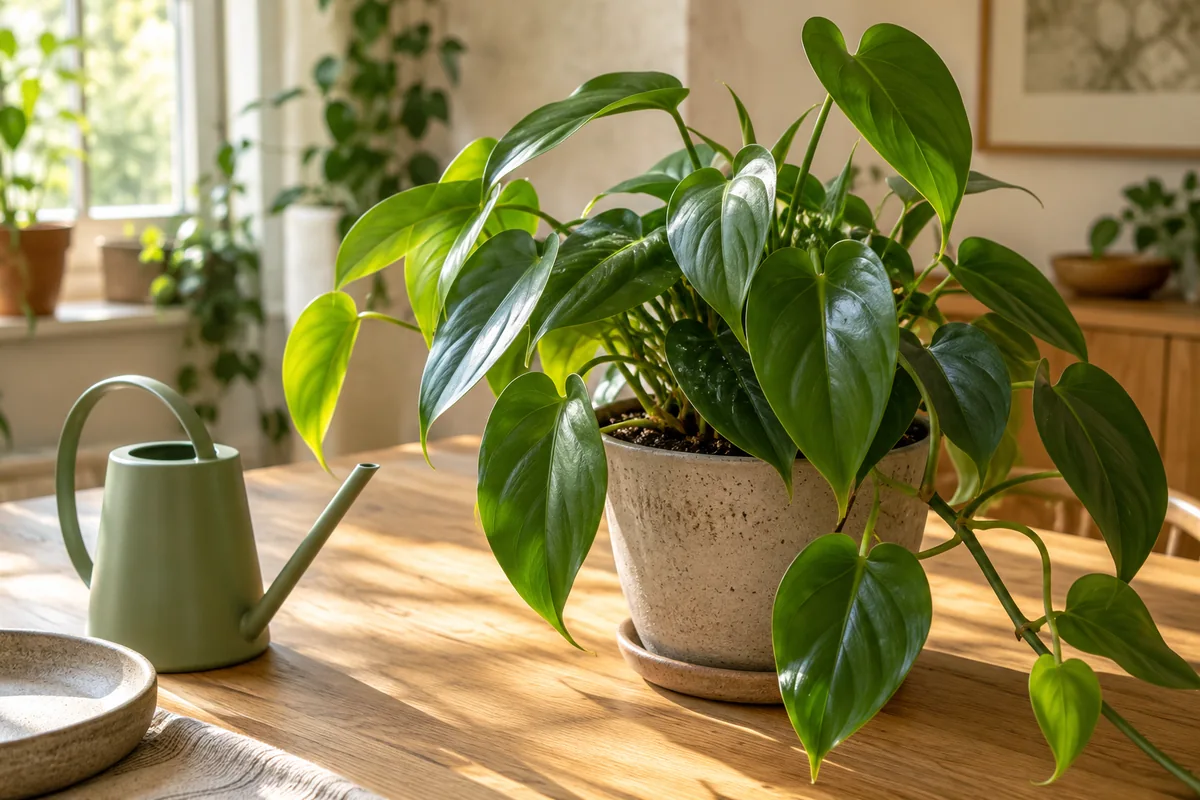
Pour slowly over several areas of the surface rather than directing the entire amount at the main stem. Leave the plant's crown clear when its growing point is sensitive to trapped water. A narrow spout helps reach beneath foliage without bending leaves or soaking nearby furniture. Allow the first pass to settle, then add more if the mix is absorbing it. Fine material and coarse bark accept water differently, so watch the surface instead of using a fixed speed. A root ball that begins floating or shedding water around its edges needs a gentler approach, not a larger sudden pour that carries loose mix over the rim.
When a dry root ball has pulled away from the pot, several slow passes can help it absorb moisture again. Check whether the container becomes noticeably heavier and whether the center feels damp afterward. If water continues bypassing the roots, a brief controlled soak may be appropriate for that plant and mix, followed by complete drainage. Do not leave a neglected pot standing in water indefinitely. The problem may also reflect an old compacted mix that needs replacing. Repeatedly relying on emergency soaking without reviewing the root zone can turn an occasional difficulty into the normal watering pattern.
Allow some water to leave the drainage holes when the root ball has been wetted evenly, then give the pot time to finish draining. Empty the saucer rather than allowing the plant to draw back water carrying accumulated minerals. Routine top watering can help move dissolved residues out of the container, though substantial salt buildup may need a deliberate flushing session or fresh mix. Avoid adding fertilizer during a corrective flush intended to remove excess salts. Check the product instructions for any feeding routine and consider what nutrients are already in the potting mix. Watering technique and feeding strength should support each other instead of producing repeated deposits.
Small daily splashes are often less useful than a thorough drink followed by the right drying interval. They can keep the surface damp while leaving deeper roots dry, and they make moisture difficult to judge because different parts of the pot behave differently. The amount needed for a thorough watering depends on the root ball and how dry it was, so a single cup measure rarely suits every plant. Learn the container's freshly drained weight and compare it later. If the pot remains wet unusually long, review light, mix structure, and root condition before assuming that the solution is simply to pour a smaller amount forever.
Return the plant to its usual position once it has drained and note when the root zone was last thoroughly wetted. Check it again according to its needs and current conditions. A clear routine is easier to maintain when pots remain accessible and trays can be emptied without moving half the room. Over time, slow even watering becomes a short practical task rather than a rescue operation. The leaves benefit from roots that receive moisture across the whole container and then regain air as the mix dries. A measured pour, visible absorption, and complete drainage provide a dependable foundation for most ordinary indoor watering sessions.