A pot that still feels heavy a week after watering deserves a closer look, especially when neighboring plants have already begun to dry. The elapsed time alone does not prove that something is wrong. A large container in a cool room can remain damp for quite a while. What matters is whether moisture is declining at a reasonable pace for the plant and its root system. Start with the container rather than reaching for a new watering schedule. A blocked opening, an unnoticed pool inside a decorative cover, or a root ball surrounded by excessive fresh mix can each explain the same persistently wet surface.
Remove the inner pot from its decorative container and check the base. Water can collect out of sight even when the top of the mix looks ordinary. Pour away any standing water and let the pot drain over a sink or tray. Look through the drainage holes for compacted material, a tightly fitted plug, or roots pressing against a flat saucer. A container needs an exit for excess water and enough clearance for that exit to work. Adding pebbles beneath the mix does not correct an absent drain hole. It also reduces the space available for roots and creates a different interface inside the container rather than a reliable drainage solution.
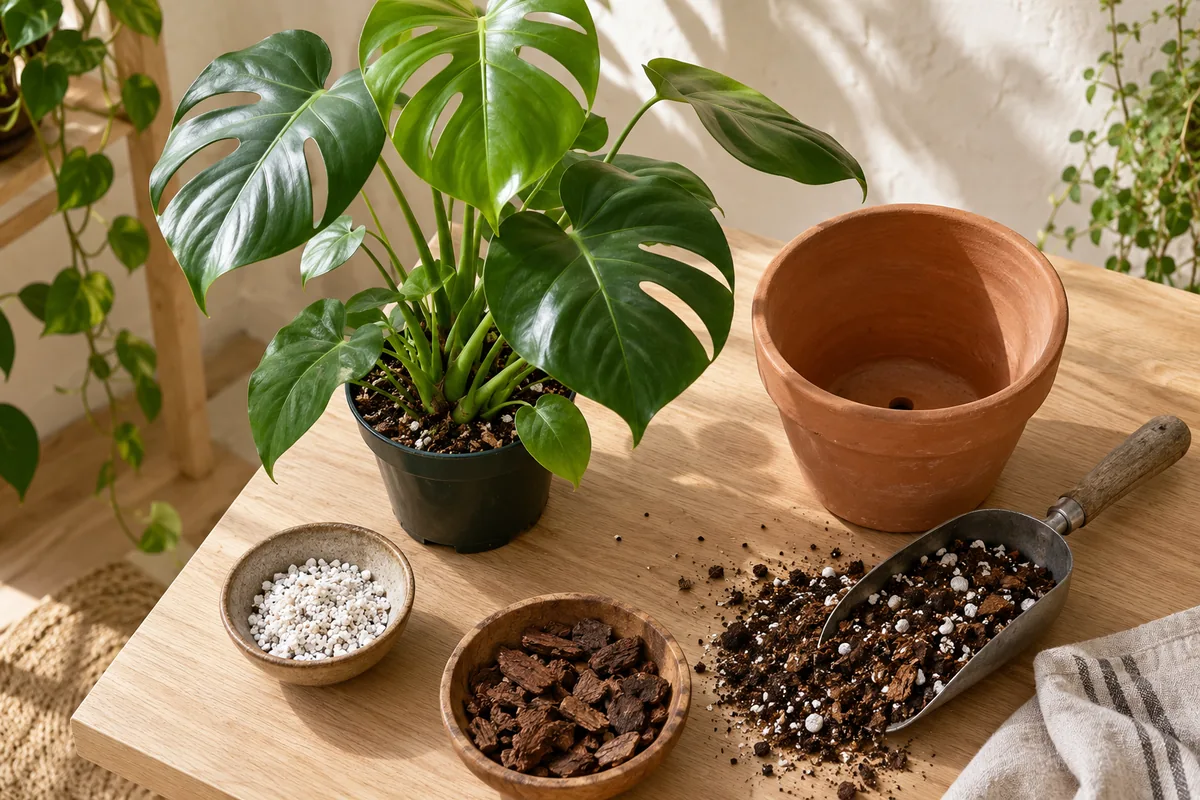
Next compare the amount of growing mix with the size of the root system. If a small plant recently moved into a much larger pot, the unoccupied outer mix may retain water long after the existing roots have used moisture near the center. This is particularly noticeable with slow growing plants and species that store water in fleshy structures. A suitable pot is usually only modestly larger than the root ball. If the mismatch is substantial and the mix remains saturated, returning the plant to a more proportionate container may be useful. Avoid repeatedly lifting it out just to check progress, since every disturbance creates another adjustment for the remaining roots.
Consider the texture and age of the growing medium. Fine material can settle into a dense mass as it ages, particularly when watered repeatedly from the same point. A mix that once contained visible bark may gradually lose those large spaces as the pieces soften and break down. Pressing the surface firmly during repotting can reduce air spaces from the beginning. Observe how water enters the pot. If it puddles for a long time or escapes down a single crack while the center remains compact, the physical structure deserves attention. A fresh, appropriate container mix can improve the situation more effectively than simply withholding water for a very long period.
Light and temperature influence drying as much as the ingredients do. A plant placed farther from a window after a room rearrangement may use less water while receiving the same weekly watering. Short winter days create a similar mismatch. Keep the plant within its suitable light range and away from cold glass or chilly floor surfaces. Do not place it in intense sun to dry the pot quickly; foliage accustomed to filtered light can scorch before the interior mix changes much. The aim is a stable location that allows normal growth, with watering adjusted to actual moisture use. A fan directed at the leaves is not a substitute for appropriate root conditions.
Check the plant itself without assuming that every yellow leaf has the same cause. A single older leaf can fade as part of ordinary growth. Several yellowing leaves together with a heavy, wet pot suggest that the root zone needs attention. If the plant slips out easily, examine the outer roots briefly. Firm roots can vary naturally in color by species and growing medium. Soft, collapsing material with an unpleasant odor is more concerning than color alone. Remove only clearly deteriorated sections with clean tools if repotting becomes necessary. Preserve firm roots, use a container with drainage, and avoid enclosing the plant in a damp bag after the work.
During recovery, pause automatic watering reminders and inspect the mix directly. The upper surface may dry before the lower root zone, especially in a tall container. A wooden skewer inserted carefully away from major roots can offer an additional indication of interior moisture. Container weight becomes useful once you have compared the pot after watering and near the next suitable watering point. Do not fertilize a plant simply because its leaves look pale while the roots are still adjusting. Concentrated feed cannot replace air in saturated mix. Let stable conditions and a normal drying interval become established before returning to routine feeding during active growth.
Write down what changed so you can recognize the pattern later. A new cachepot, a larger container, a move across the room, and a seasonal drop in light can each alter the interval between waterings. Once the pot begins losing weight predictably and new growth looks firm, keep observing rather than making more changes. The right interval may differ from the one you used before. Water fully when the plant reaches its appropriate moisture threshold, then allow drainage and another gradual drying cycle. Understanding why the pot stayed wet makes future decisions clearer and prevents the same problem from returning under a different calendar reminder.