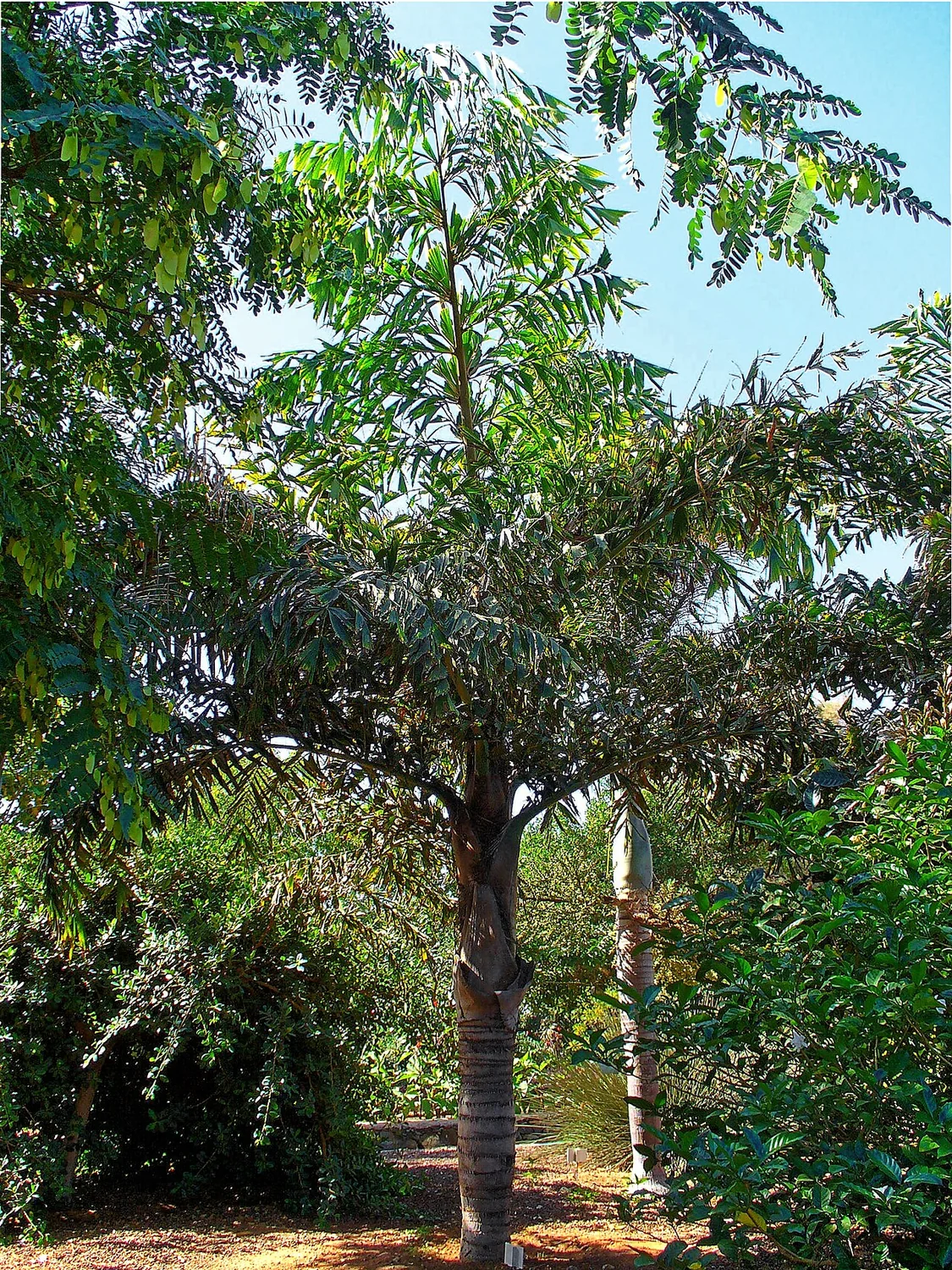
Fishtail Leaves and a Clumping Lifecycle
Fishtail palm is instantly recognizable once its leaflets are examined. Caryota mitis carries irregular wedge-shaped segments with jagged outer edges, arranged on branching leaves that are more complex than the familiar feathered palm frond. The outline can resemble a collection of torn green flags. It is a vigorous tropical palm that may eventually occupy considerably more space than a shop display suggests. A young container belongs in a roomy, well-lit position where its broad leaves can spread. It should not be selected as a permanently small ornamental merely because the nursery pot can still be lifted with one hand.
The species comes from tropical Southeast Asia and naturally forms clusters of stems. The name mitis is often interpreted as mild or unarmed, but this should not be turned into a blanket safety claim. Its fruit can be irritating and harmful, and any mature fruiting specimen needs appropriate handling. The most distinctive aspect of its lifecycle is that a stem eventually flowers in sequence and dies after completing reproduction, while other stems in the clump can continue. That is different from a solitary ornamental trunk being expected to persist indefinitely. A container owner may never see that mature process, but it explains the plant's natural renewal.
Room for a Broad Tropical Canopy
For indoor cultivation, bright indirect light and a warm protected room are sensible starting conditions. A large office atrium or conservatory is more appropriate than a dim cubicle. The leaves can extend sideways and downward as the plant matures, so leave a meaningful radius around the container. Avoid a location where the irregular leaflets are continually caught by people walking past. If summer conditions permit time outside, acclimate the foliage and shelter it from drying wind. A palm grown under nursery shade cannot immediately be judged by what an established landscape plant handles in a humid tropical climate.
Water in response to the medium. Allow some drying at the upper root zone before a thorough application, then let excess leave freely. The aim is neither a permanent wet basin nor a series of prolonged droughts. A large actively growing canopy can use more water than a small plant under the same conditions, but lower winter light can sharply reduce demand. Check below a decorative surface layer if the pot seems to remain heavy. An outer container with no visible drainage arrangement makes a vigorous palm harder to manage because the caretaker cannot tell whether roots are receiving moisture or sitting in stale surplus.
Managing Roots, Stems, and Fruit Precautions
Use a fertile, open container mix that supports roots without becoming compacted. When repotting, choose a stable vessel with enough depth and a modest allowance for growth. Preserve connected stems and their roots rather than automatically dismantling the clump. The naturally spreading habit may eventually justify division, but that is a substantial propagation task requiring useful roots on each portion. Keep stems at their previous planting level. A wide canopy can tempt an owner to bury the base or overfill the pot for support; both approaches obscure the root environment. Stability is better supplied by a suitable container and sensible location.
Maintain the palm by removing spent material selectively. Each living stem needs its own crown, and cutting off that growing point is not a method of making a shorter branched plant. A completely dead stem can be removed carefully from a substantial clump without injuring neighboring shoots. Retain mostly green fronds where possible. The naturally ragged shape of the leaflets should not be tidied into smooth tips; it is the species' identifying feature. Dust can be removed gently while supporting sections of the large leaf. Avoid pulling across the leaf's branching framework as though it were one simple strap of foliage.
Canopy Care and the Precautions around Mature Fruit
Apply nutrition during active growth according to a suitable labelled product. A quickly enlarging plant in strong light and a quiet indoor specimen do not have identical requirements. Brown tips or pale older leaves deserve an inspection of moisture, salts, and roots before being interpreted as a request for stronger feeding. Consider whether the plant has recently moved or received inconsistent care from several people. A simple shared record can prevent that confusion in an office. Watering responsibility should remain clear during holidays, especially as the growing canopy increases demand while the container volume stays the same.
Inspect leaf undersides and sheltered stem bases for mites, scale, or mealybugs. The irregular leaflet edges and branching leaf structure can make a distant canopy assessment unreliable. If pests appear, separate the palm while identifying an appropriate treatment. Where fruit forms, do not handle it casually or offer it as an edible curiosity. Keep it away from children and animals, and use authoritative guidance for disposal and handling. A mature flowering stem may decline as part of its natural lifecycle, but early deterioration of young crowns should still prompt a careful check for root, pest, or environmental problems rather than an assumption of normal senescence.
Giving a Palm with an Unusual Future
A fishtail palm is an unusual gift for a recipient who already enjoys larger tropical plants. The repeated, jagged leaflets can personally suggest individuality within a group, while its clumping renewal can offer a chosen metaphor for continuity. Those ideas are not an established cultural promise attached to the species. Discuss room and maintenance before delivery. It is not an ideal surprise for a home where curious animals chew foliage or where a child may reach eventual fruit. A smaller labelled plant with a realistic outline of its future size is a more thoughtful introduction than an oversized ceremonial arrangement with no care plan.
Plan for the plant's development rather than merely preserving its purchase-day appearance. As new stems and leaves emerge, rearrange the surrounding space before they become trapped behind furniture. Keep the root ball accessible and reassess the pot's drying pattern as the canopy grows. If the palm eventually outgrows the room, rehoming may be more responsible than repeated destructive pruning. Caryota mitis is fascinating precisely because its leaf construction and reproductive lifecycle differ from a generic indoor palm. Appreciating those differences makes it possible to cultivate a living clump with understanding, rather than continually forcing it into a static decorative role.