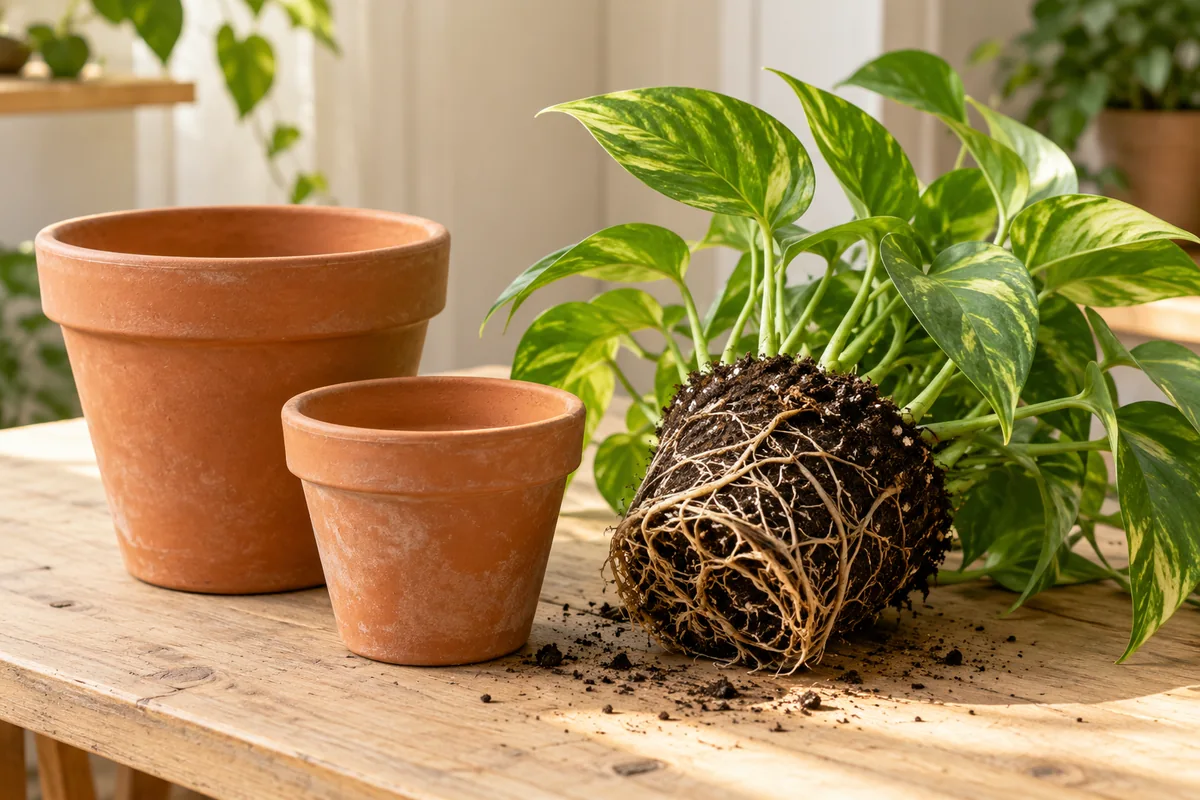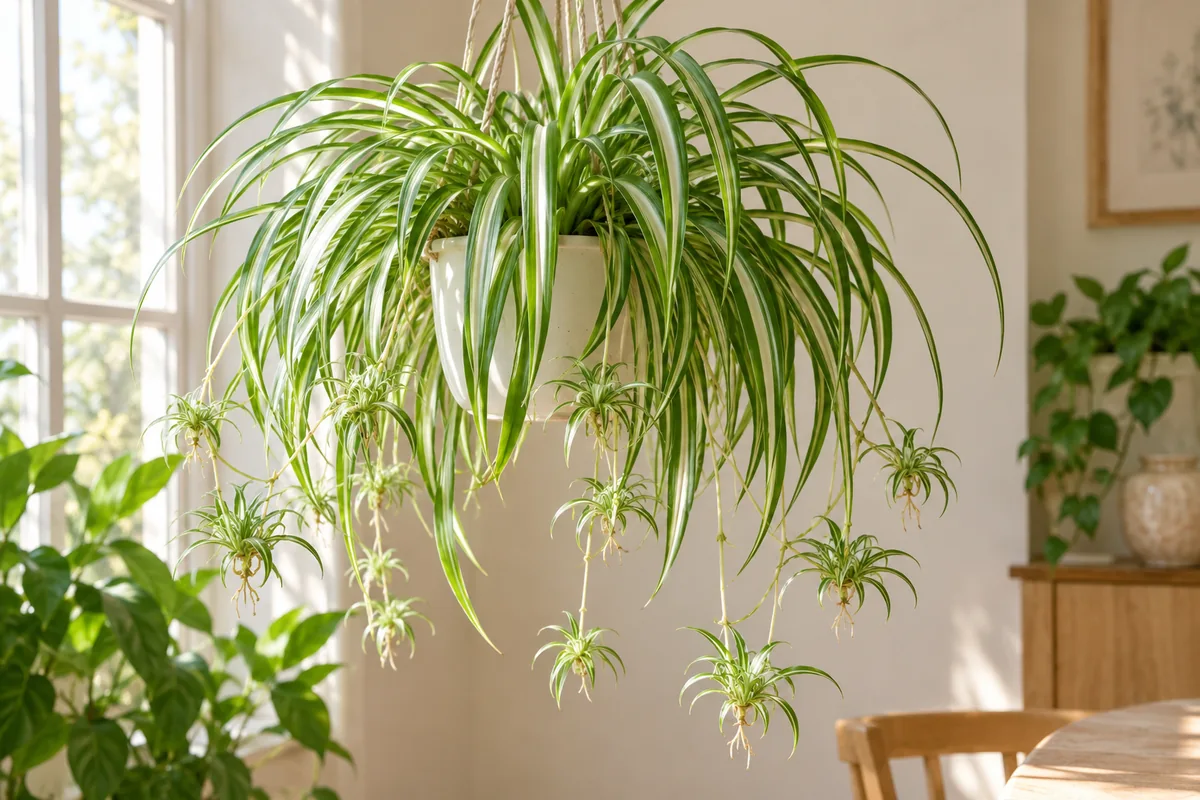
A spider plant can turn a flexible nursery pot into a firm rounded shape as its thick roots occupy nearly every gap. Water may begin running through quickly, and the plant can dry much faster than it once did. At that point, moving the whole clump into a modestly larger pot is one option. Dividing it is another when there are several clear growing crowns and you want smaller plants. The choice should suit the actual structure of the clump. A single crown with a crowded root ball is not an invitation to cut randomly through the middle simply to produce two containers of similar size.
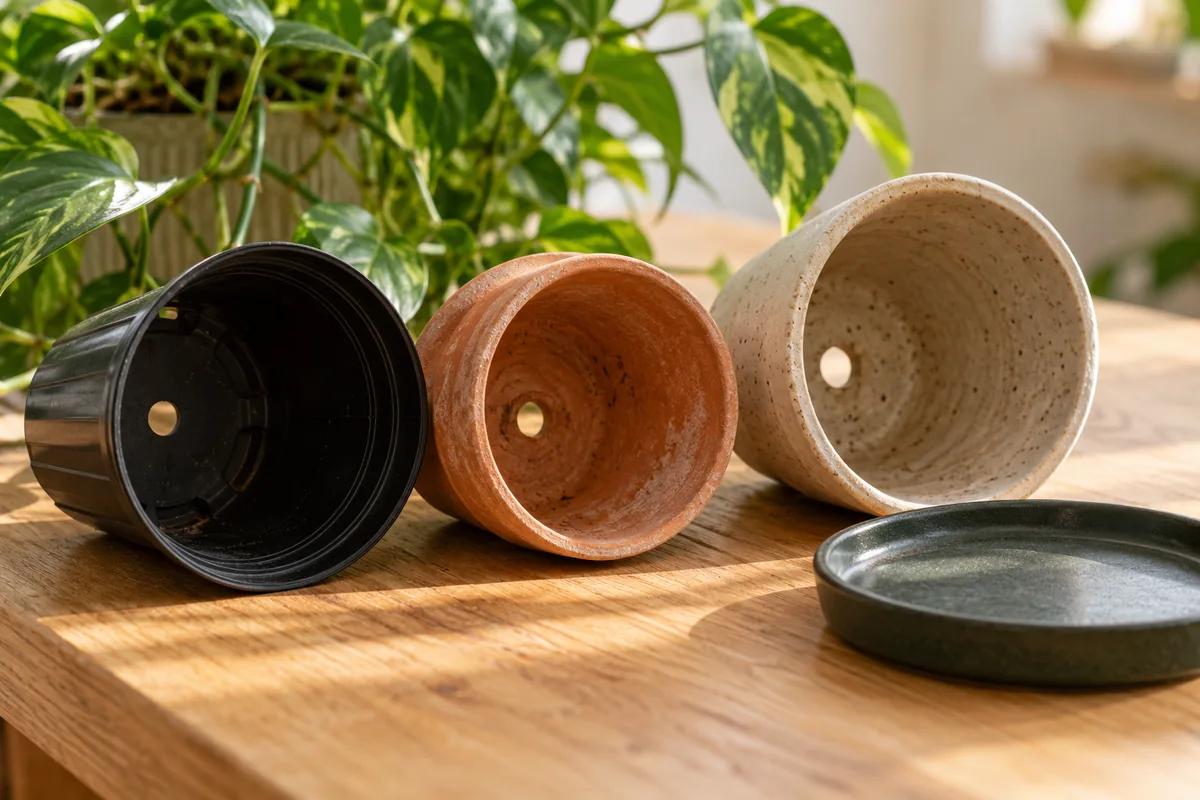
Choose a time of active growth for optional division and prepare the work area before removing the plant. Gather clean pots with drainage, an appropriate houseplant mix, and clean cutting tools for sections that will not separate gently. Watering at a suitable interval before the work can make the root ball easier to handle without leaving it sodden. The leaves are long and easily bent, so give them room on the table. Remove hanging runners from the work path or support them carefully. You can retain plantlets separately if they are ready, but avoid trying to root offsets and divide the main clump as one rushed operation without a plan.
Slide the plant out and examine where the leaf crowns arise. Each useful division needs a crown with attached roots, rather than a handful of roots without a growing point. Thick fleshy roots can weave between neighboring crowns, so begin with loose outer material and look for natural separations. Use your fingers to ease sections apart where they move readily. If a tight connection must be cut, make a clean deliberate cut instead of pulling until multiple roots tear. Keep the divisions large enough to establish comfortably. A few robust clumps usually offer a more manageable result than many tiny fragments with little root system to support their leaves.
Remove clearly deteriorated roots and old loose mix while preserving firm fleshy material. Those thick roots store moisture and are part of the plant's normal structure. There is no need to trim them merely because they look bulky. If a long root circles the old pot, guide it into the new container without folding it sharply. Choose pots that fit the individual divisions with a modest amount of room around their roots. Containers selected by the size of the original plant will usually be too large for the separated pieces. The fresh volume should support new growth without keeping a wide area of unoccupied mix continually damp.
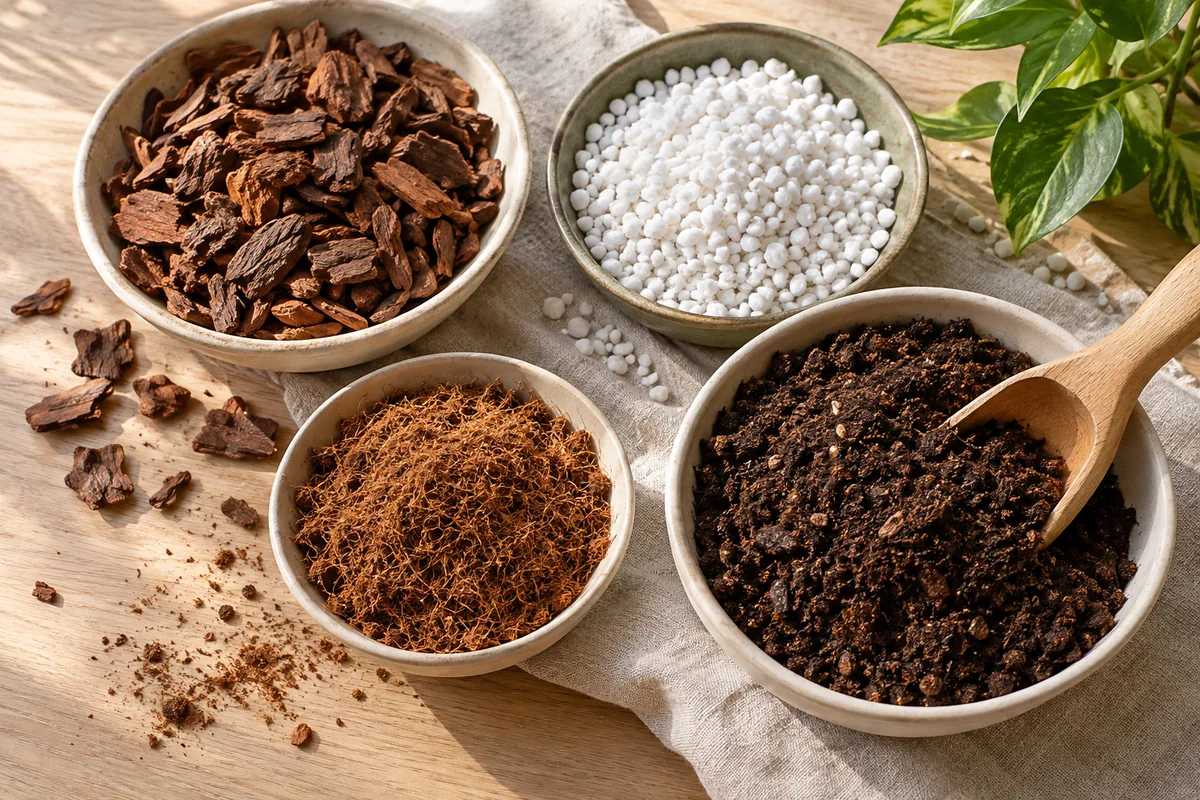
Set each crown at its previous depth. The point where leaves emerge should remain above the surface rather than being buried in a new mound of mix. Fill around the roots evenly, using gentle taps and light finger pressure to settle material into gaps. Do not force the fleshy roots into a dense coil simply to fit a pot that is too shallow. Adjust the container if necessary. Leave room below the rim for controlled watering, and label the divisions if you are comparing different placements or mixes. Keep the blend suitable for an ordinary spider plant, with useful moisture retention and free drainage rather than an extreme mixture chosen to speed recovery.
Water the newly potted divisions appropriately, allowing surplus water to leave completely. Empty every saucer or cover, then place the plants in suitable filtered light away from strong new sun and direct drafts. A reduced root system may use water differently from the original crowded plant, and the fresh mix often retains more moisture than the old root filled container. Check before watering again. The surface can dry while lower material remains damp. Smaller divisions may need closer observation, yet that does not mean they need daily water. Keep the routine based on the condition of each container and the firmness of its foliage rather than the fact that all were divided together.
Some older leaves may look untidy after handling. Remove badly damaged material cleanly if needed, preserving enough foliage for the division to continue growing. Avoid cutting back every leaf to make the plants appear symmetrical. New leaves arise from the crowns, and their condition over time is a more useful measure than the appearance of bent old tips. Feeding can wait until the plants have settled into a normal watering pattern and growth resumes, particularly if the mix already includes nutrients. Keep concentrated fertilizer away from newly cut roots. Stable light, appropriate moisture, and undisturbed contact with the fresh medium do the practical work of establishment.
During the following weeks, compare the divisions independently. One with a larger root system may begin using water sooner than a smaller neighbor. A plant close to the window may also dry faster than one at the back of the group. Keep enough space to inspect each crown and lift each pot. Once new leaves extend and the drying intervals become predictable, return to ordinary care for the conditions of each position. Division should relieve crowding and create useful plants, not produce a shelf of oversized damp pots. A few well rooted clumps in proportionate containers give the clearest start for the next stage of growth.