Two bags labeled peat free can feel surprisingly different when opened. One may contain visible wood fibers and coarse bark, while another feels fine and springy with a larger proportion of coir. The shared label tells you which ingredient is absent, not exactly how the finished mix will behave in your home. Read the ingredient information and the intended use before filling a pot. A blend made for outdoor containers is not automatically the right choice for a small indoor fern or a slow growing succulent. The useful starting point is the physical texture of the mix and the requirements of the plant that will occupy it.
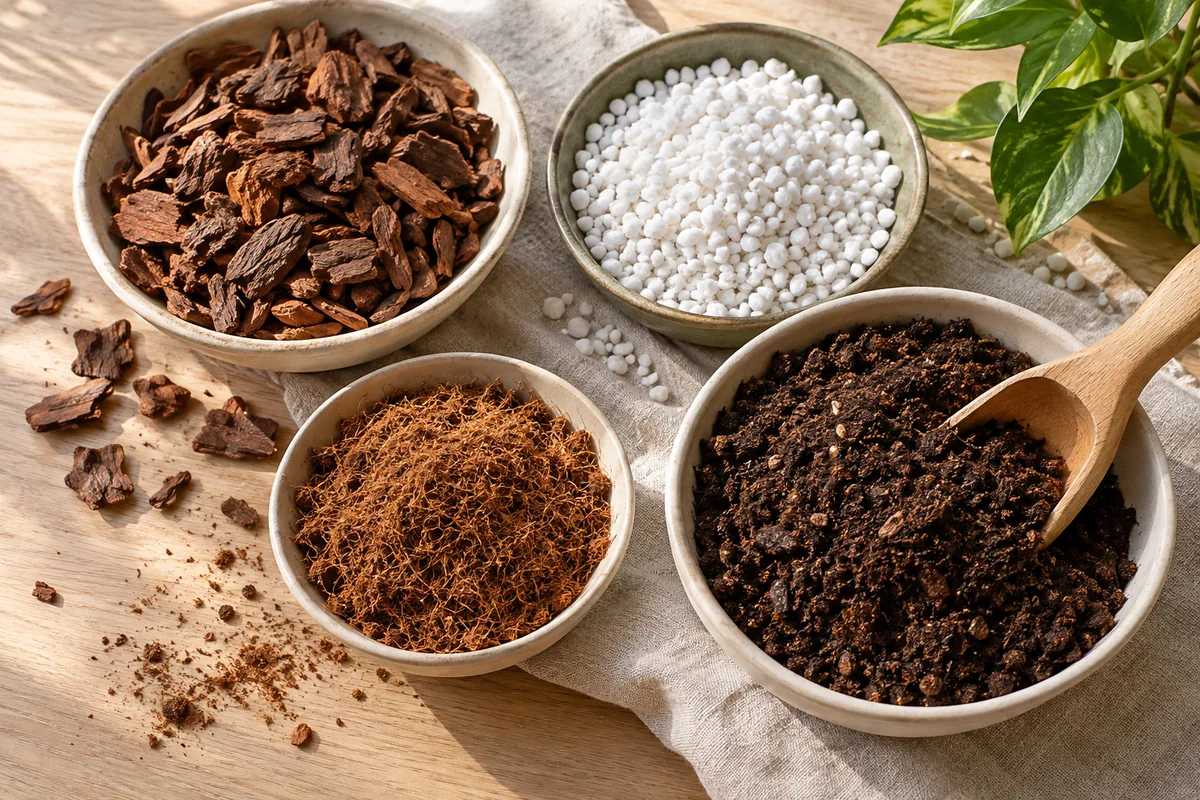
Common ingredients include coir, composted bark, wood fiber, green compost, and mineral components such as perlite or grit. Each contributes different properties, and the proportions affect water retention, air spaces, weight, and stability. A finished commercial mix may also contain fertilizer and materials that adjust its acidity. Do not assume it needs extra feed simply because it contains no peat. Read the bag instructions for the initial nutrient supply and recommended handling. Keep the original label or photograph it so you can refer to the details later. That information becomes useful when comparing a new bag with one that worked well for a particular plant.
Before planting, examine how readily the material accepts water. Some mixes are easiest to handle after being lightly moistened in a separate container. Add water gradually and turn the material until moisture is distributed rather than leaving dry pockets beside a wet patch. Avoid making it sodden before it enters the pot. Compressed coir components require proper expansion according to their directions, and an opened bag may contain unevenly moist areas. Break apart soft clumps gently without crushing all the larger particles. The aim is a uniform usable medium that settles around roots while preserving the spaces that give the mix its structure.
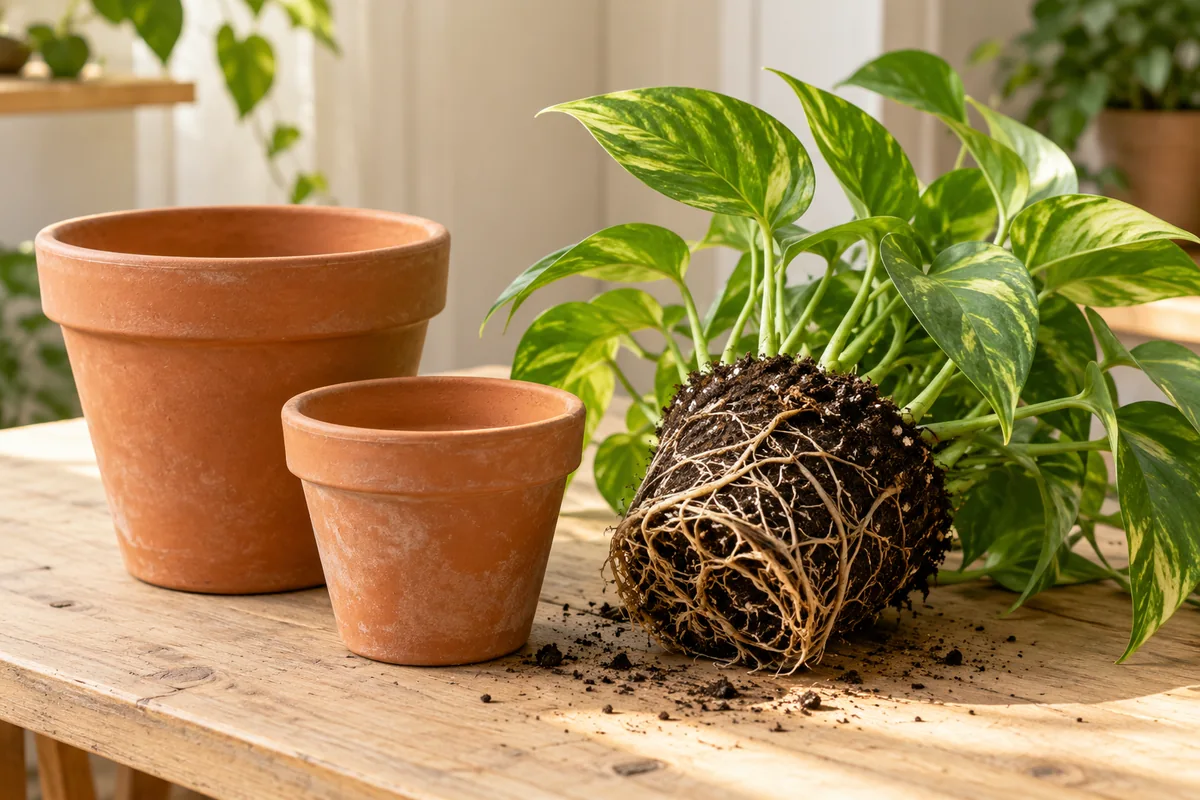
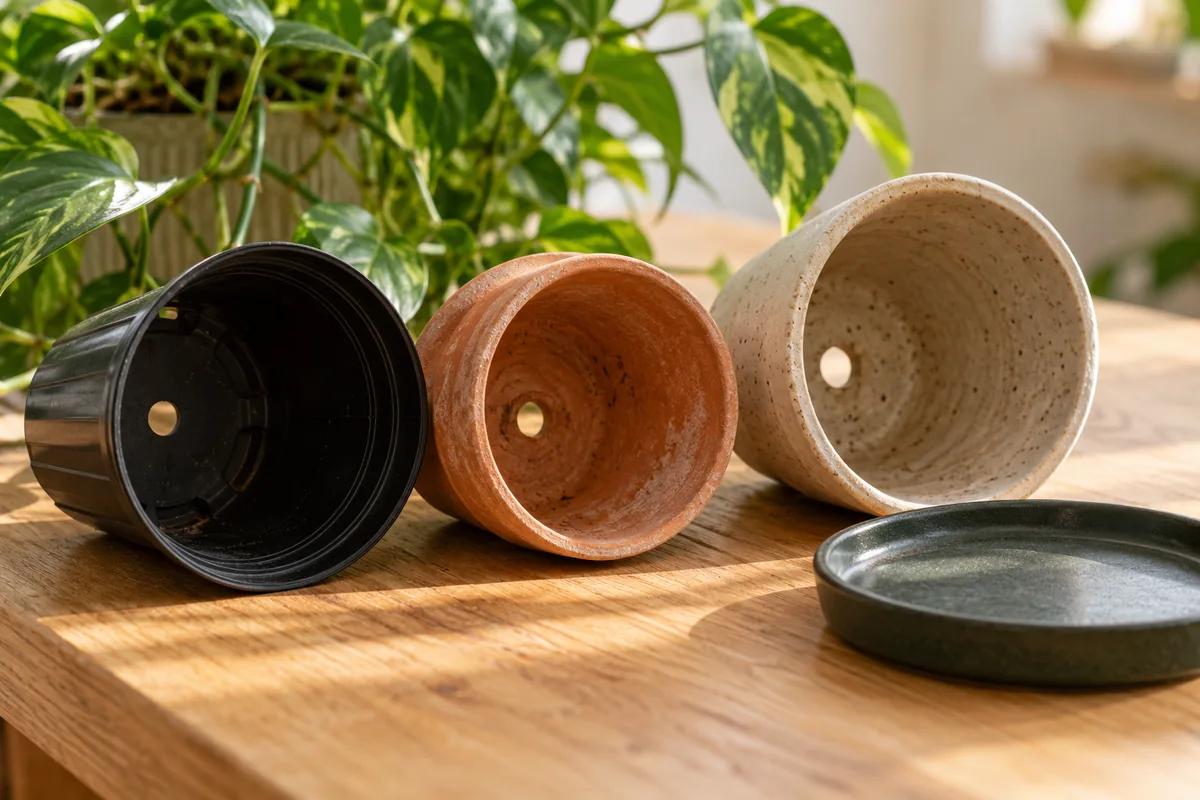
Choose a container in proportion to the root ball. Any mix can stay wet too long when a small plant is surrounded by a large volume of unused material. Drainage holes remain necessary for ordinary container growing, and a stone layer does not replace them. Fill the pot with the selected medium throughout the root zone rather than building unrelated layers. Keep the stem or crown at its previous depth and leave room below the rim for watering. Settle the sides gently. Heavy pressure can compress fibrous ingredients and reduce the useful air spaces, so firmness should come from even placement rather than packing the mix as tightly as possible.
Expect the new material to dry differently from the old mix. A visible surface of wood fiber or bark can appear dry while the finer material underneath remains moist. Check below the surface and learn the pot's changing weight after watering. Conversely, some blends dry more quickly at the edges or become difficult to rewet after a long dry interval. Observe a complete watering cycle before deciding on a routine. There is no universal peat free watering schedule. The room, container material, root system, and ingredient proportions all contribute, so a plant moved from a familiar mix may need closer attention for the first several weeks.
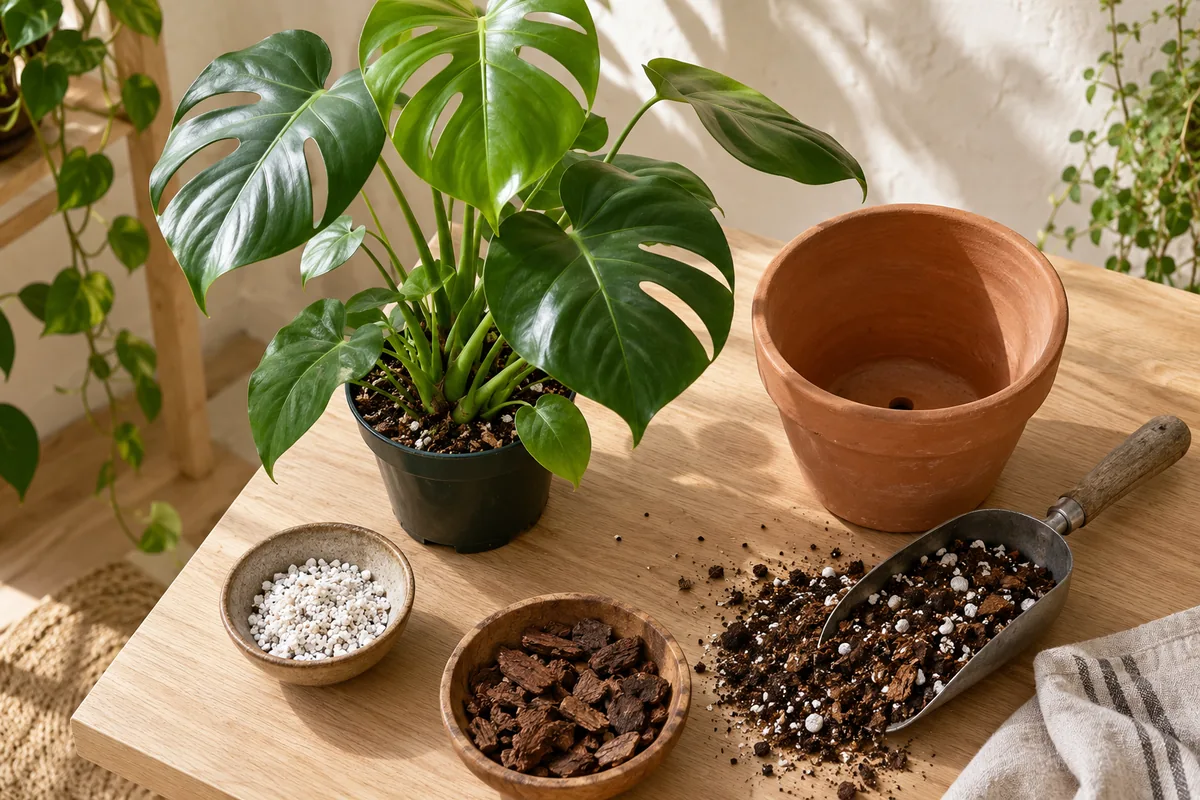
Adjustments should have a clear purpose. Adding perlite may change air space and water distribution, while adding bark increases the proportion of larger organic particles. Adding ingredients at random can produce a blend that no longer matches the manufacturer's fertilizer or watering guidance. Begin with a mix intended for the relevant type of plant and alter it only when you understand the reason. A succulent may need a different mineral content from a fern. Keep a simple record of any additions by volume, using the same scoop for consistency. That makes successful results repeatable and prevents the next repotting session from depending on memory alone.
Store unused material according to the bag directions in a sheltered place away from persistent wet floors and direct heat. Close the bag to keep debris and insects out without sealing a soaking wet mix in an unsuitable container. Use a clean scoop and avoid returning old root material to the fresh supply. An earthy appearance does not mean a bag remains unchanged indefinitely. Ingredients can settle and separate during storage, so turn the material before using another portion. If a bag has developed an unusual odor or its contents have been contaminated, assess it carefully rather than using it around an established indoor collection simply to avoid waste.
Judge the mix by the plant's growth and the watering pattern it supports. Firm new roots, normal leaves, and a predictable drying interval are useful signs that the combination is working. If the pot remains wet or dries abruptly, inspect size, light, and drainage as well as the material itself. Keep notes about the specific blend rather than treating all peat free products as one category with identical behavior. Once you understand how a chosen mix absorbs water and changes through time, it becomes a familiar growing medium. The label provides a starting point; ordinary observation explains how it performs in the conditions of your own room.