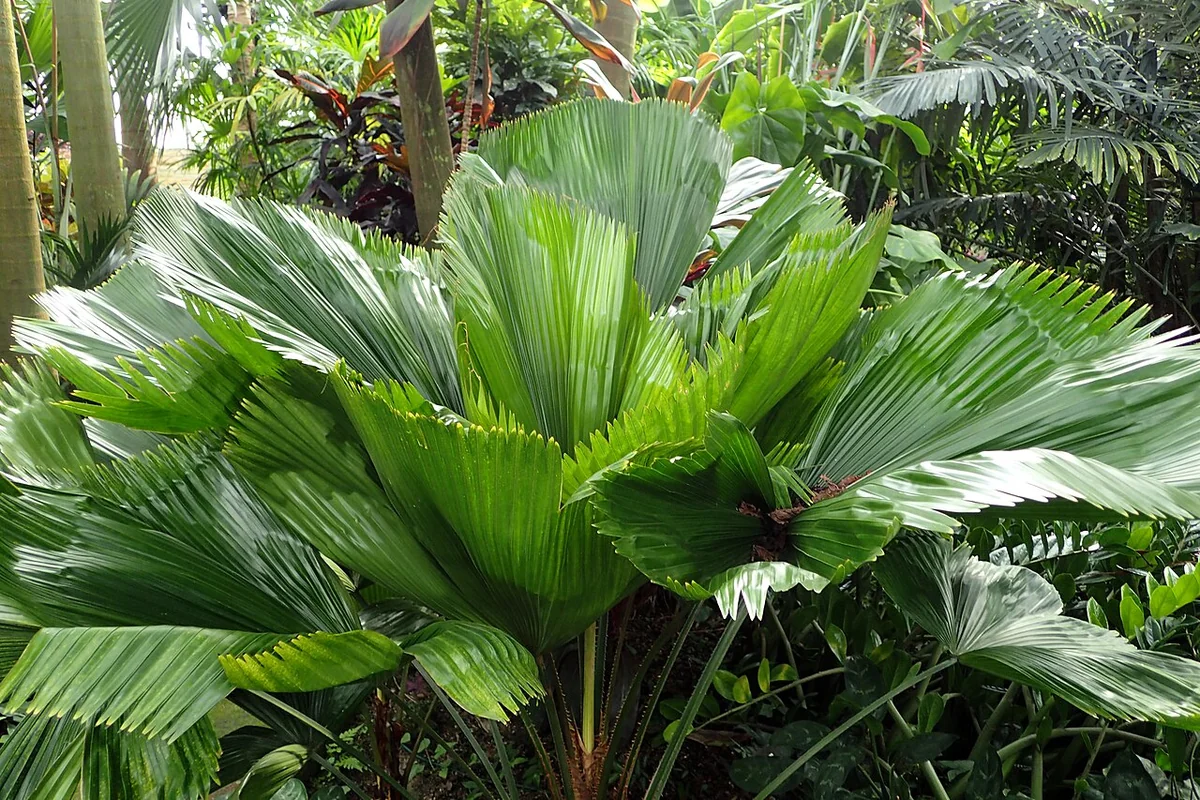
Rainforest Origins of the Pleated Circle
Licuala grandis is an architectural plant built from circles. Its nearly rounded, strongly pleated leaves create a sculptural outline that can look unusually formal for a living palm. The blade remains largely undivided, with notched edges rather than the many separate segments of a typical fan palm. That broad surface gives the ruffled fan palm its appeal and also exposes every tear or scorch mark. It belongs where its leaves can be admired without being brushed, folded, or squeezed behind furniture. A slow-growing specimen can remain manageable in a container, but the next leaf still needs enough room to open fully.
The species comes from the Solomon Islands and Vanuatu and is associated with tropical rainforest. Its broad understory foliage makes sense in that setting, where filtering vegetation and sheltered air reduce exposure to harsh sun and wind. The dramatic form is sometimes used as an interior design statement, but it is not a sign that the plant can accept the dry, shaded conditions of any fashionable room. A suitable collection space must account for its warm forest background. The island origin provides an honest conversation about biodiversity without requiring a fabricated legend about the circular leaves or their supposed effects on fortune.
Filtered Light and Balanced Moisture
Provide bright, filtered light and protection from intense direct sun. A warm conservatory with light shade, or a well-lit room whose humidity can be managed, is more realistic than an ordinary air-conditioned desk corner. The broad leaves can scorch after a sudden move into strong sun, and damaged areas will remain visible. Avoid placing the palm directly in the path of a fan or vent. Even when air movement is useful, a continual drying blast across one side is not equivalent to gentle ventilation. Decide on the growing position before buying a large specimen whose canopy cannot be moved easily without scraping it.
Maintain moderate, reasonably even root moisture. Check the upper medium and the condition of the deeper root ball before watering, rather than waiting for the broad leaves to show conspicuous stress. When water is needed, distribute it around the occupied mix and let surplus leave the container. The palm should not be sealed into a cachepot that hides stagnant water. A root ball that repeatedly dries hard can lead to lasting leaf damage, while constant saturation reduces the air supply. The balance is easier in an open container mix than in a dense, fine medium compressed beneath a decorative layer.
Humidity, Roots, and Intact Leaves
Humidity and temperature need to be considered together. A warm room with very dry air may keep the plant alive yet steadily mark the margins of its large blades. If a humidifier is appropriate, monitor the actual conditions and protect furnishings from persistent condensation. Do not create a stagnant enclosed corner simply to retain moisture. A brief spray of water is not a durable substitute for a suitable ambient environment around a large leaf. Keep roots and foliage clear of cold glass and entry drafts. Tropical appearance should not be mistaken for tolerance of abrupt temperature swings in a glazed entrance.
Repot only when roots or medium condition require it. The solitary stem and developing crown must be supported carefully during the move. Use an adequately deep draining container and an airy organic mix, increasing size modestly. Preserve the previous planting level instead of covering the trunk to improve stability. A well-chosen heavier outer pot can hold the display securely without adding excessive wet growing volume. Seed is the normal route to new plants; cutting the crown or dividing a solitary trunk is not a propagation technique. A small purchased specimen therefore represents years of future development rather than raw material for several immediate gifts.
Cleaning Pleats without Flattening Their Structure
The leaves should be cleaned in sections with support beneath the pleats. Avoid flattening the blade against its natural folds or dragging a cloth firmly from edge to center. The sharply textured surface can trap dust, but vigorous polishing risks damage. Keep a partly imperfect yet mostly green leaf while it remains useful. Fully brown older leaves can be removed carefully without cutting the stem or central spear. The crown should never be clipped to hold the palm at a chosen height. Selecting the right eventual location is the practical method of size management for this single-stemmed plant.
Feed lightly during active growth and follow the directions of a suitable container-plant product. Extra fertilizer is not a repair for a torn or scorched blade. Examine new growth and the root environment if the plant's condition changes. Check the sheltered underside and folds for pests such as scale or mites, especially after bringing a new specimen into a warm collection. Isolate an affected pot while identifying the problem. A large round leaf may show damage dramatically even when the original incident was small, so distinguish a stable physical scar from a pattern actively spreading across several new leaves.
A Specialist Gift and an Uncluttered Display
This is a specialist gift for a recipient who wants to manage a rainforest palm and can supply a protected bright location. The circular pleated leaves might personally symbolize completeness, careful craft, or a gathering around a table. Those are visual interpretations, not established guarantees of harmony or luck. It is courteous to discuss the gift first because humidity requirements and leaf clearance can affect how a room is used. Include the scientific name, the solitary growth habit, and a reminder that leaves should unfold untouched. A smaller sound palm is often more welcome than a large dramatic specimen that immediately exceeds the available space.
Allow the plant to be the center of a simple, uncluttered display. Its strong geometry does not require surrounding decorative clutter, which increases the chance of leaf damage during everyday handling. Watch the progression from a narrow emerging spear to a rounded pleated blade, and adjust nearby objects before the leaf opens. Keep drainage accessible and compare the quality of successive leaves over a full growing period. Licuala grandis is successful indoors when the setting has been chosen around its particular needs. The impressive circles are a consequence of sound forest-palm cultivation, not a replacement for it.